



Table of Contents
Introduction
Publishing content without a system is one of the biggest reasons brands struggle to see ROI. Blogs go live, posts get shared, and videos get views—but conversions remain inconsistent.
The missing piece? A clearly defined content marketing funnel.
A strong funnel aligns your content marketing strategy with user intent at every stage of the journey. Instead of guessing what to post, you guide audiences from discovery to decision—step by step.
In this blog, we’ll break down the four phases of a winning content marketing funnel, explain what type of content works best in each phase, and show how modern brands use strategy, tools, and trends to drive sustainable growth.
Why a Content Marketing Funnel Is Essential Today
Today’s buyers don’t convert after one blog or post. They research, compare, pause, return, and then decide.
A structured content funnel helps you:
- Deliver the right message at the right time
- Build trust before asking for action
- Align content with business goals
- Use content marketing tools more effectively
- Stay competitive with evolving content marketing trends
Without a funnel, content feels random. With a funnel, content becomes predictable and scalable.
How the Funnel Works as a System
Each phase supports the next:
- Awareness attracts traffic.
- Consideration builds trust.
- Conversion generates revenue.
- Retention sustains growth.
When aligned, your content marketing funnel becomes a long-term growth engine—not a short-term campaign.
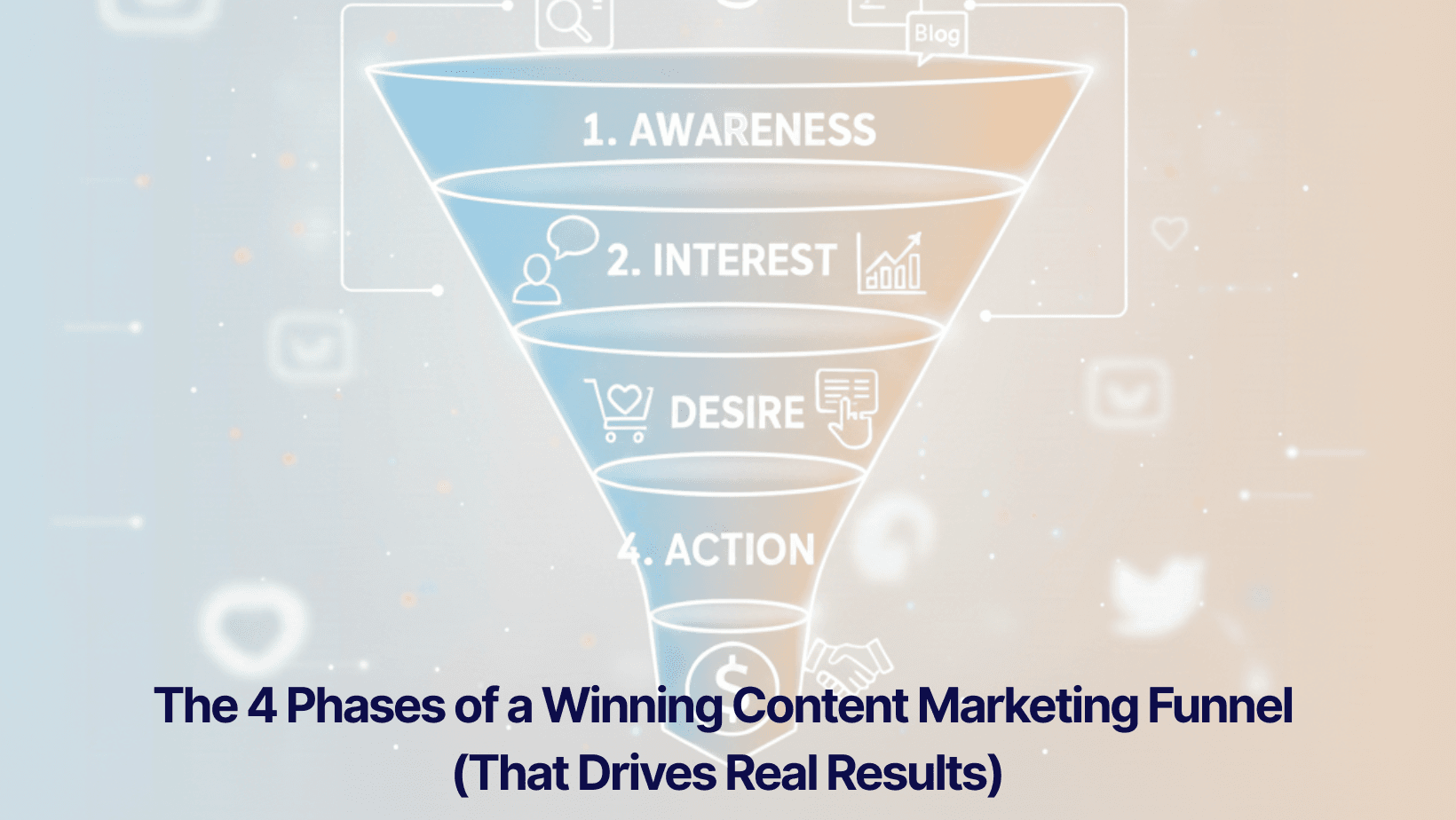
The 4 Core Phases of a Winning Content Marketing Funnel
✅This is the discovery stage. Users are searching for information, answers, or clarity—not products.
Your goal here is visibility and relevance.
Effective awareness-stage content includes:
- SEO-optimized blog posts
- Educational articles
- Social media insights
- Industry trend content
This is where content marketing trends play a big role. Search behavior, short-form content, and intent-based queries shape how audiences discover brands.
At this stage, you’re not selling—you’re positioning your brand as helpful and credible.
✅Once users know you exist, they begin evaluating options. This is where your marketing strategy must shift from visibility to credibility.
Consideration-stage content focuses on:
- Explaining solutions
- Comparing approaches
- Addressing objections
- Demonstrating expertise
In-depth blogs, case studies, comparison guides, and webinars work well here. The goal is to help users feel confident that your brand understands their problem better than others.
Trust built here makes conversion feel natural later.
✅This is where intent is highest.
Users are ready to take action—but only if the path is clear and friction-free.
High-performing conversion content includes:
- Optimized landing pages
- Clear calls-to-action
- Demos, consultations, or lead magnets
- Testimonials and proof points
At this stage, content marketing tools like CRM systems, analytics platforms, and conversion tracking become critical to measure performance and optimize results.
✅A winning content marketing funnel doesn’t stop at conversion.
Retention-focused content strengthens relationships and increases lifetime value through:
- Email newsletters
- Onboarding content
- Educational resources
- Community and updates
This phase turns customers into repeat buyers and brand advocates—feeding the funnel again at the top.
Retention is one of the most overlooked but powerful marketing trends driving long-term growth.
Content Marketing Funnel
Common Mistake Brands Still Make
Many brands use the same content for every stage.
Educational blogs won’t convert ready buyers.
Sales pages will repel early-stage users.
A strong marketing strategy assigns each piece of content one clear funnel role.
Clarity always outperforms volume.
Content Marketing-Funnel Checklist
Use this checklist to strengthen your funnel:
- Update strategy based on marketing trends
- Define one goal per funnel stage
- Map content types to each phase
- Align keywords with search intent
- Use content marketing tool to track behavior
- Optimize CTAs by funnel stage
- Review performance monthly
Final Thoughts
A winning content marketing funnel doesn’t rely on viral posts or aggressive sales tactics. It relies on clarity, consistency, and intent.
When each phase supports the next, content stops being an expense and starts becoming an investment that compounds over time.
If your content isn’t guiding users forward, it’s holding growth back.
Want to build a marketing funnel that attracts, converts, and retains customers consistently?
Contact us today to boost your digital growth with a strategic content marketing funnel designed for long-term results.
Claim your free digital marketing audit.
Stay updated with SunBPO Solutions for the latest trends, insights, and strategies to keep your business ahead of the curve!
Frequently Asked Questions (FAQs)
How does a content marketing strategy support the funnel?
A content marketing strategy ensures every piece of content has a purpose and aligns with a specific funnel stage.
Are content marketing trends changing funnels?
Yes. Intent-based search, personalization, and retention-focused content are shaping modern funnels.
Can small businesses use a content marketing funnel?
Absolutely. Funnels are even more valuable for small businesses with limited budgets.


0 Comments