



Table of Contents
Introduction
The med spa industry is becoming increasingly competitive, and simply posting attractive treatment photos is no longer enough to keep a practice visible. Potential clients are researching treatments, comparing providers, reading reviews, watching videos, and looking for businesses they can trust before making an appointment.
This creates a major opportunity for med spas that are willing to think beyond traditional promotions. The right med spa marketing ideas can help a business attract attention, educate potential clients, build trust, and turn online interest into consultations and bookings.
From personalized content to local search and creative social campaigns, a strong strategy should connect visibility, education, trust, and conversion rather than treating each marketing activity separately.
Understand What Modern Med Spa Clients Want Before Creating Campaigns
Today’s clients often begin with a concern rather than a specific treatment. They may search for ways to improve skin texture, reduce acne scars, address pigmentation, or achieve a particular aesthetic goal without knowing exactly which procedure is right for them.
This means your marketing should answer questions before asking people to book.
A useful med spa strategy starts by understanding what potential med spa clients are searching for, what information they need, what makes them hesitate, and what ultimately gives them confidence to schedule a consultation.
When your content addresses these stages, your marketing becomes more relevant and less promotional.

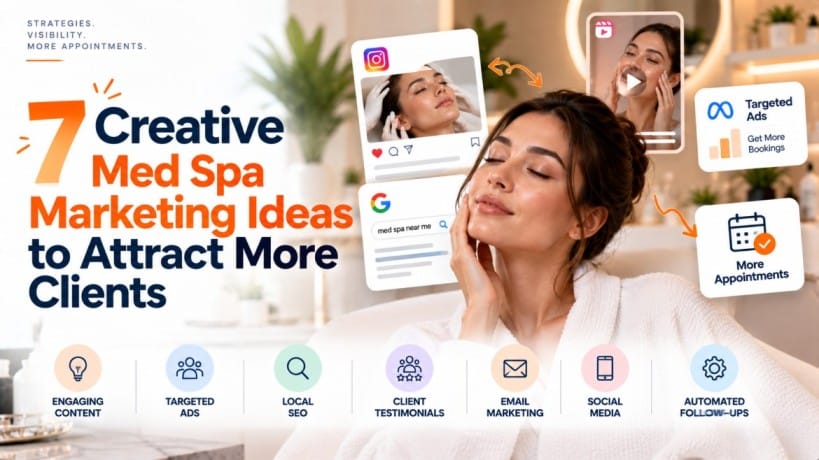
7 Creative Med Spa Marketing Ideas to Attract and Convert Clients
Many med spas organize their marketing around treatments such as Botox, fillers, laser treatments, chemical peels, or body contouring. While treatment-focused content is important, potential clients do not always begin their search by knowing what procedure they want.
They may start with a concern. Someone might search for “how to improve uneven skin tone,” “how to reduce acne scars,” or “ways to improve skin texture.” They may not know which treatment is appropriate yet.
Creating content around these concerns allows your med spa to become visible earlier in the decision-making process.
Use questions from consultations, social media comments, website inquiries, and front-desk conversations as content ideas. Questions such as “What treatment can help with dull-looking skin?” or “What should I know before a chemical peel?” can become blogs, videos, FAQs, or social posts.
The goal is to educate potential clients first and introduce relevant treatments naturally.
Short-form video gives med spas an opportunity to demonstrate expertise, personality, and approachability.
However, every video does not need to promote a special offer. Educational videos can explain a treatment, answer a question, introduce a provider, or address a common misconception.
Examples include:
- “What happens during your first consultation?”
- “3 things to know before a chemical peel.”
- “What is the difference between Botox and fillers?”
- “Who may benefit from laser skin treatments?”
- “A common skincare mistake our providers see.”
The goal is to give potential clients useful information while helping them become familiar with your providers and practice.
Reviews are more than something to display on Google. They can become valuable marketing assets when used appropriately.
With appropriate permission and privacy considerations, positive client feedback can be incorporated into social posts, website testimonials, or educational campaigns.
Rather than simply saying “Our clients love us,” share genuine experiences that communicate what clients appreciated about the consultation, communication, professionalism, or overall experience.
Reviews can become especially important when someone discovers your med spa through social media and then researches the business before booking.
Keep your Google Business Profile updated, encourage genuine feedback, and respond professionally to reviews.
Seasonal marketing can give your med spa a reason to communicate with its audience without repeating the same promotion every month.
Instead of simply offering a discount, build campaigns around a specific client goal.
For example:
- Summer Skin Reset
- Wedding-Ready Skin
- Holiday Glow
- New Year Skin Goals
Each campaign can combine educational content, social media, email marketing, landing pages, and appropriate promotional offers.
The strongest med spa marketing ideas connect the campaign to a real client need instead of making every campaign feel like another sale.
A strong Instagram presence can create awareness, but local search can help capture people who are actively looking for a provider.
Someone searching for “med spa near me,” “Botox clinic in [city],” or “laser skin treatment near me” already has a stronger level of intent.
Your website and local presence should make it easy for these potential clients to understand what you offer and where you are located.
Focus on:
- A complete and accurate Google Business Profile
- Treatment-specific website pages
- Relevant location-focused content
- Genuine client reviews
- Consistent business information
- Clear appointment and contact options
- High-quality clinic photographs
Local SEO should be treated as an ongoing process rather than a one-time setup.
One of the most effective ways to approach med spa marketing is to stop treating individual services as isolated promotions.
Instead, build campaigns around the client’s journey.
Someone interested in improving skin texture may first need education. They may then research treatment options, read FAQs, explore provider information, check reviews, and eventually schedule a consultation.
Your marketing can support each stage:
Concern → Education → Treatment Research → Trust → Consultation → Follow-Up
A social media post can link to a blog. The blog can link to a treatment page. The treatment page can introduce the provider. The provider page can lead to a consultation.
This creates a connected marketing system rather than a collection of unrelated posts.
Instead of constantly searching for new promotional ideas, create a recurring educational series.
For example:
- Med Spa Monday can answer one treatment question every week.
- Ask Our Provider can feature short expert responses.
- Treatment Explained can break down one service at a time.
- Skincare Myth of the Week can address common misconceptions.
A consistent series creates familiarity while giving your team a repeatable content framework.
More importantly, educational marketing positions your med spa as a resource rather than simply another business asking people to book appointments.
Med Spa Marketing Focus
Connect Your Marketing Channels Into One Client Journey
Creative ideas work better when they are connected.
A potential client might discover your med spa through Instagram, search Google for the treatment, visit your website, read reviews, explore a treatment page, and then request a consultation. Each channel should support the next step.
For example:
Social Media → Website → Educational Content → Treatment Page → Reviews → Consultation
This approach helps reduce friction and creates a more consistent client experience.
It also makes it easier to identify where potential clients are dropping out of the journey. journey can completely stop when the office closes.
Focus on Trust Before Conversion
A client may be interested in a treatment but still hesitate to book.
They may wonder whether the provider is experienced, whether the treatment is appropriate for them, what the experience will be like, or whether the business is trustworthy.
Your digital presence should answer these concerns.
Provider profiles, educational videos, treatment explanations, genuine reviews, FAQs, clinic information, and transparent consultation details can all contribute to confidence.
The goal is not to remove every question. It is to make sure potential clients have enough useful information to take the next appropriate step.
Measure Which Marketing Activities Generate Real Clients
Likes and impressions can show engagement, but they do not necessarily show business growth.
A med spa should also monitor:
- Consultation requests
- Appointment bookings
- Phone calls
- Website inquiries
- Treatment-page engagement
- Google Business Profile actions
- Landing-page conversions
- Cost per lead
- Returning clients
- Revenue generated from campaigns
This allows you to identify which med spa marketing ideas are generating meaningful opportunities rather than simply attracting attention.
Final Thoughts
Successful med spa marketing is not about constantly creating new discounts or posting another treatment photograph.
It is about understanding what potential clients want to know, answering their questions, demonstrating expertise, building trust, improving local visibility, and making the journey from discovery to consultation simple.
The most effective strategy combines creativity with strong digital marketing fundamentals. When educational content, short-form video, local SEO, reviews, paid campaigns, and treatment pages work together, your med spa can create a stronger online presence and more meaningful opportunities for client growth.
The goal is simple: help potential clients discover you, understand their options, trust your expertise, and feel confident taking the next step.
Stay updated with SunBPO Solutions for the latest trends, insights, and strategies to keep your business ahead of the curve!
Frequently Asked Questions (FAQs)
How can a med spa use social media to attract clients?
A med spa can use social media to educate potential clients, answer common questions, explain treatments, introduce providers, share appropriate client experiences, and build familiarity with the practice.
Should med spas focus on promotions or educational content?
Both can play a role. Promotions can encourage immediate action, while educational content builds long-term visibility and trust. A balanced strategy can use education to attract and inform potential clients while promotions support appropriate conversion opportunities.
How can a med spa measure marketing success?
Track consultation requests, bookings, calls, qualified leads, website conversions, cost per lead, returning clients, and campaign revenue. Engagement metrics are useful, but they should not be the only measure of marketing performance.

0 Comments