





Table of Contents
Introduction
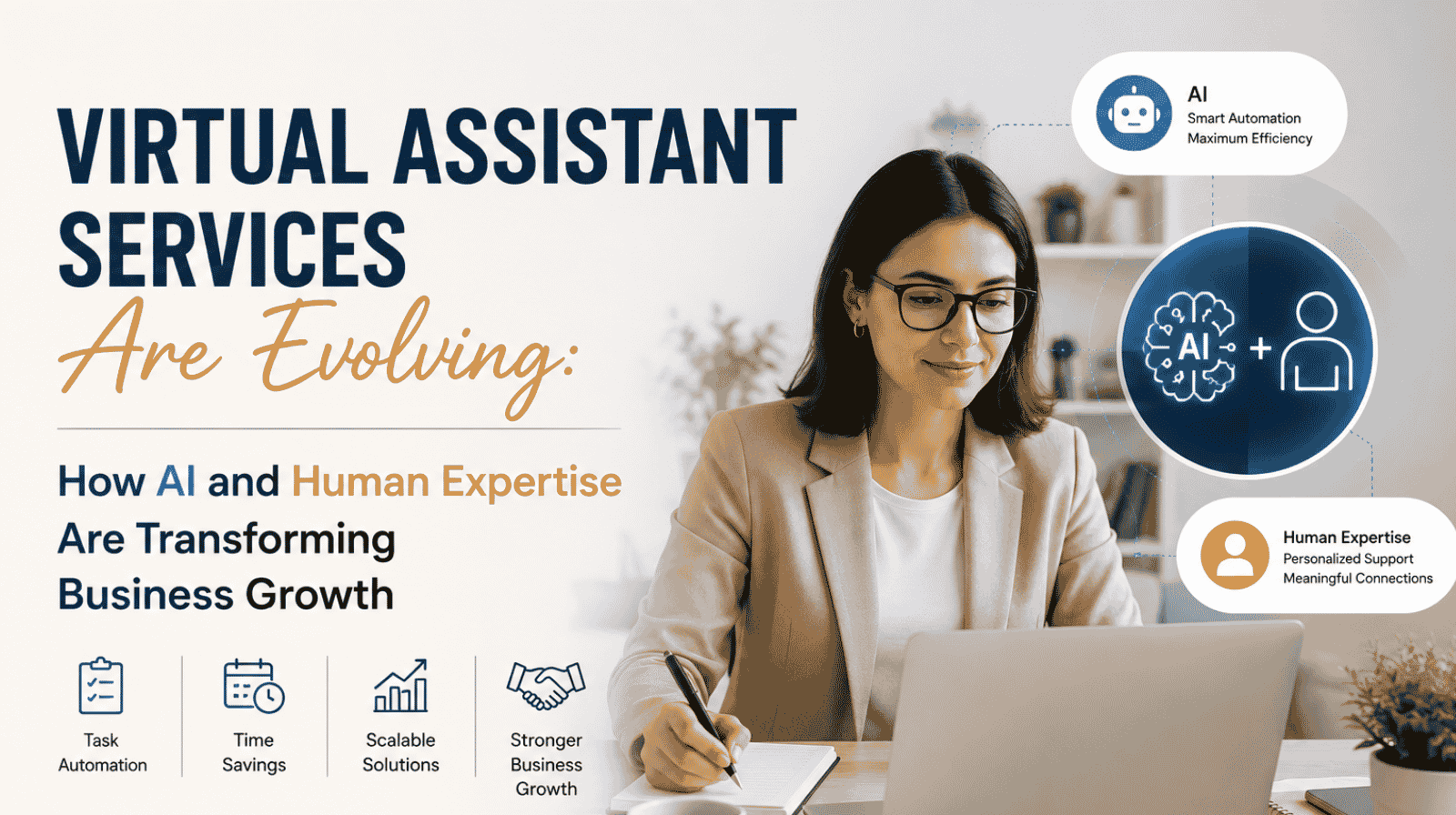
The business world is changing faster than ever, and companies are looking for smarter ways to improve productivity without increasing costs. This shift has transformed the role of virtual assistant services. What was once considered simple administrative support has evolved into a strategic business solution powered by both skilled professionals and intelligent technology.
Today, businesses are combining AI virtual assistant tools with experienced human virtual assistants to streamline operations, improve customer service, manage digital marketing, and increase overall efficiency. While AI can automate repetitive tasks, it cannot replace human creativity, communication, critical thinking, or relationship-building skills.
The future isn’t AI versus humans—it’s AI working alongside people. Businesses adopting virtual assistant outsourcing are gaining access to specialized expertise while remaining flexible and cost-effective. Whether you’re a startup, entrepreneur, or growing company, modern virtual assistants have become valuable partners in driving business success.
The Evolution of Virtual Assistant Services
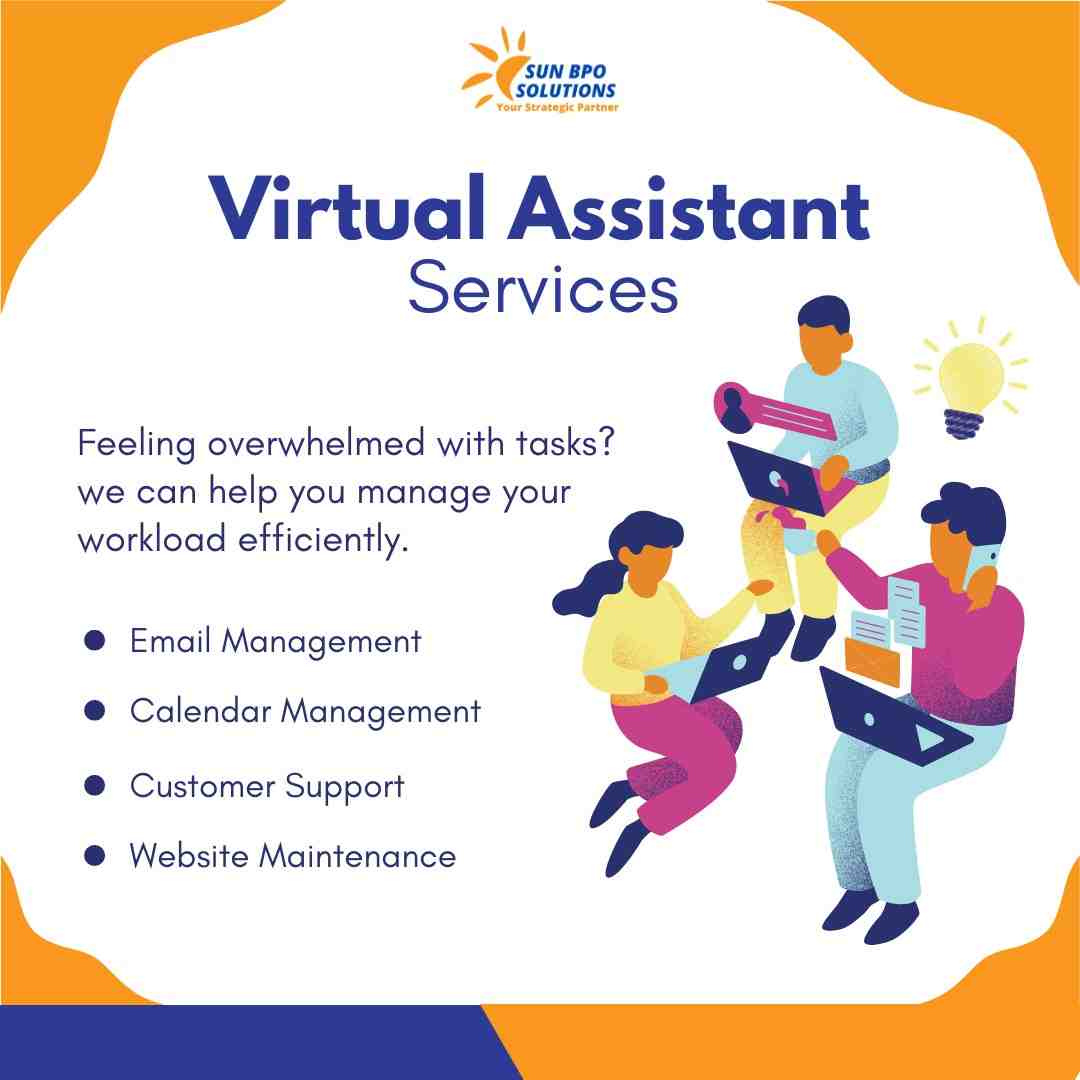
Traditional virtual assistant services mainly focused on scheduling appointments, managing calendars, handling emails, and performing data entry. Although these services remain valuable, today’s virtual assistants contribute far beyond administrative support.
Modern virtual assistants now assist with:
- Digital marketing campaigns
- Social media management
- Customer support
- CRM management
- Content publishing
- Lead generation
- Project coordination
- Research and reporting
- Bookkeeping and invoicing
Businesses increasingly rely on specialized virtual assistant for business solutions that provide industry-specific expertise rather than general administrative assistance.
How AI Virtual Assistant Technology Is Changing the Industry
The rise of the AI virtual assistant has significantly improved workplace productivity. AI-powered tools can organize schedules, summarize meetings, automate workflows, analyze customer data, and generate reports within seconds.
However, technology alone cannot replace human decision-making.
Human virtual assistants understand customer emotions, solve unexpected problems, communicate professionally, and adapt to situations that require judgment and creativity. AI handles repetitive work, while experienced professionals focus on strategic tasks that create real business value.
This collaboration allows businesses to complete work faster without compromising quality or customer experience.
Why Businesses Are Choosing Virtual Assistant Outsourcing
Eliminate expenses related to hiring, office space, equipment, and employee benefits.
Scale support up or down based on your business needs without long-term commitments.
Work with experienced virtual assistants in administration, marketing, customer support, bookkeeping, and more.
Delegate routine tasks so your team can focus on growth and strategic priorities.
Complete tasks quickly with skilled professionals who are ready to contribute immediately.
Free up valuable time by outsourcing repetitive tasks and concentrating on high-impact business activities.
Common Tasks Handled by Virtual Assistant Services
How Virtual Assistants Support Business Growth
Modern virtual assistant services contribute directly to business growth by allowing leadership teams to focus on strategic priorities.
Virtual assistants help businesses:
- Manage customer communication.
- Organize projects and daily operations.
- Maintain CRM systems.
- Publish website and blog content.
- Schedule social media posts.
- Conduct market research.
- Generate qualified leads.
- Prepare business reports.
Delegating these responsibilities allows entrepreneurs to concentrate on innovation, customer relationships, and revenue generation instead of administrative work.
AI Doesn’t Replace Human Expertise: It Enhances It
One of the biggest misconceptions is that AI will eliminate the need for virtual assistants.
In reality, AI increases the value of skilled professionals.
For example, an AI virtual assistant can draft emails, summarize meetings, or organize information within seconds. A human virtual assistant then reviews the content, ensures accuracy, adjusts the tone, communicates with clients, and makes informed business decisions.
This partnership creates a faster, more efficient workflow while maintaining the personal touch customers expect.
Businesses that successfully combine AI with experienced professionals often outperform those relying entirely on automation or manual processes alone.
Industry Insights: The Future of Virtual Assistant Services
The demand for virtual assistant services continues to grow as businesses embrace remote work, digital transformation, and AI-powered productivity tools. Companies are no longer hiring virtual assistants only for administrative support—they are building remote teams that manage marketing, customer service, project coordination, CRM systems, bookkeeping, and lead generation.
One of the biggest trends is the rise of the AI virtual assistant. AI can automate repetitive tasks such as scheduling, data processing, meeting summaries, and workflow management, while human virtual assistants provide strategic thinking, communication, creativity, and problem-solving. This hybrid approach allows businesses to improve efficiency without losing the personal touch that customers value.
As more organizations adopt virtual assistant outsourcing, they gain access to global talent, specialized skills, and flexible support without the overhead costs of hiring full-time employees. Businesses that combine technology with experienced professionals are becoming more agile, productive, and competitive.
Final Thoughts
The role of virtual assistant services has evolved far beyond traditional administrative support. Modern virtual assistants now contribute to marketing, customer service, operations, project management, and business development, making them valuable partners for companies of all sizes.
Rather than replacing people, the AI virtual assistant is empowering professionals to work smarter by automating repetitive tasks and allowing them to focus on strategic, customer-focused activities. Businesses that embrace virtual assistant outsourcing gain greater flexibility, lower operational costs, and access to specialized expertise without the commitment of hiring additional in-house staff.
As technology continues to evolve, the most successful organizations will combine AI with human expertise to build efficient, scalable, and customer-focused operations. Investing in professional virtual assistant services is no longer just a cost-saving decision—it’s a smart strategy for long-term business growth and improved productivity.
Frequently Asked Questions
Claim your free digital marketing audit.
Stay updated with SunBPO Solutions for the latest trends, insights, and strategies to keep your business ahead of the curve!
Frequently Asked Questions (FAQs)
What is an AI virtual assistant?
An AI virtual assistant uses artificial intelligence to automate repetitive tasks like scheduling, workflow management, data processing, and customer interactions, helping businesses improve efficiency.
Can AI replace human virtual assistants?
No. While an AI virtual assistant can automate routine tasks, human virtual assistants provide creativity, communication, decision-making, emotional intelligence, and strategic problem-solving that AI cannot replace.
Which businesses benefit most from virtual assistant services?
Startups, entrepreneurs, small businesses, e-commerce companies, real estate firms, healthcare providers, marketing agencies, and growing enterprises all benefit from virtual assistant services by improving efficiency and reducing operational workload.



0 Comments