




Table of Contents
Introduction
Creating content consistently can feel like a never-ending task. You publish a blog, share it on social media, send an email, and then move on to the next idea. But one strong idea can often become weeks or even months of useful content when you have the right strategy.
This is where a content ecosystem becomes valuable. Instead of treating every blog, social media post, video, email, and infographic as a separate piece of work, businesses can connect them around one central topic. This approach helps brands get more value from their ideas while creating a stronger and more organized online presence.
A strong content marketing strategy is not about creating something completely new every day. It is about finding ways to expand, repurpose, and connect valuable ideas. When this approach is combined with SEO, internal linking, Social Media Content, and helpful website resources, it can support sustainable long-term SEO growth.
What Is a Content Ecosystem?
A content ecosystem is a connected group of content assets built around a central topic, audience need, or business goal. One main piece of content acts as the foundation, while smaller pieces support and expand the same idea across different formats and platforms.
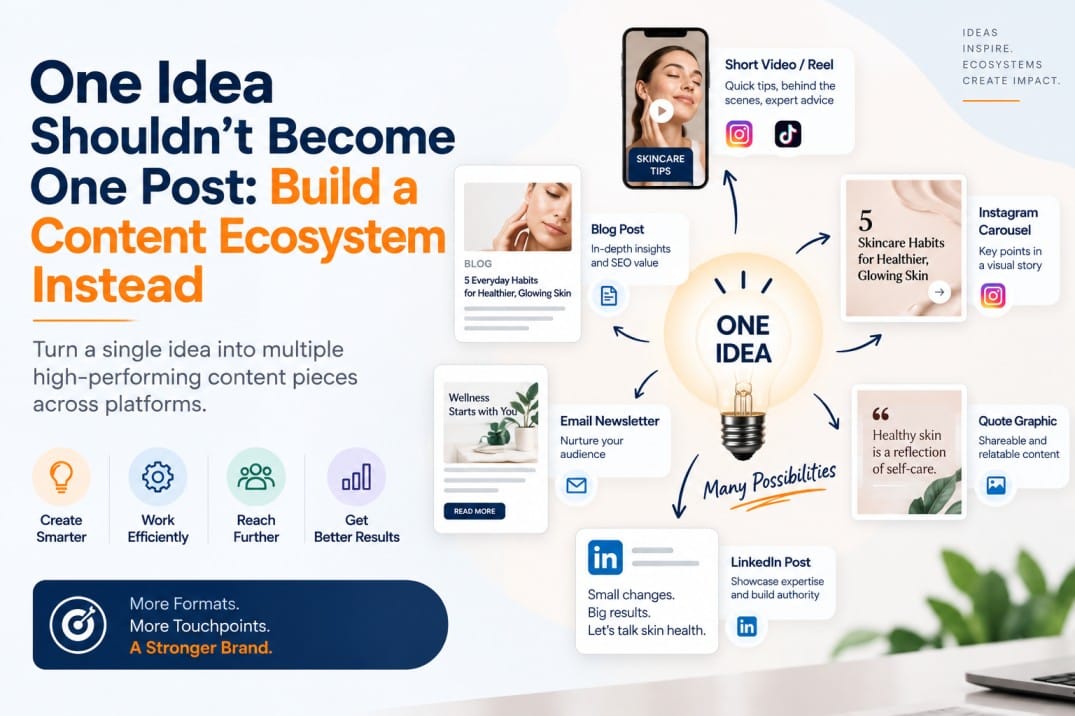
For example, a business could create one detailed blog about improving local SEO. That blog could then become a LinkedIn post, Instagram carousel, short video, email newsletter, FAQ, checklist, and several supporting articles.
The result is not simply more content. It is a connected system where each piece has a purpose and supports the larger marketing and SEO strategy.
Start With One Strong Content Idea
The first step is choosing a topic that has real value for your audience. Instead of asking, “What should we post today?” ask, “What important problem can we help our audience solve?”
- Choose a Topic With Search Value
Start with keyword research and identify topics your audience is actively searching for. Look beyond high-volume keywords and consider related questions, long-tail searches, and problems your customers regularly discuss.
- Focus on One Core Message
A strong content ecosystem begins with one clear idea. The central topic should be broad enough to create multiple content pieces but focused enough to maintain a consistent message.
- Match Content With Business Goals
Your content should support a clear purpose. This could be increasing organic traffic, generating leads, building authority, educating prospects, or promoting a specific service. A defined goal makes your content marketing strategy more focused and measurable.
Build Topic Clusters Around Your Main Idea
Start with a comprehensive article that covers the main subject in depth. This becomes the central resource that other related pages can support.
Create smaller articles that answer specific questions related to the main topic. These pages can target long-tail keywords and provide more detailed information than the pillar article.
Internal linking helps users move between related resources while creating a clearer website structure. Link supporting articles to the main page and connect relevant pages where it makes sense.
This structure turns individual articles into a connected SEO content strategy instead of a collection of disconnected blog posts.
Content Distribution From One Core Idea
Turn One Idea Into Multiple Content Assets
The biggest advantage of a content ecosystem is that one valuable idea can create several connected assets. This reduces the pressure to constantly develop completely new topics.
- Blog Post: Build the main topic into a detailed, search-optimized article.
- Social Media Content: Turn important insights, questions, tips, or examples into LinkedIn posts, Instagram carousels, reels, and other social formats.
- Email Content: Use the main idea as a newsletter topic or educational email that directs readers to the full article.
- Video Content: Convert key sections into short videos, webinars, tutorials, or educational clips.
- Supporting SEO Content: Create FAQs, checklists, guides, and related articles that answer specific questions connected to the main topic.
Connect Content With Your SEO Strategy
A content ecosystem becomes more powerful when every asset has a role in your broader SEO content strategy.
- Target Different Search Intent
Different content pieces can address different stages of the customer journey. An educational blog may target informational searches, while a service page can address commercial intent.
- Strengthen Topical Authority
Publishing connected, useful content around a specific subject can help establish depth and expertise. Instead of publishing random topics, businesses can build a stronger knowledge base around the areas they want to be known for.
- Keep Content Updated
Long-term SEO growth requires maintenance. Review important content regularly and update outdated information, links, examples, and recommendations when necessary.
Connect Social Media With Long-Term SEO Growth
Social media works best when it supports the practice’s wider website, content, and SEO strategy. Connecting these channels can create a stronger and more consistent digital presence.
- Repurpose Educational Content: Turn social media posts into blogs, FAQs, newsletters, videos, and other useful website content.
- Link to Valuable Website Resources: Direct audiences to relevant service pages, educational articles, FAQs, and other resources when appropriate.
- Strengthen Local Digital Presence: Keep your website, social profiles, business listings, and content aligned to support long-term SEO growth and dermatologist marketing.
Make Your Content Ecosystem Work Across Channels
Your website can act as the central hub, while your content reaches audiences across multiple channels. Each platform should contribute something different to the overall strategy.
- Search: Use optimized articles and supporting pages to attract organic traffic.
- Social Media: Use valuable Social Media Content to distribute insights and start conversations.
- Email Marketing: Bring existing subscribers back to useful website resources.
- Video: Explain complex ideas through short videos, webinars, or tutorials.
- Professional Networks: Share expert perspectives and build industry authority.
The goal is to create a connected experience rather than treating every marketing channel as a separate activity.
Measure the Performance of Your Content Ecosystem
Publishing more content does not automatically mean better results. Track whether your content ecosystem is helping your business achieve meaningful goals.
- Organic Traffic: Monitor growth in search visits to pillar and supporting pages.
- Engagement: Review time on page, returning visitors, social interactions, and content consumption.
- Conversions: Track leads, inquiries, downloads, consultations, or other actions connected to your content.
- Content Efficiency: Measure how many useful assets and results are generated from each core content idea.
These insights can help you improve your content marketing strategy and focus more resources on topics and formats that perform well.
Final Thoughts
One great idea should never have to live as just one blog post. With the right content ecosystem, a single valuable topic can become an entire network of blogs, Social Media Content, videos, emails, FAQs, guides, and supporting SEO pages.
The key is to focus on quality before quantity. Start with a strong idea, understand the search intent behind it, create a valuable central resource, and then expand that idea across formats and channels.
When your content is connected instead of scattered, every piece has a greater purpose. A strategic content marketing strategy combined with a strong SEO content strategy can help strengthen topical authority, improve organic visibility, support lead generation, and create a more sustainable path toward long-term SEO growth.
Stay updated with SunBPO Solutions for the latest trends, insights, and strategies to keep your business ahead of the curve!
Frequently Asked Questions (FAQs)
How can one blog post become multiple pieces of content?
A blog can be divided into individual insights, questions, tips, and sections. These can then become Social Media Content, videos, email content, carousels, FAQs, infographics, and supporting articles.
What is the difference between content repurposing and a content ecosystem?
Content repurposing focuses on adapting one piece of content into different formats. A content ecosystem goes further by connecting those assets through SEO, internal links, different search intents, distribution channels, and business goals.
How does a content ecosystem support long-term SEO growth?
A connected content ecosystem can help expand topical coverage, create internal linking opportunities, address different search queries, and provide useful resources for visitors. Consistent publishing and regular updates can further support a long-term SEO strategy.



0 Comments