




Table of Contents
Introduction
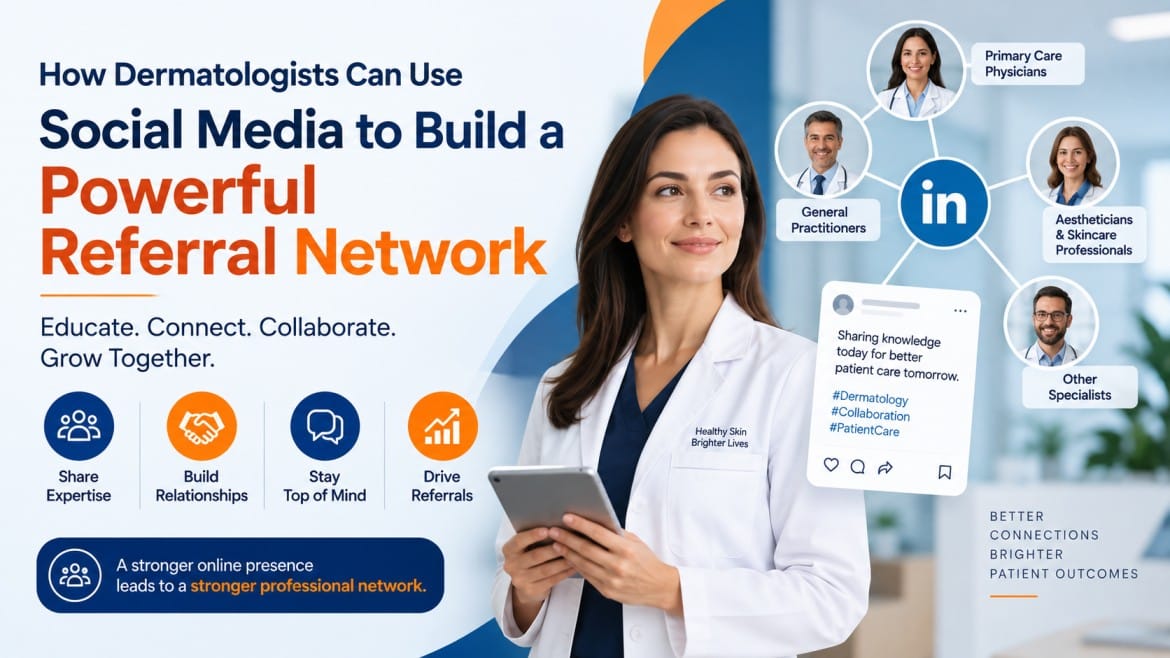
Dermatology is a relationship-driven field. Patients may discover a dermatologist through Google, social media, reviews, or recommendations, but professional referrals can become an important source of long-term practice growth. Primary care physicians, pediatricians, plastic surgeons, wellness providers, and other healthcare professionals may regularly encounter patients who need specialized dermatology care.
This is where dermatologist marketing goes beyond simply attracting new patients. A strong digital presence can help dermatologists build professional visibility, demonstrate expertise, and stay connected with potential referral partners.
Dermatology social media provides an opportunity to communicate with both patients and healthcare professionals. When used strategically, it can support professional networking while strengthening the wider dermatology digital marketing strategy of a practice.
Why Social Media Matters for a Dermatology Referral Network
Social media helps dermatologists build professional visibility and stay connected with potential referral partners. A consistent presence can showcase expertise, support patient education, and keep the practice top of mind among healthcare professionals.
- Build Professional Visibility: Share useful dermatology content that helps physicians and healthcare professionals understand your expertise and areas of focus.
- Demonstrate Clinical Expertise: Use educational content to explain common skin concerns, treatment considerations, and when specialist care may be appropriate.
- Follow Dermatology Market Trends: Use dermatology market trends to identify relevant topics, changing patient interests, and new content opportunities.
Choose the Right Platforms for Professional Networking
Different platforms serve different purposes, so dermatologists should focus on channels that support both professional networking and audience engagement.
Use Local Communities Carefully: Participate in relevant local and professional communities while maintaining appropriate medical communication and privacy standards.nt for B2B professionals because potential buyers often research a person or company before beginning a sales conversation.
Use LinkedIn for Professional Connections: Connect with physicians, healthcare professionals, practice owners, and local providers while sharing professional insights and educational content.
Use Instagram for Visual Education: Share informative carousels, short videos, and visual content that demonstrate expertise and make dermatology topics easier to understand.
Create Content That Attracts Referral Partners
Create content around common questions healthcare professionals may hear from patients. Educational posts can help referral partners understand your areas of expertise and recognize when a patient may benefit from specialized dermatology care.
Discuss how dermatology can work alongside other medical specialties when appropriate. Showing an understanding of multidisciplinary care can help potential referral partners see where your practice fits within a patient’s broader healthcare journey.
Following dermatology market trends can help identify useful subjects for professional content. Changing patient interests, emerging conversations, and shifts in digital behavior can inspire timely educational topics without relying on promotional messaging.
Potential Social Media Referral Activities
Turn Social Engagement Into Referral Relationships
Social media should be used to start genuine professional conversations rather than simply promote services. Meaningful engagement can create opportunities for stronger referral relationships over time.
- Follow Up Professionally: Continue valuable online conversations through appropriate professional meetings, events, webinars, or educational collaborations. valuable. Focus on building relationships with people who understand your expertise and may benefit from your services.
- Engage With Local Healthcare Professionals: Follow physicians, clinics, healthcare organizations, and relevant professionals in your area and interact with their content.
- Start Meaningful Conversations: Focus on shared professional interests, educational topics, and local healthcare initiatives instead of sending generic promotional messages.
Strengthen Trust and Professional Credibility
For dermatologists, trust is essential. Every social media post should reflect the same professionalism, accuracy, and responsibility patients and healthcare professionals expect from the practice.
- Keep Information Accurate: Publish reliable educational content that supports your professional reputation and strengthens your dermatology digital marketing strategy. practical insights instead of making every post sound like an advertisement. A professional voice can still be personal and authentic.
- Protect Patient Privacy: Never share identifiable patient information or images without appropriate authorization and consent.
- Avoid Overpromising: Use responsible language, avoid guaranteed-outcome claims, and present treatment information accurately.
Connect Social Media With Long-Term SEO Growth
Social media works best when it supports the practice’s wider website, content, and SEO strategy. Connecting these channels can create a stronger and more consistent digital presence.
- Repurpose Educational Content: Turn social media posts into blogs, FAQs, newsletters, videos, and other useful website content.
- Link to Valuable Website Resources: Direct audiences to relevant service pages, educational articles, FAQs, and other resources when appropriate.
- Strengthen Local Digital Presence: Keep your website, social profiles, business listings, and content aligned to support long-term SEO growth and dermatologist marketing.
Measure Referral Network Growth
Likes and follower counts do not tell the complete story. Dermatologists should focus on measurements that show whether social media is contributing to professional relationships and practice growth.
- Track Professional Connections: Monitor engagement, new connections, and conversations with relevant healthcare professionals.
- Track Referral Activity: Where appropriate, identify which professional relationships and referral sources contribute to new patient inquiries.
- Measure Website Actions: Review website visits, educational-page engagement, consultation inquiries, and other meaningful actions connected to your dermatology digital marketing efforts.
Final Thoughts
Social media can be much more than a patient acquisition channel for dermatologists. When used strategically, it can help create professional visibility, demonstrate expertise, support patient education, and strengthen relationships with potential referral partners.
The most effective dermatologist social media marketing strategy is not about posting constantly or chasing follower numbers. It is about creating useful content, engaging with the right professional audience, protecting patient trust, and connecting social activity with your website and broader digital strategy.
When dermatologist marketing, dermatology social media, dermatology market trends, and dermatology digital marketing work together with SEO and content marketing, social media can become a valuable part of sustainable practice growth and long-term SEO success.
Stay updated with SunBPO Solutions for the latest trends, insights, and strategies to keep your business ahead of the curve!
Frequently Asked Questions (FAQs)
Which social media platform is best for dermatologists?
The best platform depends on the practice’s goals. LinkedIn can be valuable for professional networking, while Instagram can be effective for visual patient education. A focused strategy is generally more useful than trying to maintain every platform.
What should dermatologists post on social media?
Educational posts, dermatology insights, frequently asked questions, professional updates, treatment education, skincare information, and appropriate practice content can all be useful. Content should remain accurate, ethical, and privacy-conscious.
Can social media support dermatology SEO?
Social media does not replace SEO, but it can support a broader digital marketing strategy by distributing educational content, increasing brand visibility, directing users to useful website resources, and creating opportunities for people to discover the practice.


0 Comments