



Table of Contents
Introduction
Being active on LinkedIn is easy. You can post several times a week, comment on industry updates, send connection requests, and share company news. But does that activity actually make you visible to the people who matter?
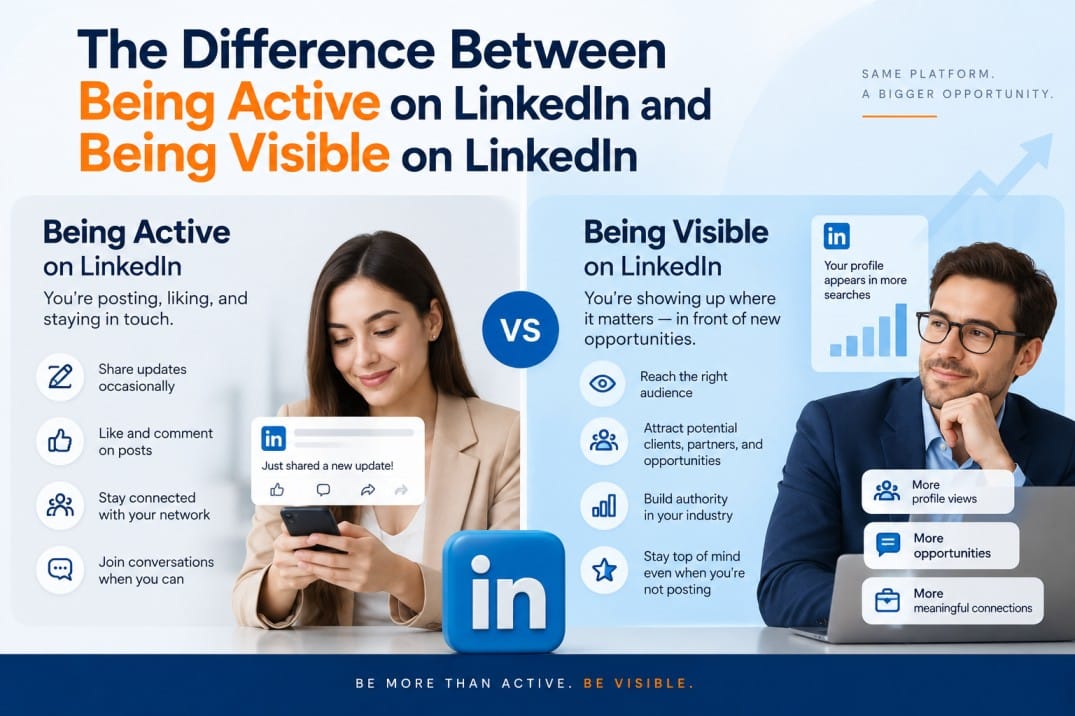
There is a major difference between active on LinkedIn and having real visibility on LinkedIn. Activity shows that you are participating. Visibility means your target audience recognizes your expertise, remembers your message, and understands what you can offer.
For professionals, founders, consultants, agencies, and B2B businesses, this difference matters. A strong LinkedIn presence should not simply increase the number of posts you publish. It should help you build authority, create meaningful relationships, generate conversations, and support long-term business growth.
LinkedIn can also work alongside your wider content and SEO strategy. When your professional profile, website, content, and social presence communicate a consistent message, you create more opportunities for people to discover and trust your brand.
Being Active on LinkedIn Is Not the Same as Being Visible
Being active on LinkedIn means regularly posting, commenting, sending connection requests, and sharing company updates. These activities can help maintain your presence, but simply posting often does not guarantee that the right audience will notice you. Your content needs a clear purpose and your profile should quickly communicate your expertise.
- Activity Creates Presence: Regular participation keeps your profile active and gives your audience opportunities to see your content.
Being visible goes beyond activity. It means becoming recognizable to the people who matter to your business, including potential clients, decision-makers, industry professionals, and partners. When people can quickly understand what you specialize in and remember your expertise, your LinkedIn presence becomes more valuable.
- Visibility Creates Recognition: Focus on becoming known for a specific area of expertise rather than simply trying to reach more people.
Build a LinkedIn Presence That People Remember
- Create a Clear Professional Positioning
Your LinkedIn profile should quickly communicate who you help, what you do, and what makes your expertise valuable. A vague headline or generic description can make it difficult for potential clients to understand your role.
Use your headline, About section, experience, and featured content to create a consistent professional message. Your positioning should make it easy for someone visiting your profile to understand why they should follow, connect, or start a conversation with you.
- Turn Your Profile Into a Trust Asset
Your profile should do more than list your job title. Use it to demonstrate experience, knowledge, achievements, services, and relevant proof of expertise.
Case studies, useful resources, professional recommendations, portfolio examples, and thoughtful content can strengthen credibility. This is especially important for B2B professionals because potential buyers often research a person or company before beginning a sales conversation.
Create Content That Builds Visibility
Company announcements and promotional posts have their place, but they should not make up your entire LinkedIn strategy.
Share practical insights, lessons learned, industry observations, common mistakes, solutions to client problems, and useful frameworks. Content that teaches something gives people a reason to stop scrolling and remember your expertise.
The most useful LinkedIn content starts with the audience rather than the business.
Think about the questions your ideal clients repeatedly ask. What problems cost them time or money? What mistakes do they make? What trends affect their industry?
Build posts around these topics. When your content consistently solves relevant problems, you become associated with expertise rather than simply being another person who posts frequently.
Random posting can make your profile difficult to understand. Instead, choose several recurring content themes connected to your expertise.
For example, a digital marketing professional might focus on SEO insights, lead generation, content strategy, social media lessons, and practical business tips.
These themes create consistency and make it easier for your audience to understand what they can expect from you.
What Supports LinkedIn Visibility?
Turn Engagement Into Meaningful Visibility
- Focus on Relevant Conversations
Not every comment creates business value. Instead of leaving generic comments such as “Great post,” contribute an actual insight, example, question, or professional perspective.
Thoughtful comments can place your expertise in front of the people already discussing topics relevant to your business.
- Engage Before You Publish
LinkedIn visibility is not only created through your own posts. Participating in relevant conversations can help you build relationships and become recognized within your professional community.
Spend time engaging with industry leaders, potential clients, partners, and relevant communities. The goal is to contribute value rather than simply promote your services.
- Build Relationships Instead of Chasing Numbers
A large follower count can look impressive, but it does not necessarily translate into leads or opportunities.
A smaller audience made up of relevant decision-makers can be far more valuable. Focus on building relationships with people who understand your expertise and may benefit from your services.
A Simple Visibility Strategy for LinkedIn
- Be Consistent
Publish useful content regularly instead of posting only when you have something promotional to announce. Consistency gives your audience more opportunities to recognize your expertise.
- Be Specific
Choose clear topics connected to your expertise and target audience. Specific content is easier to understand and more likely to attract the right people.
- Be Useful
Give your audience something they can learn, apply, question, or discuss. Valuable content creates stronger reasons to engage with your profile.
- Be Human
Share experiences, lessons, opinions, and practical insights instead of making every post sound like an advertisement. A professional voice can still be personal and authentic.
Final Thoughts
Being active on LinkedIn is only the beginning. Posting regularly can keep your profile moving, but real visibility on LinkedIn comes from being recognized for valuable expertise.
A strong LinkedIn strategy combines clear positioning, useful content, meaningful engagement, relevant connections, and consistent professional branding.
For businesses using paid campaigns, a clear LinkedIn advertising guide can help structure advertising around the right audience, message, landing page, and business goal. Organic content and paid advertising can work together instead of operating as separate activities.
The goal is not to post more simply for the sake of being active. When LinkedIn works together with your website, content strategy, and broader digital marketing efforts, it can become a powerful channel for authority, relationships, lead generation, and sustainable growth.
Stay updated with SunBPO Solutions for the latest trends, insights, and strategies to keep your business ahead of the curve!
Frequently Asked Questions (FAQs)
How can I improve my LinkedIn visibility?
Improve your profile positioning, publish useful content, engage thoughtfully with relevant conversations, build professional relationships, and focus on topics that matter to your target audience.
Does LinkedIn help with long-term SEO growth?
LinkedIn does not replace traditional SEO, but it can support your wider digital strategy by increasing brand awareness, distributing website content, generating referral traffic, and strengthening professional credibility.
What should a LinkedIn advertising guide include?
A useful LinkedIn advertising guide should cover campaign objectives, audience targeting, ad creative, messaging, landing pages, calls to action, tracking, and performance measurement.


0 Comments