




Table of Contents
Introduction
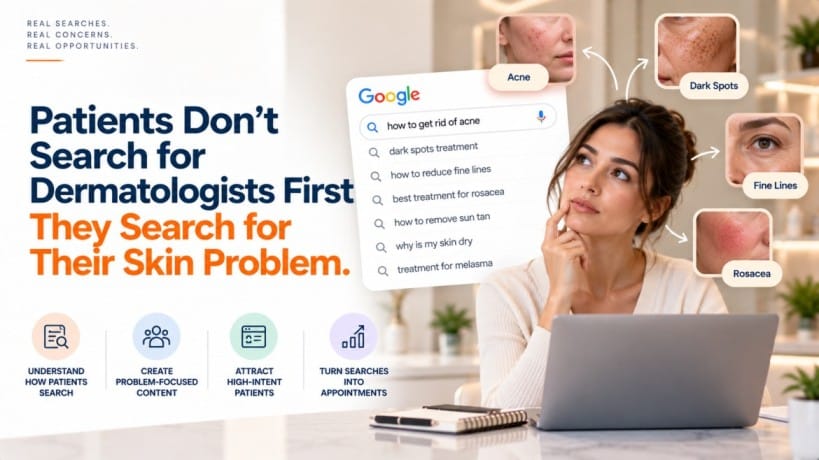
A patient may not begin their search by typing “dermatologist near me.” They may start with a problem: Why won’t my acne go away?, What causes sudden hair loss? How can I reduce acne scars? Or what treatment is available for pigmentation?
That shift creates an important opportunity for dermatologists.
Instead of building a marketing strategy around the single keyword “dermatologist,” modern dermatology practice marketing should focus on the conditions, concerns, questions, and treatments patients are already researching. This approach can help practices build visibility across traditional search, AI-powered search, social media, and local discovery.
As dermatology market trends continue to evolve, patients are becoming more informed before they ever contact a clinic. They may research symptoms, compare treatment options, read reviews, watch educational videos, and use AI-powered tools before deciding which dermatologist to consult.
The opportunity is to become visible during that research process—not only when the patient is ready to book.
Start With the Patient’s Problem, Not the Doctor’s Specialty
A traditional dermatology website often organizes information around services:
- Acne treatment
- Hair loss treatment
- Laser treatment
- Chemical peels
- Skin rejuvenation
- Injectables
- Scar treatment
These pages are important, but they may not reflect how every patient starts their research.
Someone with persistent acne may not know which treatment they need. Someone noticing hair thinning may not immediately understand whether they need medication, PRP, another treatment, or a clinical evaluation.
This is where condition-focused content becomes valuable.
A strong dermatology marketing strategy should answer the questions patients have before they know which treatment they need.
Build Content Around What Patients Ask
Create content around:
- Symptoms and common concerns
- Possible causes
- Treatment options
- When to consult a dermatologist
- What happens during an evaluation
- Treatment expectations
- Recovery considerations
- Common misconceptions
- Questions patients should ask
- Factors that may influence treatment decisions
The objective is to educate rather than immediately sell.
When your content helps a potential patient understand a problem, your practice can become part of their consideration set much earlier.
Build a Dermatology Content Journey That Moves Patients Toward Consultation
At the awareness stage, patients are trying to understand their problem before they start looking for a specific treatment or dermatologist.
Examples include:
- Why am I suddenly experiencing hair loss?
- What causes persistent adult acne?
- Why does pigmentation keep coming back?
- What can cause itchy or irritated skin?
The purpose at this stage is education. Content should help patients understand their concern, explore possible factors, and recognize when professional guidance may be appropriate..
Once patients understand the problem, they begin researching possible solutions.
This is where content about treatment options, consultations, procedures, expected timelines, preparation, recovery, and important considerations becomes useful.
The goal is to help patients move from simply understanding a condition to understanding what professional treatment may involve. Treatment pages, detailed guides, comparison content, FAQs, and educational videos can all support this stage.
At the decision stage, patients are evaluating which dermatologist or practice they should contact.
They may search for:
- Dermatologist near me
- Acne specialist in [city]
- Hair-loss dermatologist in [city]
- Dermatology clinic reviews
- Dermatologist consultation
- Skin treatment clinic
At this point, your website should make the next step clear. Doctor profiles, patient reviews, treatment information, consultation details, location information, and clear booking options can help reduce uncertainty.
The goal is not to pressure visitors into booking. It is to give them enough relevant information and confidence to take the next appropriate step.
Dermatology Content Strategy
Connect Problems to Appropriate Treatments
Condition-based content should not simply become another sales page.
Instead, explain how dermatologists evaluate a concern and what factors can influence treatment decisions.
For example, an acne resource can discuss different types of acne, possible contributing factors, professional evaluation, and treatment approaches. A hair-loss resource can explain why diagnosis matters before choosing a treatment.
Adapt Your Marketing to Dermatology Market Trends
Successful dermatology marketing requires keeping up with changes in how patients discover and evaluate healthcare providers.
Some important areas to watch include:
- AI-assisted search and information discovery
- Condition-based search behavior
- Local search and Google Business Profile visibility
- Doctor-led educational content
- Short-form educational video
- Patient reviews and reputation
- Personalized website experiences
- Treatment-specific landing pages
- Question-based content
- Mobile-first patient journeys
The important point is not to chase every new platform or trend.
Instead, identify which changes are actually influencing your patients and adapt your strategy accordingly.
Build a Stronger Dermatology Digital Marketing System
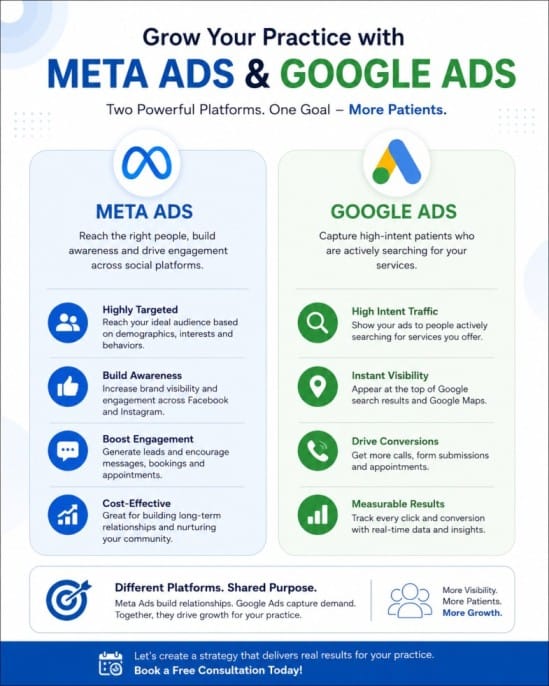
A successful dermatology digital marketing strategy should not depend on one channel.
SEO can capture people researching conditions. Local search can help patients find nearby practices. Social media can build familiarity. Educational content can establish expertise. Reviews can support trust. Landing pages can help convert high-intent visitors.
When these channels work together, the practice creates multiple opportunities for patients to discover and evaluate its services.
The objective is not simply to generate more impressions.
It is to create a connected digital experience that moves potential patients from problem awareness to education, trust, consideration, and consultation.
Final Thoughts
The biggest opportunity for dermatologists is to stop thinking only about people who are already searching for a clinic.
Patients often begin with uncertainty. They have a symptom. A concern. A question. Sometimes they do not even know what treatment they need.
That is where modern dermatology practice marketing can create value. By building condition-based content, answering real patient questions, demonstrating professional expertise, strengthening local visibility, and creating a clear path from education to consultation, dermatology practices can become visible earlier in the patient journey.
The future of dermatology marketing is not simply about being found when patients search for a dermatologist.
It is about being useful before they know they need one.
Stay updated with SunBPO Solutions for the latest trends, insights, and strategies to keep your business ahead of the curve!
Frequently Asked Questions (FAQs)
Why is dermatology digital marketing important?
Dermatology digital marketing helps practices reach potential patients where they research skin, hair, and treatment concerns. A combination of SEO, educational content, local search, social media, and conversion-focused website experiences can support visibility and patient acquisition.
How can dermatologists improve their marketing strategy?
Dermatologists can improve their strategy by understanding patient search behavior, creating condition-based content, strengthening local SEO, showcasing medical expertise, using patient questions as content ideas, and measuring consultations and leads rather than traffic alone.
Should dermatologists focus on SEO or social media?
Both can play different roles. SEO can help capture patients actively researching conditions and treatments, while social media can increase awareness, education, engagement, and familiarity with the practice. A connected strategy can make the channels more effective together.


0 Comments