




Table of Contents
Introduction
Search is changing rapidly. People are no longer relying only on traditional search engines to discover businesses, compare services, and find answers. They are increasingly exploring AI-powered search experiences to research products, evaluate service providers, and make informed decisions. For businesses, this creates a new opportunity to strengthen online visibility and reach potential customers.
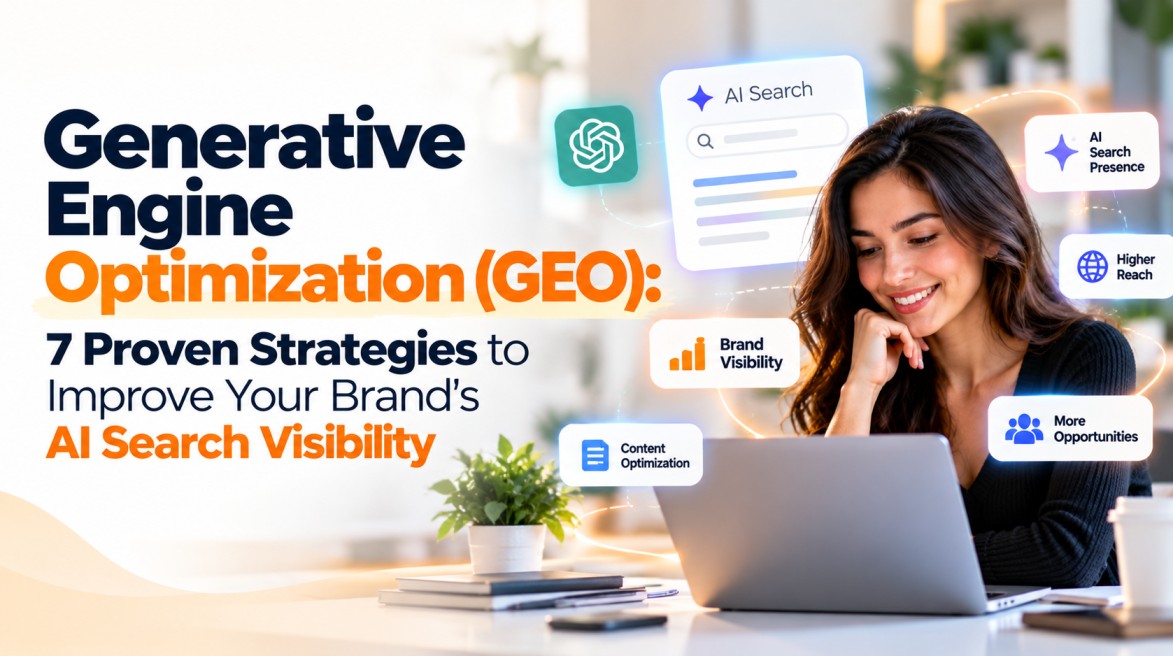
Generative Engine Optimization (GEO) is an emerging digital marketing approach that helps businesses make their content easier for AI-powered search systems to understand and potentially reference in generated answers. Although appearing in AI-generated responses cannot be guaranteed, creating useful content and establishing brand credibility can help businesses prepare for changing search behavior.
In this blog, we explore how generative engine optimization works, why it matters, and seven practical GEO strategies businesses can use to improve their digital presence.
What Is Generative Engine Optimization (GEO)?
Generative engine optimization is the practice of improving website content and online brand information so AI-powered search and answer systems can understand their relevance and potentially mention or reference them in generated responses.
Traditional search engine optimization focuses on improving visibility in search results through keyword research, technical SEO, relevant content, and website authority. GEO builds on these foundations by emphasizing clear answers, trustworthy information, original insights, and well-organized content.
For example, a digital marketing agency could publish a comprehensive guide explaining SEO strategies, website optimization, and lead generation. By providing accurate information, practical examples, and clear explanations, the agency can create a more useful resource for its audience while supporting discoverability across different search experiences.
Why Is GEO Important for Businesses in 2026?
AI-powered discovery is becoming an important consideration for digital marketers. Potential customers may ask AI tools to compare service providers, explain industry trends, or recommend solutions before visiting a company’s website. Businesses that focus exclusively on traditional search rankings may overlook these additional discovery opportunities.
However, GEO should complement traditional SEO rather than replace it. A technically sound website, helpful content, relevant keywords, and credible information remain essential elements of a strong digital marketing strategy.
Businesses that invest in generative engine optimization can improve their content quality, answer customer questions more effectively, and build a stronger online presence. The goal is not simply to appear in AI responses but to become a useful and trustworthy resource for potential customers.
7 GEO Strategies to Improve Your Brand’s AI Search Visibility
Identify the questions your target audience asks before purchasing a product or choosing a service. Develop content that addresses their concerns with direct answers, practical examples, and relevant explanations. For instance, a digital marketing agency could answer questions about SEO costs, lead generation, website performance, and campaign effectiveness. Content that solves real problems is more valuable than articles created only to include keywords.
Ensure your website has a clear structure, descriptive page titles, useful meta descriptions, relevant internal links, and properly organized headings. Fix broken links, address duplicate content, improve mobile usability, and check whether important pages can be crawled and indexed. A strong SEO foundation supports discoverability and makes your website easier for both visitors and search systems to navigate.
Generative engine optimization tools can help marketers identify content gaps, research customer questions, analyze competitors, and monitor search performance. Platforms such as Semrush and Ahrefs support keyword and competitor research, while Google Search Console provides useful information about organic impressions, clicks, and indexing. AI assistants can help develop content outlines and topic ideas, but their output should always be reviewed for accuracy. No tool can guarantee inclusion in AI-generated answers.
Build credibility by publishing original insights, expert commentary, relevant case studies, and verified information. Explain how your recommendations work and support factual claims with reliable sources. Keep business information accurate and update outdated content regularly. Avoid inventing statistics or exaggerating client results. Demonstrating genuine expertise helps readers assess your credibility and supports a trustworthy online presence.
Improve your brand’s presence through relevant industry publications, accurate business profiles, useful expert contributions, and legitimate backlinks. Consistent information about your company and services helps potential customers understand what you offer. Focus on earning mentions through valuable contributions rather than using spammy link-building practices or publishing low-quality guest posts solely to influence rankings.
Make your content easy to understand by using descriptive headings, short paragraphs, clear definitions, and relevant examples. AI tools can support research, content planning, and repurposing, but human review remains important. Check facts, verify sources, and add original expertise before publishing. Structured data may help search engines interpret eligible content, but it does not guarantee AI citations or enhanced search placement.
Measure traditional SEO performance alongside available AI discovery signals. Monitor organic impressions, clicks, keyword rankings, qualified leads, and conversions. Where analytics identify traffic from AI platforms, review whether those visits contribute to meaningful business outcomes. You can also test a consistent set of customer questions across selected AI platforms and record whether your brand appears. Treat these observations as directional because AI responses can change across searches and platforms.
GEO Strategy Allocation
How Generative Engine Optimization GEO Services Can Help Businesses
Businesses without an in-house SEO team may benefit from professional generative engine optimization GEO services. Depending on the provider, these services can include website audits, content optimization, keyword and question research, technical SEO improvements, brand authority development, and monitoring of available AI search visibility signals.
A reliable service provider should explain its process, establish realistic goals, and connect its work to measurable outcomes. For example, improving important service pages may help a business communicate its expertise more clearly, while better content planning can address unanswered customer questions.
Before choosing a provider, review its experience, reporting methods, and approach to content quality. Avoid agencies that promise guaranteed AI citations or instant placement in generated answers, because these outcomes cannot be controlled directly.
How to Choose the Right GEO Tools for Your Business
Choosing the right generative engine optimization tools depends on your goals, website size, and marketing budget. Businesses starting with GEO can use existing SEO platforms to identify keyword opportunities, examine competitors, and review technical issues. Analytics platforms can help measure website traffic and conversions, while AI assistants can support brainstorming and content planning.
Rather than purchasing multiple tools immediately, identify your biggest content and SEO challenges first. Select tools that address those needs, establish a performance baseline, and review the usefulness of their insights over time. Remember that tools support decision-making; they do not replace subject expertise, a sound content strategy, or careful implementation.
Final Thoughts
Generative engine optimization is an emerging part of digital marketing that encourages businesses to create clear, useful, and credible content for changing search experiences. By combining traditional SEO with effective tools, original expertise, and consistent performance measurement, brands can prepare for the growing role of AI-powered discovery.
Start by improving your most important website pages, answering genuine customer questions, and strengthening your online authority. With realistic expectations and a customer-focused approach, your business can build a stronger digital presence without relying on shortcuts or guaranteed-ranking promises.
Stay updated with SunBPO Solutions for the latest trends, insights, and strategies to keep your business ahead of the curve!
Frequently Asked Questions (FAQs)
Which generative engine optimization tools should businesses use?
Businesses can use tools such as Semrush and Ahrefs for SEO research, Google Search Console for organic search performance, analytics platforms for conversion tracking, and AI assistants for content planning. The best combination depends on business goals and budget.
What do generative engine optimization GEO services include?
Depending on the provider, services may include technical SEO, content optimization, keyword research, website audits, brand authority development, and monitoring of available AI search visibility signals.
Can a business guarantee visibility in AI search results?
No. AI-generated responses can vary by platform, question, and context. Businesses can improve their content quality and search accessibility, but no tool or service can guarantee inclusion in AI-generated answers.



0 Comments