




Table of Contents
Introduction
In today’s competitive online marketplace, businesses need more than a website and social media accounts to stand out. They need a consistent visual identity that captures attention, communicates value, and builds trust. This is where graphic designing business becomes an essential part of a successful digital strategy. From website banners and social media posts to advertisements, presentations, and brand identities, visual content influences how people perceive a business.
Understanding why graphic design is important helps businesses create meaningful connections with their audiences, communicate complex ideas clearly, and maintain a recognizable presence across digital platforms. Whether you are building a graphic design business or improving an established brand, a strategic approach to design can help strengthen your digital presence and support long-term growth.
Why Is Graphic Design Important for Businesses?
Graphic design combines typography, color, imagery, layout, and visual storytelling to communicate messages effectively. In digital marketing, these elements help businesses present their products and services in an attractive, understandable, and consistent way.
People often encounter a brand through a social media graphic, website banner, online advertisement, or email campaign before interacting with the business directly. Consistent visuals help audiences recognize a brand across different platforms. For businesses offering creative services, understanding graphic design requirements, client expectations, and marketing objectives is equally important. A successful design should not only look appealing but also communicate the right message to the right audience.
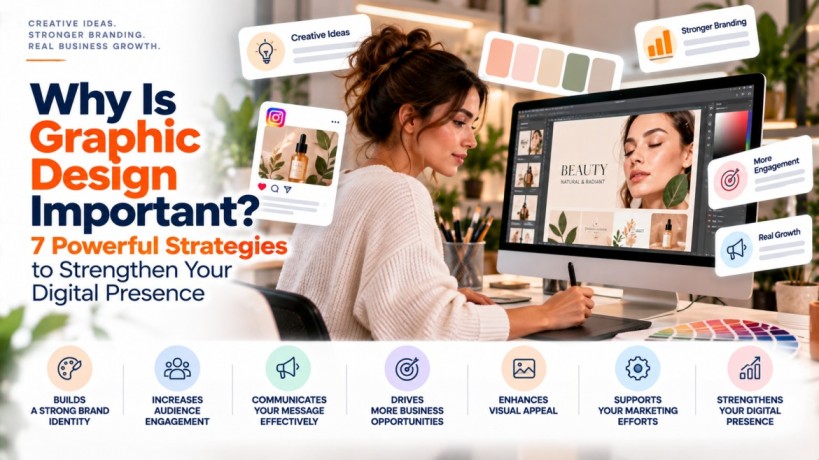
7 Essential Graphic Design Tips to Strengthen Your Digital Presence
A strategic approach to graphic design helps businesses improve communication, maintain consistency, and create a stronger online experience. These practical graphic design tips can help make visual content more effective.
7 Essential Graphic Designing Tips
Use consistent colors, typography, logos, and visual styles across your website, social media, advertisements, and marketing materials. Consistency makes your business easier to recognize across digital platforms.
Use professional layouts, high-quality images, and clear messaging. Avoid overcrowded graphics and excessive design elements that distract from your main message.
Create platform-appropriate posts, carousels, infographics, and promotional creatives. Use a clear visual hierarchy so viewers can quickly understand the main message.
Use diagrams, icons, illustrations, and structured layouts to simplify complex information. Ensure that visuals support navigation and do not slow down the website.
Communicate the offer, audience benefit, and next step clearly. Test different creative versions to identify which designs perform best for your campaign objectives
Use blog graphics, infographics, downloadable guides, and presentation visuals to make educational content easier to understand and share.
Maintain a cohesive visual style across platforms. Use readable text, accessible color contrast, authentic imagery, and designs that accurately represent your products or services.
Graphic Design Priorities
Graphic Design Trends Businesses Should Know
Keeping up with relevant graphic design trends can help businesses maintain a modern and competitive visual identity. However, following every new trend is not necessary. The best design choices depend on your brand personality, target audience, industry, and communication goals.
Some popular design directions include minimal layouts, bold typography, custom illustrations, authentic photography, subtle animation, and more accessible visual experiences. Businesses may also use AI-assisted design tools to explore ideas, generate concepts, and speed up parts of the creative process. Human judgment remains important for checking accuracy, originality, brand consistency, and the suitability of the final design.
For example, a professional consulting firm may benefit from clean layouts and restrained typography, while a lifestyle brand may use expressive colors and playful illustrations. The goal is to adapt useful trends without losing the visual identity that makes your business recognizable.
How Graphic Design Supports Your Digital Marketing Strategy
Graphic design is most effective when it is connected to a broader marketing plan. Every visual asset should have a clear purpose, whether that is increasing brand awareness, explaining a service, encouraging website visits, or supporting a lead generation campaign.
For example, a social media campaign might use a consistent set of graphics to introduce a problem, explain a solution, and invite the audience to learn more. A landing page can then continue the same visual style, helping visitors understand the offer without feeling that they have moved to an unrelated experience.
Design also supports different stages of the customer journey. Awareness-focused graphics introduce a brand, educational visuals explain its expertise, and conversion-focused designs guide visitors toward a consultation or purchase. The format, message, and call to action should match the audience’s needs at each stage.
Graphic Design Requirements for Professional Results
Understanding graphic design requirements before starting a project helps reduce revisions and keeps the final output aligned with business goals. Requirements vary depending on whether the project involves a logo, website banner, social media post, digital advertisement, or printed material.
Before beginning a design project, clarify the following essentials:
- Project objective: Define what the design should communicate or achieve.
- Target audience: Identify the people the design needs to reach.
- Brand guidelines: Confirm approved colors, fonts, logos, imagery, and tone.
- Platform and dimensions: Check the required format, size, aspect ratio, and file type.
- Content and call to action: Confirm the final text, key message, and desired next step.
- Technical specifications: Consider image resolution, file size, accessibility, and print requirements where applicable.
For a graphic designing business, documenting these details in a creative brief can improve communication with clients, establish clear expectations, and make project delivery more efficient.
Common Graphic Design Mistakes Businesses Should Avoid
One common mistake is prioritizing appearance over communication. A visually impressive graphic may still be ineffective if the audience cannot understand its message or identify the next step. Overcrowded layouts, inconsistent branding, too many fonts, and excessive text can reduce clarity.
Another mistake is using the same design without considering each platform. A website banner may not work well as a mobile social media post. Businesses should adapt dimensions, text placement, and visual hierarchy to the platform while maintaining consistent brand elements.
Finally, avoid judging success only by likes or visual appeal. Depending on the campaign, useful performance measures may include engagement rate, click-through rate, landing-page visits, inquiries, conversions, and cost per acquisition. Tracking these results helps businesses improve their creative decisions over time.
Final Thoughts
Graphic design is an important part of building a strong digital presence because it helps businesses communicate clearly, establish a recognizable identity, and create consistent experiences across online channels. By applying practical graphic designing tips, understanding relevant graphic design trends, and defining clear graphic design requirements, businesses can make their visual communication more effective. Whether you manage an established company or operate a graphic designing business, combining creativity with audience research and performance measurement can help build a professional brand experience that supports long-term growth.
Stay updated with SunBPO Solutions for the latest trends, insights, and strategies to keep your business ahead of the curve!
Frequently Asked Questions (FAQs)
What are the latest graphic design trends?
Common contemporary design directions include minimal layouts, bold typography, custom illustrations, authentic photography, subtle animation, and accessible design. The most suitable trends depend on your brand and audience.
What are the basic graphic design requirements for a project?
Most projects require a clear objective, target audience, brand guidelines, final content, platform specifications, dimensions, and the appropriate output format.
How can I grow a graphic designing business?
Build a strong portfolio, define your target market, establish clear service packages, maintain consistent branding, and promote your work through a professional website and relevant social media channels. Client communication and reliable delivery also help build long-term relationships.


0 Comments