





Table of Contents
Introduction
A professional dermatology website is often the first point of contact between a skin clinic and potential patients. Before booking an appointment, visitors want to understand the clinic’s services, learn about its specialists, and feel confident about the care they may receive. Effective dermatology website design builds this confidence through clear information, mobile-friendly navigation, professional visuals, and convenient appointment options. Beyond appearance, thoughtful dermatology web design can improve the patient experience, support search engine optimization (SEO), and make it easier for visitors to connect with your practice. Whether you manage a medical dermatology clinic or offer cosmetic skin treatments, your website should communicate credibility and guide visitors toward the next step.
Why Dermatology Website Design Matters
Choosing a dermatologist is a personal decision. Patients may be researching acne treatment, pigmentation concerns, chronic skin conditions, skin cancer screenings, or cosmetic procedures. They often look for information about provider qualifications, available treatments, clinic location, and appointment availability before deciding where to seek care.
A well-designed website answers these questions in a clear and accessible way. Consistent branding, readable text, relevant images, and straightforward navigation help visitors find what they need without unnecessary confusion. A professional website also supports digital marketing by providing a useful destination for people arriving from search engines, social media, online directories, and paid advertisements.
However, website design alone cannot guarantee new appointments. Results also depend on content quality, local competition, reputation, patient experience, and the effectiveness of the clinic’s marketing strategy.

7 Essential Features of an Effective Dermatology Website
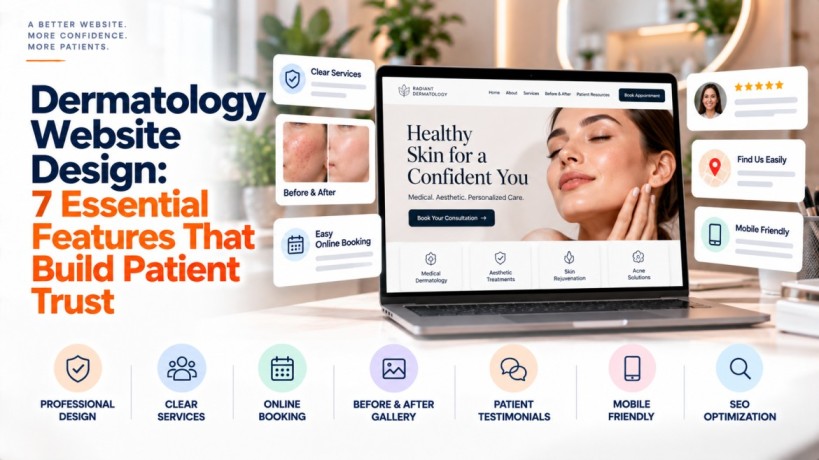
An effective dermatology website should combine attractive design with practical features that help patients find information, evaluate the clinic, and request appointments. The following elements can help create a more trustworthy and user-friendly online experience.
7 Essential Features
Use consistent colors, readable fonts, balanced spacing, and professional photographs to create a welcoming first impression. Keep the homepage organized and clearly communicate the clinic’s services.
Ensure the website adapts to smartphones, tablets, and desktop screens. Use readable text, easy-to-tap buttons, a simple menu, and clickable phone numbers so visitors can navigate without difficulty.
Create dedicated pages for relevant services, such as acne treatment, medical dermatology, pigmentation concerns, skin cancer screening, or cosmetic dermatology. Explain each service in accessible language and include a clear next step for interested visitors.
Display accurate dermatologist biographies, professional qualifications, clinic details, and authentic patient reviews where appropriate. Keep all information current and avoid unsupported claims or guaranteed treatment results.
Add visible calls to action such as “Book an Appointment” or “Request a Consultation.” Connect them to a reliable scheduling system or inquiry form and explain what happens after submission.
Optimize images, reduce unnecessary scripts, and maintain a logical page structure. Use descriptive titles, relevant headings, internal links, and useful content to support website usability and search visibility.
Use sufficient color contrast, descriptive image text, logical headings, and clearly labeled forms. Provide understandable privacy information and use suitable secure systems for appointment requests and sensitive information.
Dermatology Website Improvement Priorities
How a Dermatology Website Builds Patient Confidence
Trust is particularly important when people are choosing a healthcare provider. A website should help visitors understand who provides care, what services are available, and how to contact the practice. Transparent information about qualifications, clinic facilities, consultation procedures, and appointment policies can reduce uncertainty.
Patient education also plays an important role. Useful articles about common skin conditions, treatment preparation, and aftercare can help visitors understand their options. Medical content should be accurate, reviewed by qualified professionals when appropriate, and written to educate rather than diagnose individual visitors.
A strong dermatology website design strategy also avoids exaggerated promises. Genuine reviews, accurate service descriptions, and realistic explanations of treatment outcomes help establish credibility and encourage informed decisions.
Common Dermatology Website Design Mistakes to Avoid
Some websites lose visitors because important information is difficult to find. Overloaded homepages, confusing menus, outdated provider profiles, slow-loading images, and lengthy contact forms can create unnecessary friction. Excessive promotional language may also make healthcare content feel less credible.
Avoid using generic content that does not explain your clinic’s actual services or expertise. Ensure that contact information is consistent across the website and relevant business listings. Review website content periodically so treatment details, opening hours, and provider information remain accurate.
A useful website review should consider both appearance and functionality. Test the complete visitor journey, from landing on a service page to finding contact information and submitting an appointment request. Address the issues that create the greatest barriers first.
How Dermatology Web Design Supports SEO and Patient Acquisition
A visually appealing website is more effective when potential patients can discover it through search engines. Search-friendly dermatology web design combines a clear website structure with useful content, responsive layouts, and strong technical performance.
Each important service should have a dedicated page that addresses relevant patient questions. For local visibility, include accurate clinic contact information, location details, and an up-to-date Google Business Profile. Internal links between service pages and educational articles can help visitors discover related information while helping search engines understand the site.
Website performance should also be monitored regularly. Review mobile usability, page loading speed, relevant organic traffic, appointment-button clicks, and completed inquiry forms. If visitors read service pages but rarely contact the clinic, consider whether the calls to action are clear and whether the booking process is easy to complete.
Final Thoughts
Effective dermatology website design combines professional presentation, clear service information, mobile usability, trustworthy medical content, and convenient appointment options. A well-structured dermatology website helps visitors understand the practice, evaluate its credibility, and find the information they need. By investing in accessibility, privacy, SEO, and ongoing performance improvements, dermatology clinics can create a better online experience that supports patient confidence and their wider digital marketing goals.
Stay updated with SunBPO Solutions for the latest trends, insights, and strategies to keep your business ahead of the curve!
Frequently Asked Questions (FAQs)
What should a dermatology website include?
A dermatology website should include service information, dermatologist biographies, clinic contact details, appointment options, educational content, and clear privacy information in a mobile-friendly layout.
Why is mobile-friendly design important for dermatology clinics?
Mobile-friendly design allows visitors to browse services, read information, call the clinic, and request appointments from smartphones without struggling with small text or difficult navigation.
How can I improve my dermatology website’s SEO?
Improve loading speed, create useful service pages, use descriptive titles and headings, strengthen internal links, maintain accurate local business information, and regularly review website performance.



0 Comments