





Table of Contents
Introduction
Every website visitor has different needs, interests, and expectations. Some visitors want quick answers, while others need detailed information before making a purchase. A generic website experience may not address these differences, making it harder for businesses to engage visitors and turn them into customers.
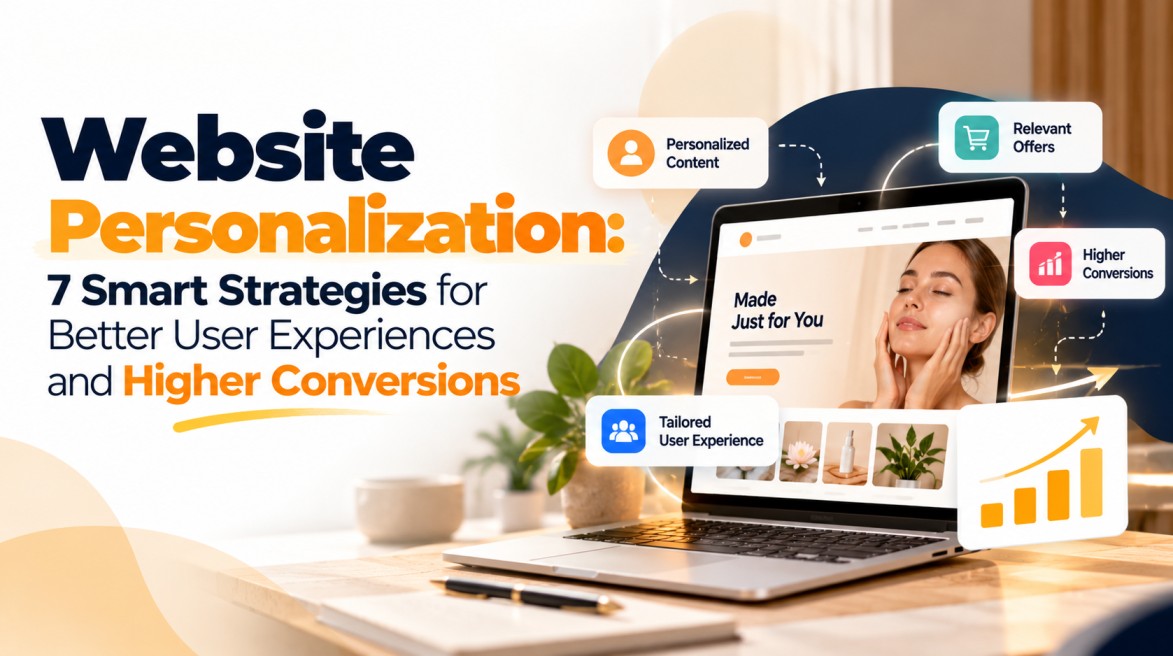
Website personalization helps businesses create more relevant digital experiences by adapting content, recommendations, and interactions to visitors’ needs. Through effective website content personalization and thoughtful design, businesses can help users find information faster without making their websites complicated.
In this guide, we explore seven practical strategies for creating a personalized website experience, choosing the right website personalization platform, and improving customer engagement while keeping website navigation simple.
What Is Website Personalization?
Website personalization is the process of adapting website content, features, and recommendations to make the experience more relevant to different visitors. Depending on the website, this may include personalized product recommendations, location-relevant information, tailored calls to action, or content based on visitors’ selected interests.
For example, an ecommerce store might recommend related products, while a digital marketing agency could display relevant case studies for visitors exploring a particular service. The goal is to help people discover useful information instead of presenting every visitor with the same generic experience.
Effective website personalization does not always require advanced technology. Even simple improvements, such as organizing service pages around customer needs or remembering selected preferences with appropriate consent, can make a website easier to navigate.
Why Website Personalization Matters in 2026
Customers increasingly expect online experiences to be relevant, convenient, and easy to use. Businesses that understand these expectations can create more useful digital journeys, reduce unnecessary browsing, and help visitors make informed decisions.
Website content personalization can be particularly valuable for businesses serving different customer groups. A service provider, for instance, can create dedicated pages for different industries, explain relevant benefits, and showcase examples that match each audience’s needs.
Personalization can also support conversion optimization by presenting appropriate information at the right stage of the customer journey. However, it should never come at the expense of privacy, accessibility, or usability. The best experience feels helpful rather than intrusive.
7 Practical Website Personalization Strategies to Improve Customer Experience
Start by understanding the different needs of your target audience. Create relevant website pages, resources, and service descriptions that address specific questions or challenges. For example, a digital marketing agency serving healthcare providers and ecommerce businesses could offer dedicated pages with industry-specific services, examples, and benefits.
This approach to website content personalization makes information easier to find without requiring complicated automation. Use customer feedback, website analytics, and search queries to identify the topics visitors care about most.
Relevant recommendations can help visitors discover products or services that match their interests. An ecommerce website might suggest complementary products, while a website development company could recommend related services such as SEO, landing page design, or website maintenance.
Keep recommendations focused and useful. Too many suggestions can distract visitors and make decisions more difficult. Start with a small number of relevant recommendations and review whether they improve engagement or conversions.
Calls to action should match the information visitors are viewing and the decisions they are ready to make. Someone reading an introductory blog may prefer a helpful guide, while a visitor exploring service details may be ready to request a consultation.
Use clear and relevant messages such as “Explore Our Services,” “Request a Consultation,” or “View Our Portfolio.” A personalized website design should make the next step obvious without overwhelming users with competing buttons or unnecessary pop-ups.
Returning visitors may appreciate features that help them continue where they left off. Depending on the website, these features could include recently viewed products, saved items, remembered preferences, or access to previously selected options.
These improvements can be useful for ecommerce stores, membership websites, and businesses with longer buying journeys. Collect and retain information only when appropriate, explain relevant data practices, and give users suitable control over their preferences.
Location-aware content can help businesses display relevant store details, regional services, or local contact information. Mobile visitors may benefit from simplified navigation, readable text, and easily accessible contact buttons.
The objective of personalized website design is to make the experience more convenient, not to restrict access or make assumptions about users. Keep essential information available to everyone and ensure your website works smoothly across different screen sizes.
A website personalization platform can help businesses manage audience segments, deliver relevant content, organize recommendations, and analyze visitor behavior. Depending on the platform, it may integrate with a content management system, customer relationship management software, or analytics tools.
AI can also help identify content opportunities and support personalized recommendations. However, the right technology depends on your website’s size, goals, and budget. Start with a practical requirement rather than purchasing complex software you may not need. Review automated recommendations for accuracy and avoid using sensitive personal information inappropriately.
Website personalization should be guided by evidence rather than assumptions. Monitor conversion rates, form submissions, engagement, repeat visits, and completed purchases to understand whether your changes are helping visitors.
Where possible, use A/B testing to compare different page experiences. Change one important element at a time and allow enough data to gather before drawing conclusions. Use the results to refine your content and design instead of introducing several complicated features at once.
Suggested Website Personalization Effort
How to Choose the Right Website Personalization Platform
Choosing a website personalization platform depends on your business objectives, website technology, and available resources. Some businesses may only need analytics and a content management system, while others may benefit from audience segmentation, recommendation engines, or integrations with customer relationship management tools.
Before selecting a platform, consider ease of use, integration options, reporting capabilities, scalability, data protection, and total cost. Make sure the platform supports your actual needs rather than adding unnecessary complexity.
Small businesses can begin with straightforward content improvements and relevant landing pages. As traffic and business requirements grow, they can consider more advanced personalization features. The most suitable platform is the one that helps your team deliver useful experiences and measure meaningful results.
How to Balance Personalization With Customer Privacy
Trust is essential to successful personalization. Visitors should understand how their information is collected and used, with appropriate consent and preference controls where required. Businesses should collect only the data they need for clear purposes, protect stored information, and follow applicable privacy requirements.
Avoid personalization that feels invasive or relies on sensitive assumptions. Use customer-provided preferences and relevant contextual information responsibly. Clear privacy notices and simple controls can help users feel more comfortable interacting with your website.
Final Thoughts
Website personalization helps businesses create more relevant experiences by connecting visitors with the information, products, and services they need. Through thoughtful website content personalization, clear calls to action, and an appropriate website personalization platform, businesses can improve usability without making their websites unnecessarily complicated.
Start with simple changes, measure their impact, and expand only when the results justify it. A well-planned personalized website design should always prioritize customer needs, accessibility, and privacy. When personalization genuinely helps visitors, it can support stronger engagement and more effective conversion journeys.
Stay updated with SunBPO Solutions for the latest trends, insights, and strategies to keep your business ahead of the curve!
Frequently Asked Questions (FAQs)
What is a website personalization platform?
A website personalization platform is software that helps businesses deliver and manage tailored website experiences. Depending on its capabilities, it may support audience segmentation, recommendations, content delivery, testing, and analytics.
How does personalized website design improve conversions?
Personalized website design can make navigation more relevant, highlight suitable services, and guide visitors toward appropriate actions. Its effectiveness should be measured through conversion tracking and testing.
Can small businesses use website personalization?
Yes. Small businesses can begin with targeted service pages, relevant calls to action, useful recommendations, and straightforward analytics. More advanced tools can be added when business needs and budgets justify them.



0 Comments