




Table of Contents
Introduction
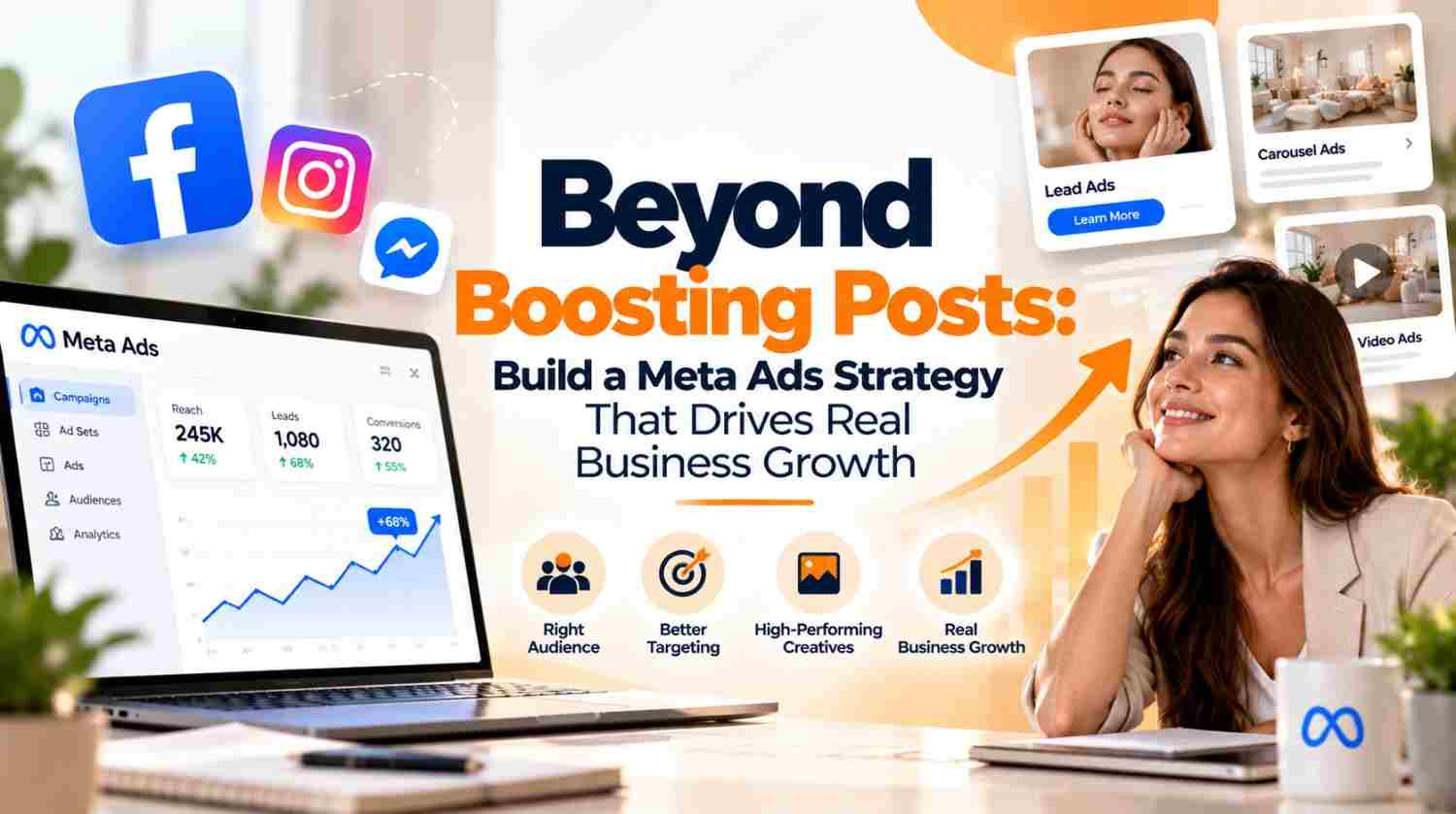
Getting likes, comments, and views on social media may look impressive, but these numbers do not always translate into business growth. Many businesses rely on boosting posts to increase visibility, hoping that more engagement will eventually bring customers. However, reaching more people does not necessarily generate qualified leads or sales.
This is where a well-planned Meta Ads strategy makes a difference. Facebook and Instagram advertising offer businesses opportunities to reach relevant audiences, promote products and services, generate inquiries, and guide potential customers toward taking action. However, successful campaigns require more than selecting a post and increasing its budget.
A results-focused approach combines audience research, compelling creatives, campaign objectives, conversion tracking, and continuous optimization. Instead of simply increasing visibility, businesses should build advertising campaigns around measurable goals that support long-term growth.
Why Boosting Posts Is Not the Same as Running a Meta Ads Strategy
Boosting posts is a convenient way to increase the reach of existing content. It can help businesses generate engagement, introduce their brand to new audiences, and promote announcements or special offers.
However, a complete Meta Ads strategy requires more planning and control. Through Meta Ads Manager, advertisers can build campaigns around objectives such as awareness, traffic, engagement, leads, app promotion, and sales. Available settings and optimization options depend on the campaign setup and current platform features.
The key difference is the business objective. Boosting posts may help more people see a particular piece of content, while a structured advertising campaign is designed around a specific action, such as submitting an inquiry, purchasing a product, or requesting a consultation.

7 Steps to Build a Meta Ads Strategy That Delivers Results
Before launching a campaign, decide what you want your advertising to achieve. A business looking for brand awareness needs a different approach from one trying to generate qualified leads or increase online sales.
For example, a dermatology clinic may focus on consultation inquiries, while an ecommerce business may prioritize completed purchases. Defining the objective helps determine the campaign structure, creative direction, and performance metrics.
Avoid choosing campaign objectives simply because they appear popular. Select an objective that matches the action you want your audience to take.
Reaching a large audience does not automatically mean reaching potential customers. Effective Meta advertising begins with understanding who is most likely to benefit from your product or service.
Consider customer interests, geographic location, age eligibility, purchasing behavior, and the problems your offering solves. Use available first-party customer information responsibly and follow Meta’s advertising policies and applicable privacy requirements.
You can also test different audience approaches, including broad targeting, custom audiences, and eligible lookalike audiences. Compare the quality of results rather than judging performance only by audience size.
Your advertisement needs to communicate its value quickly. Strong visuals, relevant messaging, and a clear offer can help people understand why they should pay attention.
Experiment with different creative formats, including short videos, carousels, product demonstrations, customer testimonials where permitted, and static graphics. Each creative should have a specific purpose rather than trying to communicate everything at once.
For example, a service-based business could create one advertisement highlighting a common customer problem and another explaining how its service addresses that problem. Comparing the results can help identify which message attracts more relevant prospects.
Getting someone to click your advertisement is only one part of the customer journey. What happens after the click can influence whether that person becomes a lead or customer.
Your landing page should continue the message introduced in the advertisement. Use a clear headline, relevant information, visible calls to action, mobile-friendly layouts, and simple inquiry forms.
For example, if an advertisement promotes a dermatology consultation, the landing page should make the clinic’s services, booking process, and contact options easy to understand. Avoid sending every campaign to a generic homepage when a more relevant destination is available.
The Meta Ads platform provides advertising opportunities across Facebook, Instagram, and other eligible placements. However, managing campaigns effectively requires more than publishing advertisements.
Meta Ads Manager gives advertisers a central place to create campaigns, organize ad sets, manage creatives, review performance, and adjust budgets. Businesses can use its reporting features to understand which campaigns are generating useful results.
Start with a realistic budget that your business can sustain while gathering enough performance data to evaluate the campaign. Test different creatives, messages, and eligible audience approaches without making too many changes at once.
Give campaigns sufficient time to generate useful information, while monitoring delivery and spending. Avoid increasing budgets aggressively based on a few early clicks or impressions.
Advertising decisions should be based on meaningful data rather than assumptions. Monitor metrics such as click-through rate, cost per lead, conversion rate, cost per acquisition, and return on ad spend where applicable.
Meta Pixel and Conversions API can help businesses measure eligible website actions and improve campaign measurement when implemented correctly. Their setup should respect applicable privacy requirements and consent obligations.
It is also important to assess lead quality. A campaign generating inexpensive inquiries may still perform poorly if those inquiries rarely become customers.
Not everyone makes a purchase or submits an inquiry during their first interaction with a brand. Some people need additional information, time, or reassurance before taking action.
Retargeting can help businesses reconnect with eligible audiences who have previously interacted with their website, advertisements, or social media content. Depending on the campaign and available data, businesses can show relevant follow-up messages to people who have demonstrated interest.
For example, an online store may remind eligible website visitors about products they viewed, while a service provider may share educational content explaining its process. Retargeting should remain relevant, respectful, and compliant with advertising and privacy policies.
Meta Ads Budget Allocation
Common Meta Ads Mistakes That Limit Business Growth
Even a well-designed advertisement can underperform when the overall campaign lacks direction. Common mistakes include relying entirely on boosting posts, targeting audiences without understanding their needs, using unclear offers, sending traffic to irrelevant landing pages, and measuring success through likes alone.
Another frequent issue is changing campaigns too often without allowing enough time to evaluate performance. Businesses may also overlook lead follow-ups, meaning that inquiries generated through advertisements are not contacted promptly.
A better approach is to review the complete customer journey, from the first advertisement impression to the final conversion. This helps identify whether the challenge lies in targeting, creative messaging, landing-page experience, or the sales process.
How the Meta Ads Platform Supports Long-Term Business Growth
The Meta Ads platform can support businesses at different stages of the customer journey. It can introduce new audiences to a brand, encourage interested people to explore its offerings, generate leads, and support repeat engagement.
However, sustainable growth requires more than advertising spend. Businesses need a relevant offer, a clear website experience, reliable follow-up processes, and a consistent approach to measuring results.
When these elements work together, a well-managed Meta Ads strategy becomes part of a broader digital marketing system rather than an isolated promotional activity.
Final Thoughts
Building a successful Meta Ads strategy requires more than boosting posts or increasing advertising budgets. Businesses need clear objectives, relevant audience targeting, compelling creatives, conversion-focused landing pages, and consistent performance tracking.
By using Meta Ads Manager effectively, testing campaigns, measuring meaningful outcomes, and improving the customer journey, businesses can make more informed advertising decisions. The real goal is not simply to reach more people but to turn relevant attention into valuable business opportunities.
Stay updated with SunBPO Solutions for the latest trends, insights, and strategies to keep your business ahead of the curve!
Frequently Asked Questions (FAQs)
What is the difference between boosting posts and running Meta Ads?
Boosting posts promotes existing social media content with a simpler setup. Running campaigns through Meta Ads Manager offers more control over campaign objectives, audience settings, placements, measurement, and optimization.
Is the Meta Ads platform suitable for small businesses?
Yes. Small businesses can use the Meta Ads platform to promote local services, generate inquiries, build brand awareness, and reach relevant audiences. Campaign budgets and objectives should match their business goals.
How can businesses improve their Meta Ads performance?
Businesses can improve performance by testing different creatives, refining audience approaches, optimizing landing pages, tracking conversions, following up with leads, and reviewing campaign data regularly.


0 Comments