





Table of Contents
Introduction
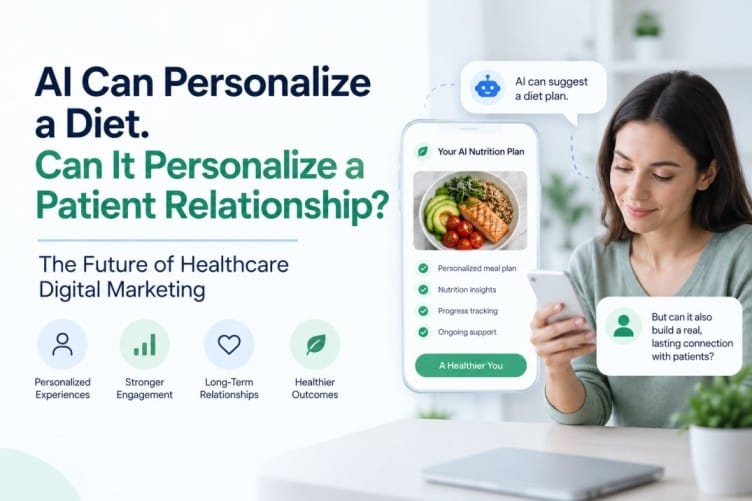
Artificial intelligence is changing how healthcare professionals communicate with patients. From meal recommendations to appointment reminders, technology can make information more relevant and accessible. However, healthcare is not only about delivering the right information. It is also about building trust, understanding individual concerns, and creating a meaningful patient relationship.
This raises an important question: AI can personalize a diet, but can it personalize a patient relationship?
The answer is that AI can support personalization, but it cannot replace human empathy, professional judgment, or genuine connection. With the right strategy, AI-powered personalization, patient relationship management, AI personalized content, and AI in nutrition can help healthcare practices improve patient experiences while supporting long-term digital growth.
What Is AI Powered Personalization in Healthcare?
AI-powered personalization uses artificial intelligence to deliver information and communication based on a person’s interests, preferences, behavior, and needs.
In a nutrition practice, this may include meal suggestions based on dietary preferences, lifestyle habits, or wellness goals. In a dermatology or healthcare practice, this may involve displaying relevant educational content, sending appointment reminders, or guiding website visitors to suitable services.
However, personalization should always be responsible. AI should not make assumptions about a patient’s health or provide unverified medical recommendations. Sensitive information must be protected, and qualified professionals should remain involved in clinical decisions.
The best approach is to use AI to support healthcare professionals—not to replace them.
Making Nutrition Education More Accessible
AI can help transform complex nutrition information into easy-to-understand explanations. A nutrition practice may use it to create simple guides, frequently asked questions, newsletters, or social media content.
All content should be reviewed by a qualified nutrition professional before publication. Accuracy and context are essential when discussing health-related topics.
The Role of Patient Relationship Management
Not every patient needs the same information. A new patient may need consultation instructions, while an existing patient may need follow-up guidance or educational resources.
AI can help segment communication based on a patient’s stage in the journey. This makes messages more relevant and reduces unnecessary communication.
AI-powered systems can assist with appointment reminders, rescheduling requests, and basic questions about clinic services. This can reduce administrative workload and make the booking process easier.
However, patients should always have access to a human team member when their questions are complex, sensitive, or related to clinical care.
Consistent communication can help patients feel supported after their first appointment. A practice that follows up professionally and provides useful information is more likely to build long-term relationships.
AI can help maintain this consistency, but the tone should remain personal, respectful, and aligned with the practice’s values.
Elements of a Strong Patient Relationship
How AI Personalized Content Supports Digital Marketing
AI personalized content refers to content adapted to the interests, questions, or behavior of a specific audience.
For healthcare practices, this may include personalized email campaigns, website recommendations, educational resources, social media messages, and follow-up content.
For example, a nutrition practice may create separate content for people interested in healthy meal planning, sports nutrition, digestive wellness, or family nutrition. A dermatology clinic may provide different educational resources for patients researching acne, pigmentation, hair loss, or cosmetic treatments.
Personalized content can improve engagement because it gives users information that is more relevant to their needs.
However, healthcare content must never become overly promotional or make unsupported medical claims. It should educate first and encourage patients to seek professional advice when necessary.
Connecting AI Personalization With Long-Term SEO Growth
AI can support long-term SEO growth when it is used to improve the quality and relevance of website content. It can help identify common questions, organize content ideas, analyze search intent, and discover gaps in existing resources.
However, publishing large amounts of generic AI-generated content is not a sustainable SEO strategy. Search engines and users value content that is useful, accurate, original, and trustworthy.
Healthcare websites should focus on:
- Clear and helpful service pages
- Expert-reviewed educational content
- Frequently asked questions
- Accurate professional information
- Local search optimization
- Genuine patient reviews
- Fast and mobile-friendly website experiences
AI should assist with research and content planning, while qualified professionals provide the expertise and final review.
Building Trust With Human-Led AI
Trust is especially important in healthcare. Patients need to know that the information they receive is accurate and that their concerns will be handled responsibly.
A strong AI strategy should include clear privacy practices, human oversight, accurate information, and transparent communication. Patients should understand when they are interacting with an automated system and how they can reach a real professional.
AI can help a practice become faster and more organized, but trust comes from the way the practice treats people.
The strongest healthcare brands use technology to make communication easier while keeping empathy and professional care at the center of the experience.
Industry Insight: Personalization Must Feel Helpful, Not Intrusive
Personalization can improve the patient experience, but excessive or poorly managed personalization may feel uncomfortable. Patients do not want to feel that every online action is being monitored or that their health information is being used without proper protection.
Healthcare practices should collect only the information they need, use it responsibly, and follow applicable privacy requirements. Personalization should make the patient journey simpler—not make patients feel watched.
The future of healthcare marketing will depend on finding the right balance between convenience, privacy, technology, and human connection.
Final Thoughts
AI can personalize information, support nutrition planning, improve communication, and make healthcare marketing more efficient. However, it cannot replace the empathy, judgment, and trust that define a strong patient relationship.
By using AI powered personalization, patient relationship management, AI personalized content, and AI in nutrition responsibly, healthcare practices can create more relevant patient experiences while supporting long-term SEO growth.
The goal is not to make healthcare feel automated. The goal is to use technology to deliver better information, stronger communication, and more meaningful human care.
Stay updated with SunBPO Solutions for the latest trends, insights, and strategies to keep your business ahead of the curve!
Frequently Asked Questions (FAQs)
How can AI in nutrition support nutrition professionals?
AI in nutrition can assist with meal-planning suggestions, educational content, follow-up communication, and organizing patient information. Professional review is still necessary for safe and appropriate nutrition guidance.
What are AI personalized content examples?
Examples include personalized email messages, educational resources, website recommendations, appointment reminders, social media content, and follow-up information based on patient interests.
Can AI personalization improve long-term SEO growth?
Yes. AI can support content planning, search intent research, and relevant educational content. However, long-term SEO growth requires accurate, original, expert-reviewed content and a strong overall website experience.

0 Comments