





Table of Contents
Introduction
In today’s digital world, businesses need more than a website to attract customers and build brand awareness. They need valuable content that educates audiences, answers questions, and encourages people to take action. From social media posts and videos to blogs, infographics, and email newsletters, digital content creation helps brands communicate with their audiences across multiple online platforms.
However, creating content consistently requires more than creativity. Businesses need the right tools, a clear strategy, an understanding of their audience, and a way to measure results. Understanding the different content formats, choosing suitable online content creation tools, and developing a practical publishing strategy can help businesses build a stronger online presence and support long-term growth.
What Is Digital Content Creation?
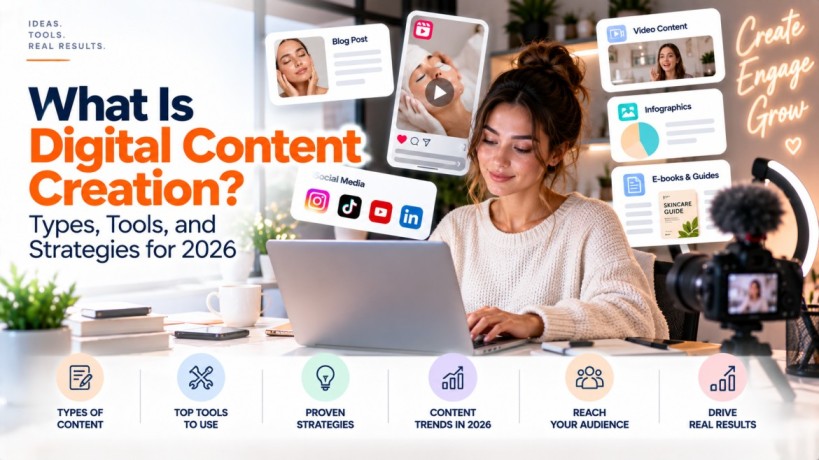
Digital content creation is the process of planning, producing, publishing, and improving content for digital platforms. It includes creating written, visual, audio, and video materials designed to inform, entertain, educate, or persuade a specific audience.
For businesses, content creation supports several marketing goals, including increasing website traffic, improving search visibility, generating leads, strengthening brand identity, and building customer relationships. Effective content addresses a genuine audience need rather than simply filling a publishing calendar.
For example, a digital marketing agency might publish an SEO guide, create a short educational video, share an infographic on LinkedIn, and send a related email newsletter. Each format communicates useful information while supporting the same broader marketing objective.
Build a Digital Content Creation Strategy That Works
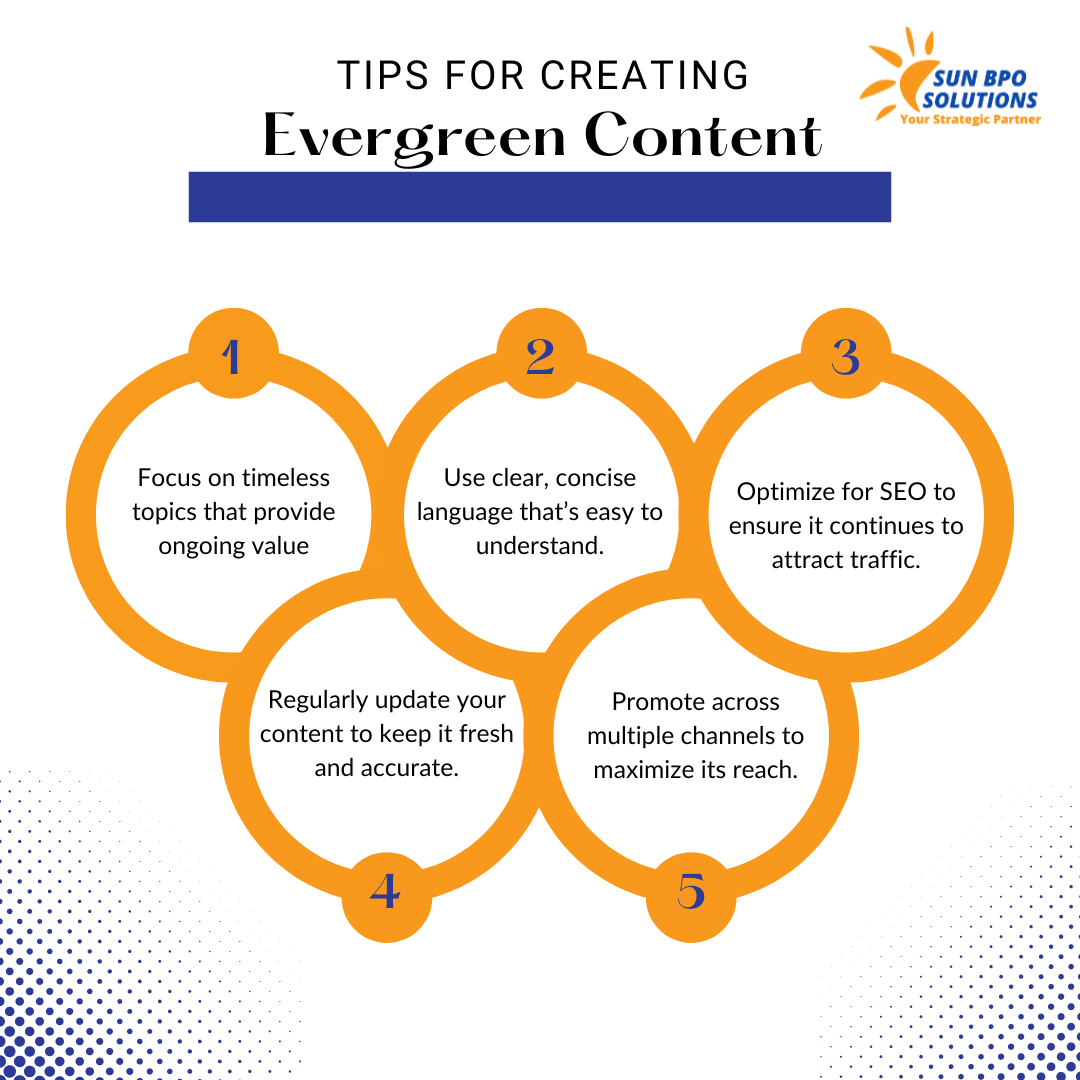
Identify your audience’s challenges, interests, questions, and purchasing concerns. Customer feedback, sales conversations, search queries, and social media comments can reveal useful content opportunities.
Decide whether your priority is brand awareness, organic traffic, lead generation, customer education, or retention. Different goals require different formats and performance indicators.
A content calendar helps maintain consistency and balance across formats and platforms. Plan topics, publishing dates, content owners, calls to action, and distribution channels in advance.
Apply relevant SEO practices to website content, including descriptive titles, clear headings, helpful internal links, and naturally placed keywords. Then repurpose strong ideas into different formats. A detailed blog post, for example, can become a carousel, a short video, and an email newsletter.
Digital Content Marketing Focus
Types of Digital Content Businesses Can Create
Different content formats serve different purposes. Choosing the right format depends on your audience, resources, platform, and marketing goals.
- 1. Written Content
Written content includes blog posts, website pages, articles, email newsletters, case studies, and social media captions. It can explain complex topics, answer customer questions, and help businesses build organic search visibility.
Well-researched blog content is particularly useful for targeting relevant search queries and demonstrating subject knowledge. Clear writing, accurate information, useful examples, and logical headings help readers understand the subject.
- 2. Visual Content
Visual content includes graphics, infographics, carousels, illustrations, presentations, and branded images. These formats can simplify information and make it easier for audiences to understand key messages quickly.
For example, an infographic explaining the stages of a customer journey may communicate information more clearly than a lengthy paragraph alone.
- 3. Video and Audio Content
Short-form videos, tutorials, webinars, podcasts, interviews, and product demonstrations help brands explain ideas through sound and visuals. Video is especially useful when a concept benefits from a demonstration or when businesses want to introduce the people behind their brand.
The most effective format is not always the most complicated. A clear, useful video recorded with a smartphone can provide value when the message, sound, and presentation are strong.
- 4. Interactive and User-Generated Content
Quizzes, polls, calculators, surveys, customer reviews, and user-submitted content encourage audience participation. They can also help businesses understand customer preferences and identify common questions.
When using customer-created content, obtain appropriate permission and represent customer experiences accurately.
Best Online Content Creation Tools for Businesses
The right tools can simplify planning, production, collaboration, and performance tracking. Businesses do not need every available application; they need a practical toolkit that supports their workflow and content goals.
- Design and Video Editing Tools
Canva helps users create branded graphics, presentations, infographics, and social media carousels. Video editing applications such as CapCut can support short-form video production, captions, and basic editing.
These tools are useful for businesses that want to maintain consistent branding without making every content task unnecessarily complicated.
- Writing and Content Planning Tools
Writing assistants and generative AI tools can help brainstorm topics, organize outlines, and refine drafts. However, AI-generated content should be reviewed for accuracy, originality, brand voice, and usefulness before publication.
Project management tools such as Trello and Asana can help teams organize content calendars, assign responsibilities, and track deadlines. These tools make it easier to maintain a consistent publishing schedule.
- SEO and Analytics Tools
Google Search Console helps website owners understand search performance, while Google Analytics can provide insight into website traffic and user interactions. Keyword research tools can help identify relevant topics and search terms.
Choosing the right digital content creator tools means considering the complete workflow, from researching an idea and producing content to publishing it and evaluating its performance.
Measure Content Performance and Improve Results
Publishing content is only part of the process. Reviewing performance helps businesses understand what audiences find useful and where improvements are needed.
For website content, track organic traffic, search impressions, clicks, engagement, and conversions. For social media, monitor reach, meaningful engagement, profile visits, and relevant website referrals. For email, evaluate clicks, conversions, and other metrics aligned with the campaign goal.
Use these findings to update existing content, test new formats, and prioritize topics that produce meaningful results. A smaller collection of helpful, well-maintained resources can be more valuable than a large volume of repetitive posts.
Final Thoughts
Digital content creation helps businesses communicate their expertise, build relationships, and remain visible across online channels. But long-term results depend on more than publishing frequently. They require audience understanding, useful information, consistent execution, appropriate tools, and ongoing improvement.
By combining suitable online content creation tools with a clear strategy and meaningful performance measurement, businesses can create content that supports both audience needs and business objectives. Start with a few formats your team can manage well, learn from the results, and expand your approach as your content strategy develops.
Stay updated with SunBPO Solutions for the latest trends, insights, and strategies to keep your business ahead of the curve!
Frequently Asked Questions (FAQs)
What is digital content creation?
Digital content creation is the process of planning, producing, and publishing digital materials such as blogs, videos, graphics, social media posts, podcasts, and emails for a specific audience.
What are the main types of digital content?
The main types include written content, visual content, video and audio content, and interactive or user-generated content. Businesses can combine these formats based on their goals and audience preferences.
How can businesses improve their digital content creation strategy?
Businesses can improve their strategy by researching audience needs, setting measurable goals, maintaining a content calendar, repurposing useful material, optimizing for search intent, and reviewing performance regularly.


0 Comments