





Table of Contents
Introduction
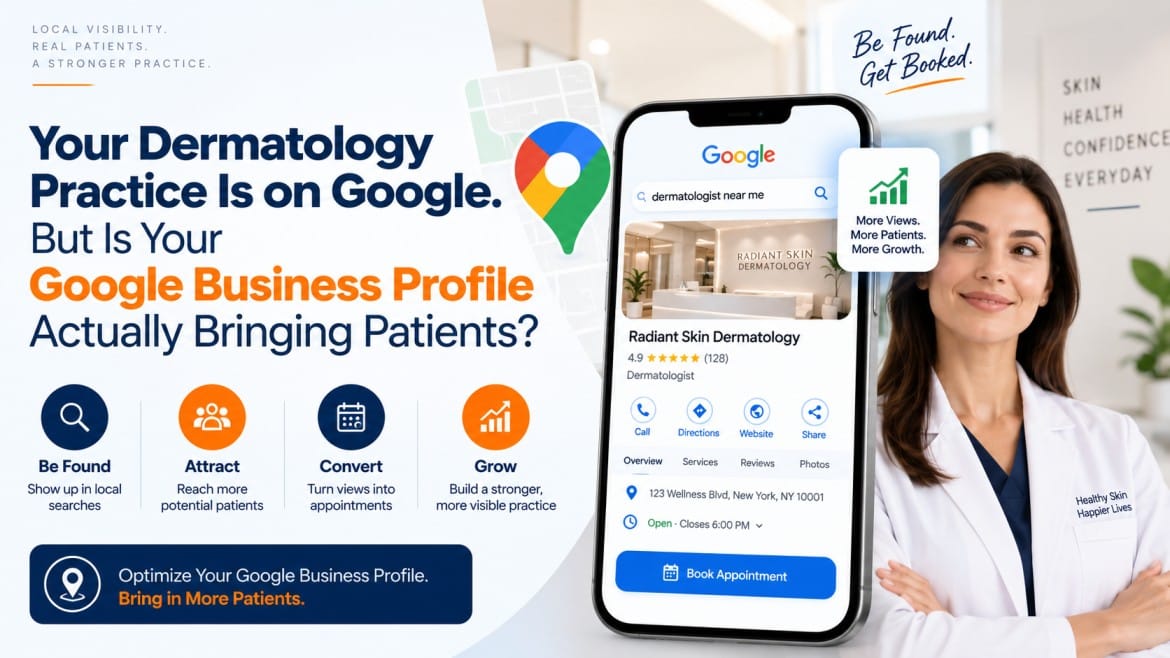
A patient searches for a dermatologist nearby, finds your practice on Google Maps, checks your reviews, looks at your location, and may even request Google Maps directions. But what happens next?
Finding your practice online does not automatically mean that the patient will visit your website, call your office, or book an appointment. There can be several points where a potential patient loses interest or faces unnecessary friction.
This is why dermatologist marketing needs to focus on the complete patient journey, not just search visibility. Your Google Business Profile, website, reviews, service pages, social media, and appointment process should work together to guide patients from discovery to action.
A strong dermatology digital marketing strategy can help dermatology practices identify these gaps, improve the online patient experience, and create a smoother path from local search to appointment.
Where the Patient Journey Begins: Google Maps
For local searches, Google Maps can be one of the first places a potential patient discovers a dermatology practice. Patients often want quick answers: Where is the practice? What services are available? Is it easy to reach? What are other patients saying?
Your Google Business Profile should provide accurate and useful information that makes the next step simple.
- Complete Your Profile: Keep your practice name, address, phone number, hours, website, and services accurate and current.
- Make Google Maps Directions Easy: Ensure your address is correct so patients can easily use google maps directions to find your practice.
- Show Relevant Services: Clearly communicate the dermatology services you offer so patients can quickly understand whether your practice meets their needs.
- Build Trust With Reviews: Genuine reviews can help potential patients evaluate your practice before deciding whether to learn more.

The Trust Check: Why Patients May Leave
Before booking an appointment, potential patients often want reassurance that they have found the right practice. A lack of trust signals can create hesitation even when your practice appears prominently in local search.
- Show Provider Expertise: Introduce your dermatologists clearly and explain their professional qualifications, areas of expertise, and experience.
- Use Authentic Reviews: Display genuine patient feedback appropriately while protecting privacy and following applicable guidelines.
- Provide Helpful Information: Answer common questions about services, appointments, locations, and what patients can expect.
- Maintain Professional Branding: Keep your website, Google profile, social channels, and other online assets visually and professionally consistent.
The First Click: Is Your Website Ready?
Patients should be able to quickly find important information such as services, provider details, location, contact information, and appointment options.
Each important dermatology service should have a dedicated and informative page. These pages can answer common questions while supporting relevant search terms and helping visitors understand what your practice offers.
Many local searches happen on mobile devices. Your website should be easy to read, navigate, and use on smaller screens, with important actions clearly visible.
Potential Patient Journey Focus Areas
Connect Google Maps, SEO, and Your Website
The patient journey works best when local search and your website are treated as one connected system.
- Strengthen Local SEO: Optimize relevant location and service pages so they support the searches your practice wants to attract.
- Build Internal Links: Connect service pages, educational articles, provider pages, and location content to make navigation easier.
- Maintain Consistent Information: Keep business details consistent across your Google profile, website, and relevant online directories.
- Create Helpful Content: Publish educational resources that answer patient questions and strengthen your wider SEO strategy.
Keep Your Google Maps Information Updated
A practice can lose potential patients when its online information becomes outdated. Changes to office hours, services, phone numbers, locations, or appointment processes should be reflected across your digital profiles.
- Keep Information Consistent: Matching information across Google, your website, and other platforms creates a more reliable patient experience. stages. Someone researching a skin concern may need educational information, while someone searching for a dermatologist nearby may be ready to compare practices.
- Make a Google Maps Update When Details Change: Review important business information whenever your practice changes its hours, location, contact details, or services.
- Check Your Location Information: Make sure your address is accurate so patients using google maps directions are guided to the correct location.
- Review Your Website Link: Ensure the profile sends visitors to the correct and relevant page.
Use Social Media to Support the Patient Journey
Dermatology social media can reinforce trust after a potential patient discovers your practice through local search. Your social profiles may be another place where people evaluate your expertise and professionalism.
- Share Educational Content: Explain common dermatology topics in simple, useful formats.
- Show Practice Expertise: Introduce providers, share professional updates, and highlight appropriate educational activities.
- Guide Users to Your Website: Connect useful social content with relevant service pages, blogs, or appointment resources.
- Keep Your Message Consistent: Make sure your social media presence supports the same professional image communicated through your website and Google profile.
Track Where Patients Are Dropping Off
You cannot improve the patient journey if you do not know where the problems are occurring. Instead of focusing only on traffic, look at the complete path from discovery to action.
- Marketing Channels: Identify whether organic search, social media, referrals, or paid campaigns are contributing to patient inquiries.
- Google Maps: Monitor available profile interactions such as website visits, calls, directions, and other local actions.
- Website: Review important landing pages, engagement, mobile experience, and navigation behavior.
- Booking: Track appointment requests, completed bookings, phone inquiries, and other meaningful conversion actions.
Final Thoughts
Getting discovered on Google Maps is valuable, but it is only the beginning of the patient journey. If potential patients are finding your practice but not booking, the problem may be somewhere between local search visibility and the final appointment step.
Review every stage: your Google Business Profile, reviews, website, service pages, mobile experience, content, calls to action, location information, and booking process.
A regular Google Maps update can also be important when your practice information changes. Accurate details help patients find the right location and reduce confusion during the journey.
When dermatology digital marketing, local SEO, dermatologist marketing, social media, website optimization, and appointment conversion work together, your practice can create a more connected patient experience.
For sustainable long-term SEO growth, the focus should not be only on ranking higher. It should also be on making it easier for the right patients to move from search to website, from website to trust, and from trust to appointment.
Stay updated with SunBPO Solutions for the latest trends, insights, and strategies to keep your business ahead of the curve!
Frequently Asked Questions (FAQs)
How often should a dermatologist make a Google Maps update?
A google maps update should be considered whenever important practice information changes, such as business hours, address, phone number, services, or other details displayed through the business profile.
How can dermatologists improve their local marketing?
Dermatologists can combine local SEO, Google Business Profile optimization, genuine reviews, useful website content, social media, accurate business information, and a simple appointment process as part of their broader dermatologist marketing strategy.
How does dermatology digital marketing support patient acquisition?
Dermatology digital marketing connects multiple online channels, including search, websites, social media, content, local listings, and paid campaigns. The goal is to create a consistent digital journey that helps potential patients discover and engage with the practice.



0 Comments