





Table of Contents
Introduction
Search engine optimization continues to be one of the most reliable ways for businesses to attract organic traffic and build digital authority. However, modern search algorithms require more than basic keyword placement. A successful SEO growth strategy combines technical optimization, valuable content, and smart linking practices.
Businesses that implement a structured SEO strategy marketing approach are able to rank higher, attract targeted visitors, and convert traffic into long-term customers.
Understanding the core elements of an effective SEO framework can help brands stay competitive in increasingly crowded search results.
What Is an SEO Strategy?
An SEO strategy is a comprehensive plan designed to improve a website’s visibility in search engine results.
It typically includes:
- Keyword research
- Content optimization
- Technical improvements
- Internal and external linking
- Performance tracking
A structured approach ensures every optimization effort contributes to long-term growth.

Why Businesses Need an SEO Growth Strategy
Online competition is growing rapidly. Without a defined SEO plan, websites struggle to appear in search results.
Benefits of a strong SEO growth strategy include:
- Higher organic visibility
- Consistent website traffic
- Improved brand credibility
- Better lead generation
- Long-term marketing ROI
Businesses that invest in SEO strategy marketing gain sustainable digital advantages. authority. AI handles data-heavy optimization.
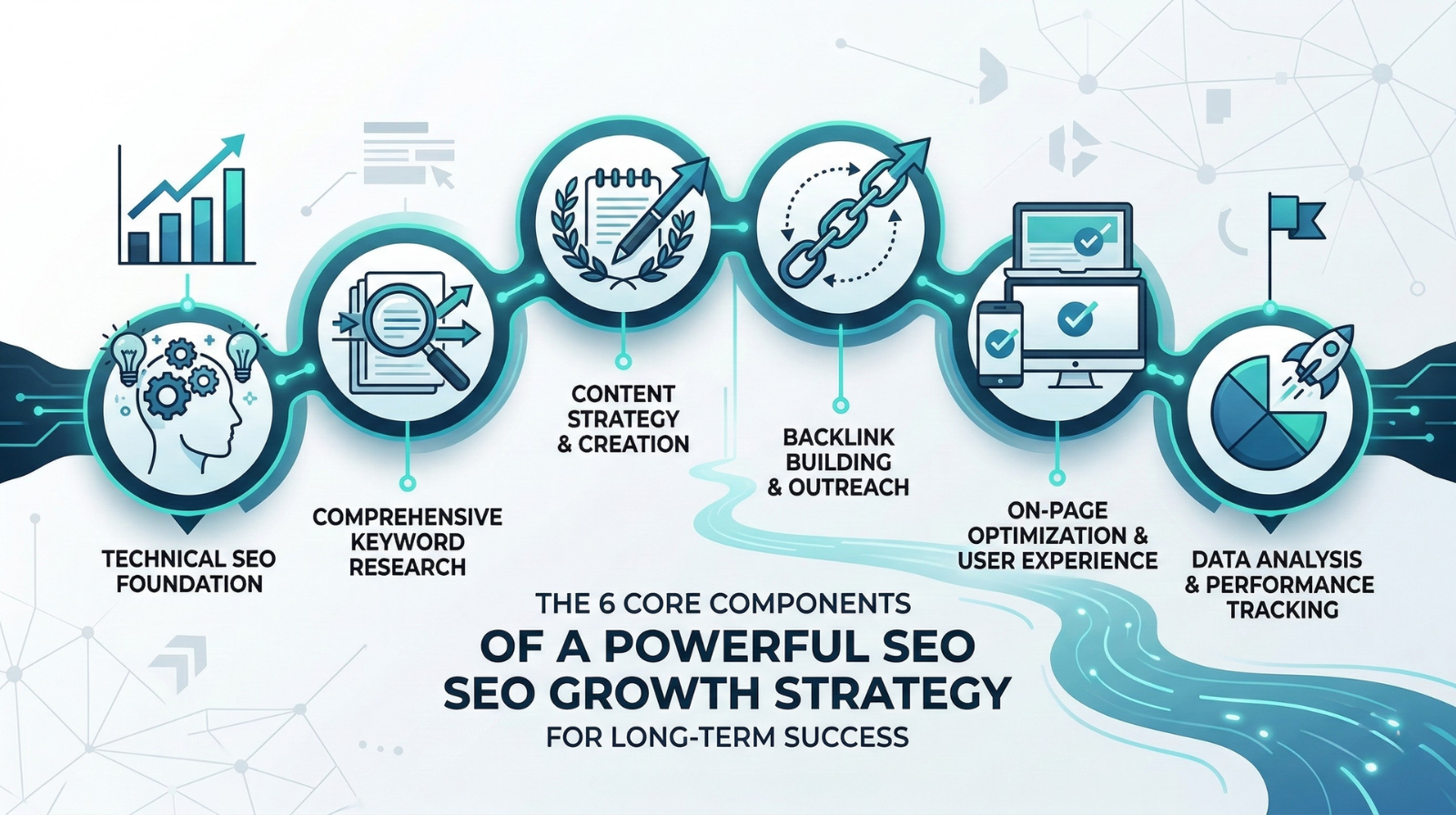
The 6 Basic Components of a Strong SEO Strategy
Keyword research is the foundation of every SEO campaign.
Identifying the right SEO strategy keywords helps businesses understand what their audience is searching for. Targeting high-intent long-tail keywords increases the chances of ranking and attracting qualified visitors.
Effective keyword research also helps structure website content and blog topics that match user search intent.
Content remains one of the most influential ranking factors.
Search engines prioritize content that provides value, answers user questions, and maintains strong readability. A strong SEO strategy marketing plan focuses on producing educational and authoritative content consistently.
Well-structured articles, guides, and case studies improve both user engagement and ranking potential.
On-page SEO ensures that search engines can clearly understand the relevance of each webpage.
Important elements include:
- Meta titles and descriptions
- Header tags and keyword placement
- Image optimization
- Internal linking structure
- Content readability
Proper optimization helps search engines index and rank pages efficiently.
Technical SEO improves website functionality and accessibility.
Important technical factors include:
- Fast page loading speed
- Mobile-friendly design
- Secure HTTPS protocol
- XML sitemap structure
- Crawlability and indexing
A strong technical foundation supports the entire SEO growth strategy.
A well-structured SEO linking strategy strengthens website authority.
Internal links help search engines understand content relationships, while backlinks from authoritative websites increase credibility.
Common linking methods include:
- Internal content linking
- Guest blogging
- Digital PR outreach
- Resource link building
A balanced linking strategy improves domain authority and search rankings.
SEO success depends on ongoing monitoring and improvement.
Using analytics tools helps marketers track:
- Organic traffic growth
- Keyword rankings
- User behavior
- Conversion metrics
- Content performance
Insights from SEO analytics allow businesses to refine strategies and improve long-term results.
Components of a Strong SEO Growth Strategy
Common SEO Mistakes Businesses Make
Keyword stuffing
Ignoring technical optimization
Weak internal linking
Publishing low-value content
Not tracking analytics
Failing to update outdated pages
Avoiding these mistakes strengthens search performance.
Tips to Improve Your SEO Strategy
Focus on search intent
Use long-tail SEO strategy keywords
Build strong internal linking
Improve website speed
Create consistent content
Track analytics insights
Update existing content regularly
SEO is a long-term growth process.
Future of SEO Strategy in 2026
Search engines are evolving rapidly with AI and advanced ranking systems.
Key trends include:
- AI-powered search results
- Voice search optimization
- Semantic keyword targeting
- Visual search technology
- Data-driven SEO strategies
Businesses that adopt advanced SEO strategy marketing techniques will remain competitive.
Final Thoughts
A strong SEO framework requires more than keywords alone. By combining content creation, technical optimization, and an effective SEO linking strategy, businesses can build a powerful SEO growth strategy that drives sustainable online visibility.
Successful SEO is built on consistency, analytics, and long-term planning.
When executed correctly, SEO becomes one of the most valuable digital marketing investments.
Want a smarter digital marketing strategy tailored to your business goals? Contact us today and let’s build a high-performance growth plan.
Claim your free digital marketing audit.
Stay updated with SunBPO Solutions for the latest trends, insights, and strategies to keep your business ahead of the curve!
Frequently Asked Questions (FAQs)
How important are SEO strategy keywords?
They help search engines understand content relevance and match pages with user search queries.
Why is SEO strategy marketing important?
It helps businesses attract qualified traffic and build long-term digital credibility.
How long does SEO take to show results?
SEO typically takes 3–6 months to produce measurable improvements.

0 Comments