





Table of Contents
Introduction
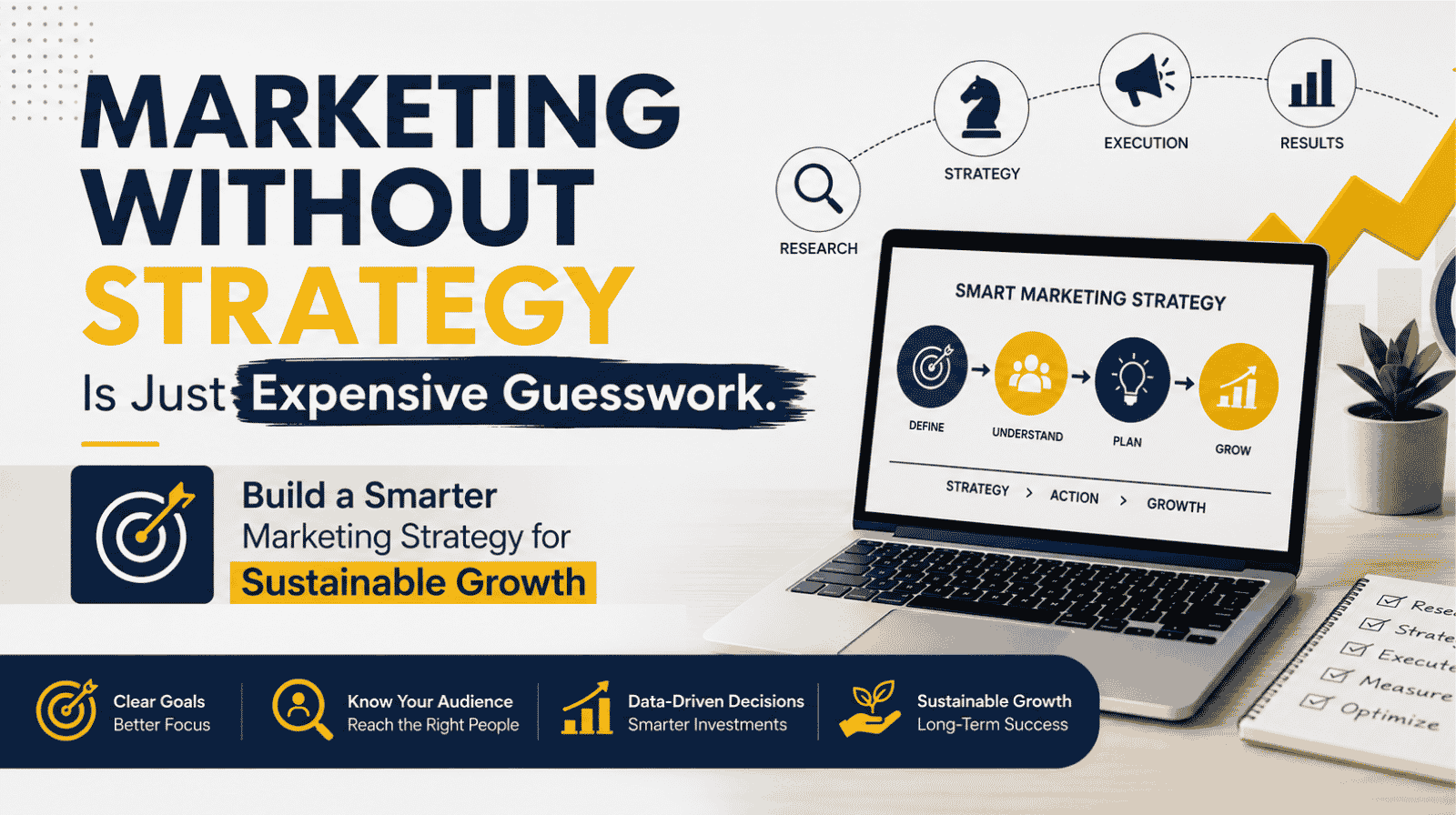
Many businesses invest heavily in advertising, social media, email campaigns, and content creation, yet struggle to generate consistent results. The problem often isn’t the marketing budget—it’s the lack of a clear marketing strategy. Without defined goals, audience insights, and measurable objectives, marketing becomes little more than expensive guesswork.
A well-planned digital marketing strategy provides direction for every campaign, helping businesses attract the right audience, deliver the right message, and achieve meaningful results. Rather than relying on assumptions or short-term tactics, organizations that follow a structured strategic marketing plan make informed decisions based on data, customer behavior, and business objectives.
This guide explains why every business needs a marketing strategy, the essential elements of effective marketing planning, and how a strategic approach leads to long-term business growth and stronger marketing ROI.
What Is a Marketing Strategy?
A marketing strategy is a comprehensive plan that outlines how a business will reach its target audience, promote its products or services, and achieve specific business goals.
It acts as a roadmap that guides every marketing decision, from content creation and social media campaigns to SEO, paid advertising, and email marketing. Instead of launching disconnected campaigns, businesses align every activity with a clear objective and measurable outcome.
An effective strategy ensures that marketing efforts work together to support long-term growth rather than producing temporary results.
Why Marketing Without Strategy Fails
Many companies focus on tactics before developing a strategy. They publish content, run advertisements, and post on social media without understanding their audience or defining clear goals.
This often results in:
- Poor campaign performance.
- Low conversion rates.
- Wasted marketing budget.
- Inconsistent brand messaging.
- Difficulty measuring success.
Without a structured digital marketing strategy, businesses struggle to understand what works, what doesn’t, and where to invest future resources.
The Key Elements of a Successful Marketing-Strategy
Establish measurable objectives such as increasing website traffic, generating leads, improving brand awareness, or boosting sales
Research customer demographics, interests, challenges, and buying behavior to create more relevant marketing campaigns.
Communicate a consistent value proposition that clearly explains why customers should choose your business.
Focus on platforms where your audience is most active, including search engines, social media, email marketing, and paid advertising.
Use marketing analytics to measure campaign performance, identify improvement opportunities, and continuously refine your strategy.
Following these steps creates a structured strategic plan that supports sustainable business growth.
Core Components of a Successful Marketing Strategy
The Role of Marketing Planning in Business Growth
Effective marketing planning helps businesses allocate resources wisely and maintain consistency across all marketing activities.
Planning begins with market research and competitor analysis, followed by defining target audiences, selecting marketing channels, creating content calendars, and establishing performance metrics.
A well-developed marketing plan also improves collaboration between teams, ensuring that branding, content, SEO, advertising, and customer communication all support the same business objectives.
Businesses that prioritize planning can adapt more quickly to changing market conditions while maintaining consistent brand messaging.
Data Turns Marketing Into a Growth Engine
Modern marketing is driven by data rather than assumptions. Businesses that regularly analyze campaign performance can identify successful strategies and eliminate ineffective ones.
Key performance indicators such as website traffic, conversion rates, customer engagement, lead generation, and marketing ROI provide valuable insights into campaign effectiveness.
Using analytics also helps marketers understand customer behavior, personalize marketing efforts, and make informed decisions that improve long-term business performance.
Common Marketing Strategy Mistakes
Even experienced businesses can make strategic mistakes that limit marketing success.
Some of the most common mistakes include:
- Setting unclear marketing goals.
- Targeting the wrong audience.
- Ignoring competitor analysis.
- Creating inconsistent brand messaging.
- Measuring vanity metrics instead of business results.
- Failing to review and improve marketing campaigns regularly.
Avoiding these mistakes helps businesses build stronger customer relationships, improve marketing efficiency, and achieve sustainable growth.
Industry Insights: Why Strategic Marketing Is the Future of Business Growth
Today’s digital landscape is more competitive than ever. Consumers interact with businesses across search engines, social media, websites, email, and online advertisements before making purchasing decisions. This means businesses can no longer rely on isolated marketing activities—they need an integrated marketing strategy that connects every customer touchpoint.
Advancements in artificial intelligence, marketing automation, predictive analytics, and customer data platforms have transformed how organizations develop marketing campaigns. However, technology alone cannot replace strategic thinking. Businesses that combine data-driven insights with a well-defined digital marketing strategy are better equipped to attract qualified leads, improve customer experiences, and maximize marketing ROI.
Organizations that continuously refine their marketing planning, monitor campaign performance, and adapt to changing customer behavior will remain competitive and achieve sustainable long-term growth.
Final Thoughts
Marketing without a clear strategy often leads to wasted budgets, inconsistent messaging, and missed growth opportunities. A well-defined marketing strategy provides the direction needed to connect with the right audience, optimize marketing investments, and achieve measurable business outcomes.
By developing a comprehensive digital marketing strategy, investing in thoughtful marketing planning, and regularly analyzing campaign performance, businesses can replace guesswork with informed decision-making. Every marketing activity, from SEO and content marketing to social media and paid advertising, should work together toward shared business goals.
The most successful businesses don’t simply market more; they market smarter. A strategic approach helps build stronger customer relationships, improve brand visibility, increase conversions, and create sustainable growth in an increasingly competitive digital world.
Claim your free digital marketing audit.
Stay updated with SunBPO Solutions for the latest trends, insights, and strategies to keep your business ahead of the curve!
Frequently Asked Questions (FAQs)
Why is marketing planning important?
Marketing planning helps businesses organize campaigns, allocate resources efficiently, maintain consistent messaging, and measure performance against clearly defined goals.
How often should a marketing strategy be reviewed?
Businesses should review their marketing strategy regularly, typically every quarter, and make adjustments based on market trends, customer behavior, and campaign performance.
How can small businesses create an effective marketing strategy?
Small businesses should start by understanding their target audience, setting measurable goals, selecting the right marketing channels, creating valuable content, tracking results, and refining their strategy over time.



0 Comments