




Table of Contents
Introduction
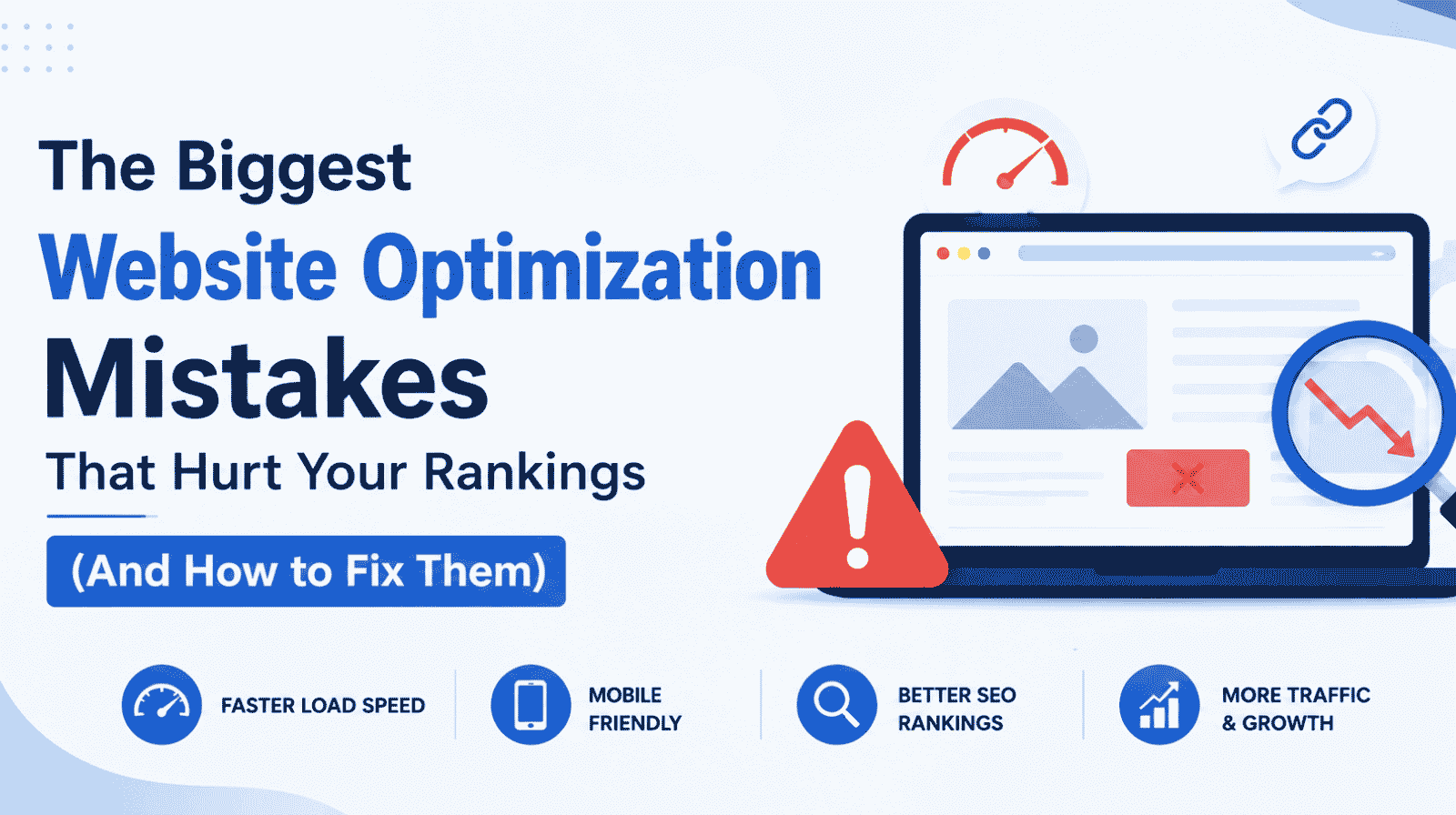
Many businesses invest heavily in digital marketing but overlook one critical factor that directly affects their online success: website optimization. Even the best content and advertising campaigns can struggle to deliver results if your website is slow, difficult to navigate, or poorly optimized for search engines.
Modern search engines evaluate much more than keywords. They consider page speed, mobile usability, technical performance, user experience, content quality, and overall website health when determining rankings. Small optimization mistakes can reduce visibility, increase bounce rates, and prevent potential customers from converting.
Following effective site optimization techniques and implementing proven website optimization best practices not only improves user experience but also supports long-term SEO growth. This guide highlights the most common website optimization mistakes and explains how businesses can fix them to improve rankings, traffic, and conversions.
Why Website Optimization Matters
A well-optimized website creates a better experience for both users and search engines. Faster loading pages, mobile-friendly layouts, clear navigation, and high-quality content encourage visitors to stay longer and interact with your business.
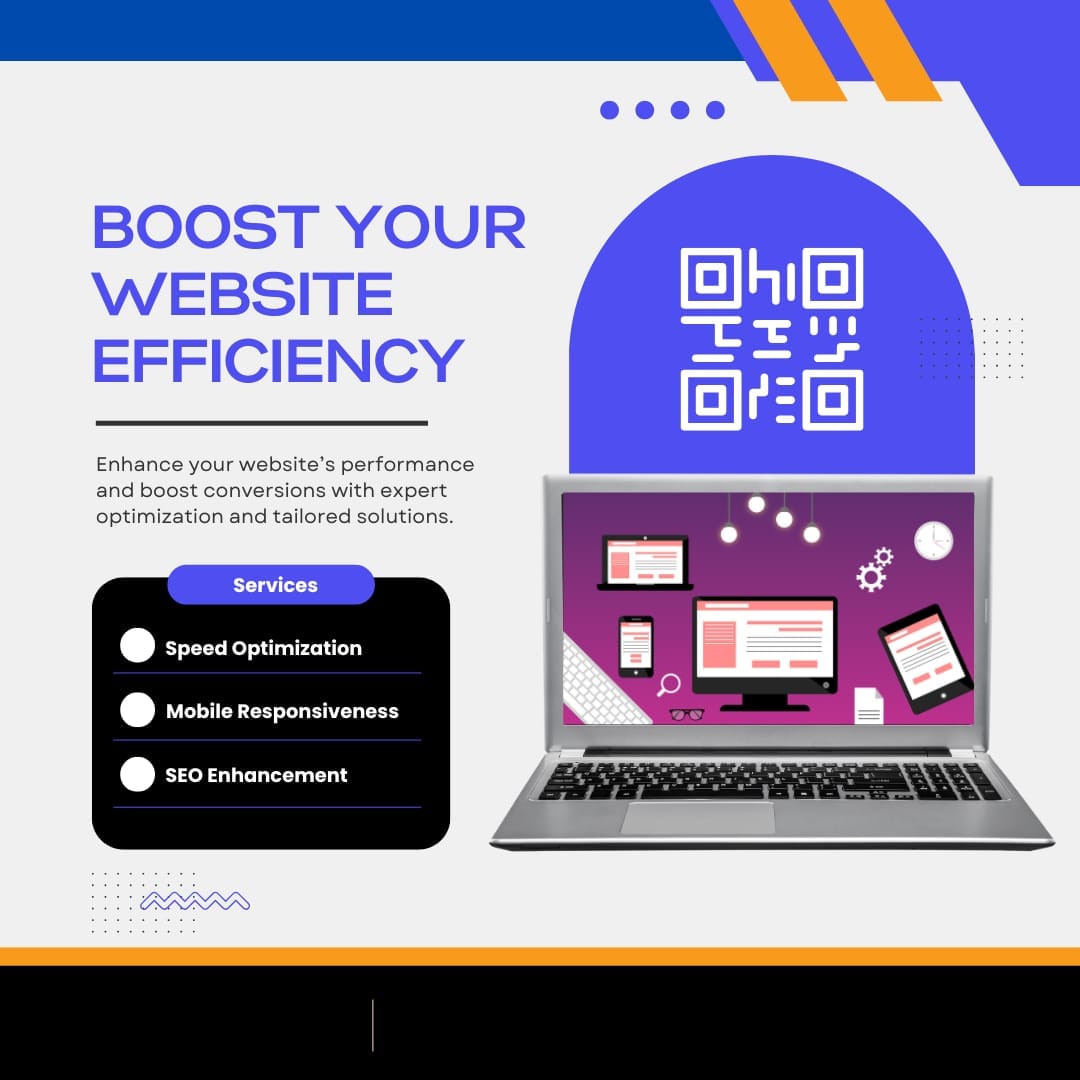
Strong site optimization also improves search visibility, increases conversion rates, reduces bounce rates, and strengthens your overall digital marketing strategy. Businesses that regularly review and improve website performance are better positioned to compete in search results.
The Biggest Website Optimization Mistakes
Website speed remains one of the most important ranking and user experience factors. Visitors expect pages to load quickly, and even small delays can increase bounce rates.
How to Fix It
Compress images, enable browser caching, minimize unnecessary code, use a content delivery network (CDN), and choose reliable website hosting.
With most users browsing on smartphones, websites that perform poorly on mobile devices lose both visitors and rankings.
How to Fix It
Follow responsive design principles, optimize page layouts for smaller screens, improve touch navigation, and regularly test your website on multiple devices.
Publishing valuable content is important, but poor formatting makes it difficult for users and search engines to understand your pages.
How to Fix It
Use descriptive headings, short paragraphs, internal links, optimized images, and naturally placed keywords throughout your content.
Many businesses focus only on content while overlooking technical issues that affect search visibility.
How to Fix It
Regularly check for broken links, XML sitemap errors, crawl issues, duplicate content, missing metadata, and indexing problems.
Confusing navigation, intrusive pop-ups, cluttered layouts, and unclear calls to action reduce customer engagement.
How to Fix It
Improve website navigation, simplify page layouts, enhance readability, and guide users clearly toward important actions.
Large, unoptimized images slow down websites and reduce performance.
How to Fix It
Compress images, use descriptive file names, add alt text, and select modern image formats to improve loading speed and accessibility.
Many businesses optimize their website once and never revisit it.
How to Fix It
Regularly audit your website, monitor analytics, update outdated content, improve page performance, and consistently apply website optimization best practices.
Common Areas of Website Optimization
Essential Website Optimization Techniques
Businesses seeking better rankings should focus on proven site optimization techniques, including:
- Improve Core Web Vitals.
- Optimize page speed.
- Strengthen internal linking.
- Publish high-quality content.
- Optimize title tags and meta descriptions.
- Improve mobile responsiveness.
- Reduce unnecessary plugins and scripts.
- Regularly monitor website performance.
Consistently applying these site optimization techniques strengthens search visibility while improving customer experience.
Why Website Optimization Supports Long-Term SEO Growth
SEO is not only about creating content it also depends on how effectively your website delivers that content.
A fast, secure, user-friendly website encourages longer visits, lower bounce rates, and higher engagement. Combined with valuable content and technical optimization, strong website optimization creates a solid foundation for long-term SEO growth.
Businesses that continuously improve their websites are more likely to maintain strong rankings despite ongoing search engine algorithm updates.
Industry Insights: Why Website Optimization Is More Important Than Ever
Search engines continue to prioritize websites that provide fast, secure, and user-friendly experiences. Google’s ranking systems now evaluate factors such as page speed, mobile responsiveness, Core Web Vitals, and content quality alongside traditional SEO signals. This means that businesses can no longer rely solely on keywords to achieve higher rankings.
Modern site optimization focuses on improving every aspect of a website from technical performance and user experience to content structure and accessibility. Businesses that consistently apply proven site optimization techniques and follow website optimization best practices create better experiences for visitors while strengthening their organic search visibility.
Website optimization is also closely connected to conversion rate optimization. Faster websites with intuitive navigation and valuable content encourage visitors to stay longer, explore more pages, and complete desired actions such as making purchases, submitting inquiries, or signing up for newsletters.
Final Thoughts
Small website issues can have a significant impact on search rankings, user experience, and business growth. Slow loading pages, poor mobile performance, technical errors, and weak content structure often prevent websites from reaching their full potential.
By implementing proven website optimization techniques, improving technical SEO, enhancing user experience, and consistently following website optimization best practices, businesses can increase organic visibility, improve customer satisfaction, and achieve sustainable online growth.
Website optimization is not a one-time project but an ongoing process of continuous improvement. Businesses that regularly monitor performance, update content, and adapt to changing search engine standards will be better positioned to achieve long-term SEO growth and outperform their competitors.
Claim your free digital marketing audit.
Stay updated with SunBPO Solutions for the latest trends, insights, and strategies to keep your business ahead of the curve!
Frequently Asked Questions (FAQs)
What are the most effective website optimization techniques?
The most effective website optimization techniques include improving page speed, optimizing images, enhancing mobile responsiveness, strengthening internal linking, fixing technical SEO issues, and publishing high-quality content.
Why are website optimization best practices important?
Following website optimization best practices helps improve user experience, reduce bounce rates, increase search visibility, and create a website that performs well across all devices.
How often should I optimize my website?
Website optimization should be an ongoing process. Businesses should regularly monitor website performance, update content, fix technical issues, and review SEO metrics to maintain strong rankings.



0 Comments