




Table of Contents
Introduction
Patients rarely choose a dermatologist after seeing one advertisement. Today, they search for their skin concern, compare treatment options, read reviews, explore websites, check social media, and evaluate whether a practice feels trustworthy before making an appointment. This makes dermatologist advertising much more than running paid campaigns—it is about creating a connected digital experience that helps potential patients move from awareness to consultation.
A successful strategy combines advertising, SEO, content, social media, reputation management, and conversion-focused website experiences. When these channels work together, dermatology practices can attract more relevant traffic, build credibility, and create a smoother path from online discovery to booked appointments.
Why Dermatologist Advertising Needs a Patient-First Strategy
Effective advertising starts with understanding what potential patients actually need. Someone searching for acne treatment has a different intent from someone researching Botox, laser resurfacing, psoriasis treatment, or skin cancer screening. Treating every visitor as the same audience can make campaigns less relevant and reduce their ability to convert.
Instead of focusing only on promoting services, dermatology practices should build marketing around patient questions, concerns, treatment goals, and decision-making behavior. This approach allows advertisements, landing pages, educational content, and follow-up messages to work together.
The goal is not simply to generate clicks. The goal is to attract people who are genuinely interested in the treatments and expertise your practice provides.
Use Dermatology Market Research to Understand Patient Search Behavior
Strong marketing decisions require more than assumptions. Dermatology market research can help practices understand what prospective patients are searching for, which treatments are receiving attention, what competitors are promoting, and where opportunities exist in the local market.
Identify Patient Needs and Search Intent
Research can reveal whether people are primarily searching for symptoms, conditions, treatments, costs, providers, reviews, or locations.
Use these insights to:
- Identify high-value treatment topics.
- Discover questions patients frequently ask.
- Understand local search behavior.
- Find gaps in competitor content.
- Identify services that deserve stronger visibility.
Build a Dermatologist Marketing Strategy Around Search Intent
Patients at the awareness stage may search for symptoms or conditions. Patients further along may compare treatments, providers, prices, reviews, and locations.
Your content strategy can therefore include:
- Condition-based educational pages.
- Treatment guides.
- Frequently asked questions.
- Before-and-after content where appropriate.
- Provider expertise pages.
- Treatment comparison content.
- Consultation-focused landing pages.
A patient may search “how to treat persistent acne” before searching for a dermatologist. Creating useful content around common concerns gives your practice an opportunity to appear earlier in that journey.
This also supports long-term SEO because your website can become a useful resource rather than simply a list of services.
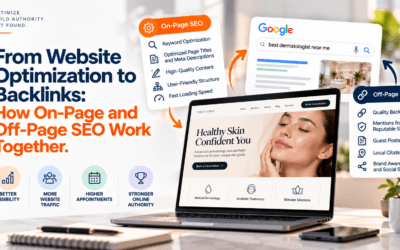
SEO should be an important part of dermatology practice marketing because organic visibility can continue generating relevant traffic long after a campaign ends.
- Optimize Treatment and Service Pages
Every important treatment should have a dedicated page that clearly explains what the treatment addresses, who it may be suitable for, what patients can expect, and how they can take the next step.
These pages should naturally incorporate relevant search terms while prioritizing clarity and patient usefulness.
2. Strengthen Local Search Visibility
For practices serving specific geographic areas, local SEO is essential. Keep your Google Business Profile accurate, maintain consistent business information, collect genuine reviews, and create location-relevant website content.
Local visibility can help patients find your practice when they are actively searching for dermatology services nearby.
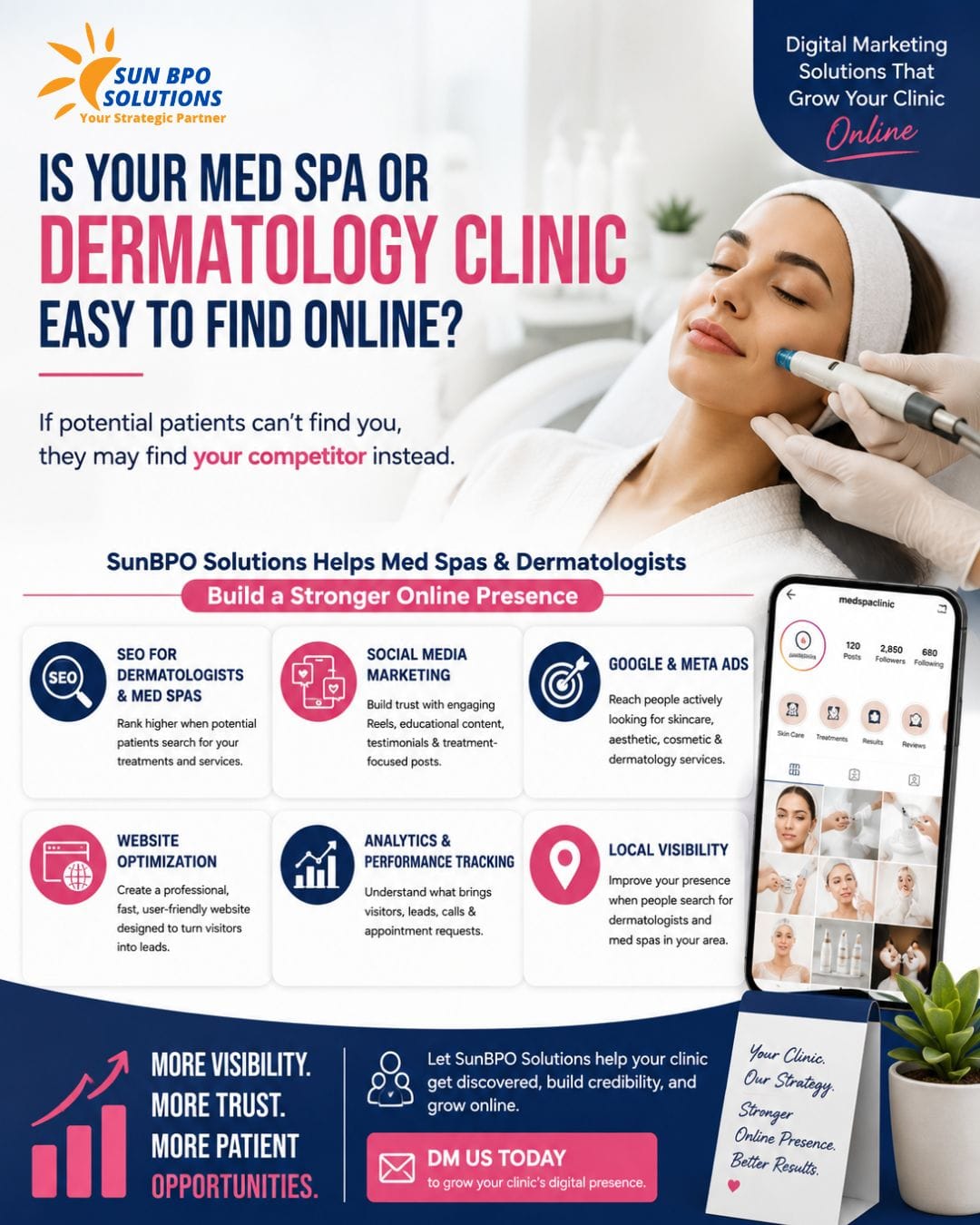
Med Spa Marketing Focus
Make Dermatologist Advertising More Relevant
Paid advertising can generate faster visibility, but relevance determines whether that visibility becomes a meaningful opportunity.
Instead of sending every advertisement to the same homepage, create campaigns around specific patient needs.
For example, an acne-related advertisement should ideally lead to an acne-focused page rather than a generic services page. A cosmetic treatment campaign should lead to a page that answers the questions someone considering that treatment is likely to have.
This alignment between dermatologist advertising, search intent, ad messaging, and landing-page content can create a more consistent patient journey.
Your advertisements should also communicate a clear value proposition. Rather than simply saying “Book Now,” explain why a patient should consider your practice, whether that is physician expertise, personalized consultations, advanced technology, comprehensive care, or another genuine differentiator.
Create a Connected Patient Acquisition Funnel
The strongest dermatology campaigns connect every stage of the patient journey.
A person may discover your practice through Google, see an advertisement on social media, read a treatment page, check reviews, and finally submit a consultation request. If each step provides consistent information, trust can build naturally.
Your funnel should connect:
- Search visibility.
- Educational content.
- Paid advertising.
- Treatment landing pages.
- Social media.
- Reviews and reputation.
- Consultation forms.
- Appointment scheduling.
- Follow-up communication.
This approach makes marketing more measurable and reduces the risk of losing potential patients between channels.
Avoid These Common Dermatologist Advertising Mistakes
One common mistake is promoting every service to everyone. Broad messaging can make campaigns less relevant.
Another is sending paid traffic to generic pages that do not match the advertisement. A third is focusing heavily on impressions and clicks without tracking what happens after a lead contacts the practice.
Practices should also avoid treating social media, SEO, paid advertising, reviews, and their website as completely separate activities. Patients experience these channels as one brand.
A more effective approach is to create a consistent message and patient experience across every touchpoint.
Final Thoughts
Successful dermatologist advertising is no longer about simply placing advertisements in front of potential patients. Modern dermatology marketing requires a connected strategy that combines patient intent, content, SEO, paid campaigns, social media, local visibility, reputation, and conversion optimization.
By using dermatology market research to understand patient behavior and applying those insights to dermatologist marketing and dermatology practice marketing, practices can create a stronger digital presence and guide potential patients from their first search toward meaningful action.
The practices that focus on educating, building trust, and creating a seamless patient journey will be better positioned for sustainable digital growth.
Stay updated with SunBPO Solutions for the latest trends, insights, and strategies to keep your business ahead of the curve!
Frequently Asked Questions (FAQs)
Why is dermatologist marketing important?
Dermatologist marketing helps practices become visible when potential patients are researching skin conditions, treatments, and providers. A strong strategy can support awareness, trust, lead generation, and patient acquisition.
How does dermatology market research help a practice?
Dermatology market research helps practices understand patient needs, search behavior, competitors, treatment demand, and local opportunities. These insights can make marketing campaigns and content more relevant.
What should be included in dermatology practice marketing?
Dermatology practice marketing can include SEO, content marketing, paid advertising, social media, local SEO, Google Business Profile optimization, online reviews, landing pages, email marketing, and conversion optimization.

0 Comments