





Table of Contents
Introduction
Creating high-quality content requires time, research, and creativity. Yet many businesses publish a blog post once and never use it again. This approach limits the value of every piece of content and reduces its long-term marketing impact. A smarter solution is to understand the content marketing lifecycle and maximize every content asset you create.
The content lifecycle is the complete journey of a piece of content—from the initial idea and planning stage to creation, distribution, optimization, and repurposing. Instead of producing new content every day, businesses can extend the life of existing content through a strategic content-creation process and effective content repurposing.
By transforming one valuable idea into multiple marketing assets, businesses can increase brand visibility, improve SEO, reach wider audiences, and generate better returns on their content investment. This guide explains how the content lifecycle works and how organizations can turn one piece of content into dozens of valuable marketing resources.
What Is the Content-Marketing Lifecycle?
The content-marketing lifecycle refers to the complete process of planning, creating, publishing, promoting, analyzing, and updating content to maximize its value over time.
Rather than viewing content as a one-time project, businesses treat every asset as an ongoing marketing resource that continues delivering value long after publication.
A typical lifecycle includes:
- Content planning
- Research
- Content creation
- Publishing
- Promotion
- Performance analysis
- Content repurposing
- Content updates
Following this structured approach helps businesses improve efficiency while increasing long-term marketing performance.
Why the Content Lifecycle Matters
Understanding the content lifecycle helps businesses get more value from every piece of content they produce.
Key benefits include:
- Improved content consistency
- Better search engine visibility
- Increased audience reach
- Higher marketing efficiency
- Stronger return on content investment
Instead of constantly creating new material, businesses maximize the performance of existing content through continuous optimization and distribution. businesses build authority, improve search rankings, and strengthen customer trust.
Understanding the Content Creation Process
Every successful content strategy begins with a structured content creation process.
The process typically starts with identifying customer needs, conducting keyword research, and selecting topics that align with business objectives.
Content creators then develop high-quality articles, videos, infographics, podcasts, or social media content designed to educate, inform, or solve customer problems.
After publication, content should be promoted across multiple digital channels to maximize visibility.
Finally, marketers analyze performance data to determine what should be updated, expanded, or repurposed. This ongoing process keeps content relevant while improving long-term SEO performance.
How Businesses Repurpose Content
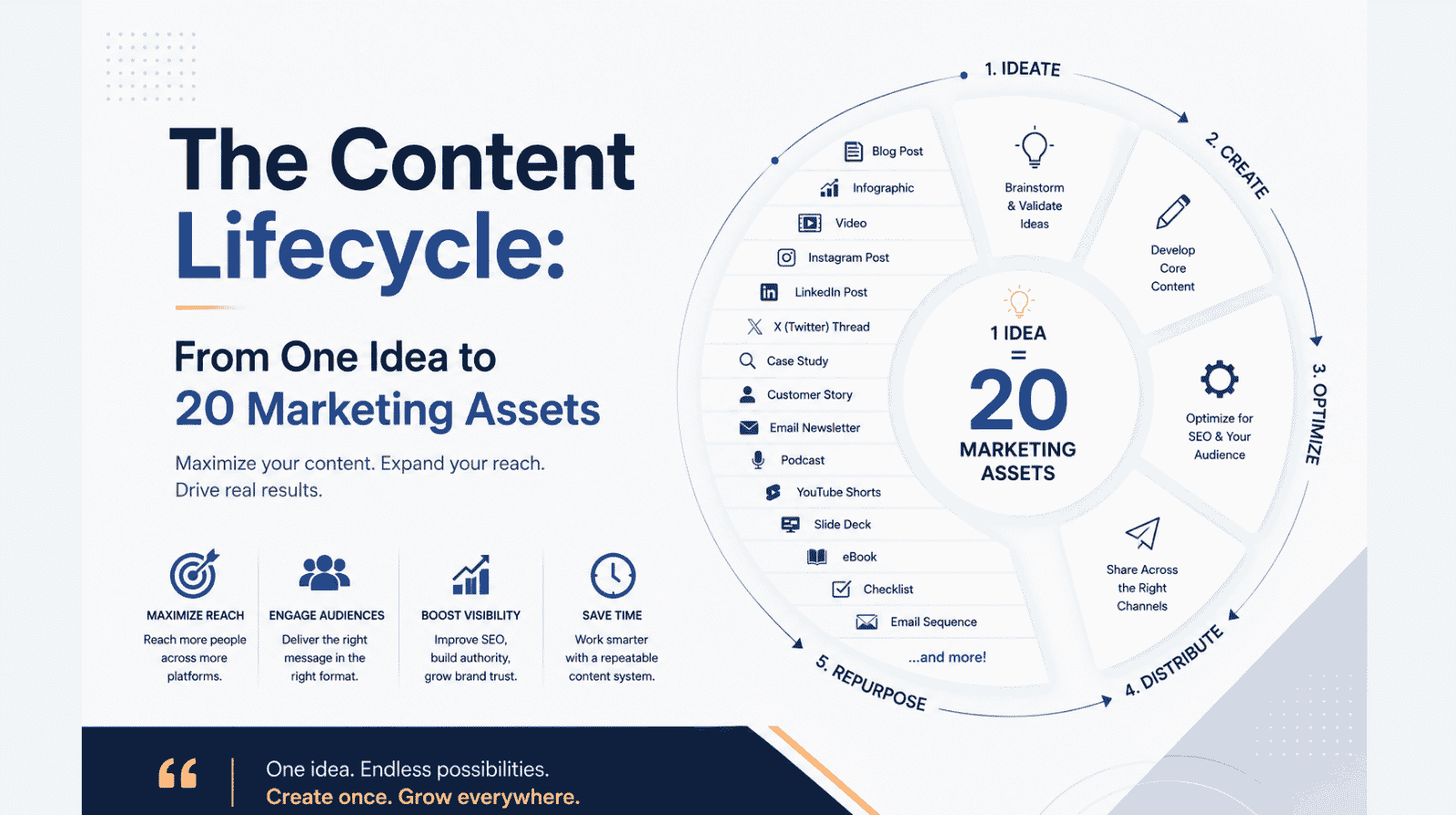
Content Repurposing: One Idea, Multiple Assets
One of the most valuable stages of the content marketing lifecycle is content repurposing.
Rather than creating new content from scratch, businesses transform existing content into multiple formats.
Examples include:
- Convert a blog into a LinkedIn article.
- Turn key points into social media posts.
- Create an infographic from statistics.
- Record a podcast discussing the topic.
- Produce short educational videos.
- Design email newsletters using blog insights.
- Build downloadable checklists or guides.
Repurposing extends the life of content while reaching audiences across different platforms and content formats
Building an Effective Content Marketing Lifecycle
A successful content strategy requires a structured workflow that supports every stage of the content lifecycle.
- Research audience needs and search intent before creating content.
- Develop high-quality content focused on solving customer problems.
- Publish content consistently across appropriate channels.
- Promote content using SEO, email marketing, and social media.
- Repurpose successful content into multiple marketing assets.
- Monitor performance and update content regularly to maintain relevance.
Businesses that consistently follow this process improve both marketing efficiency and long-term organic visibility.
Common Content Marketing Mistakes
Many organizations fail to maximize content value because they overlook important lifecycle stages.
Common mistakes include:
- Publishing content without a strategy.
- Ignoring SEO optimization.
- Failing to promote published content.
- Never updating older articles.
- Neglecting content repurposing.
- Measuring success only by page views.
Avoiding these mistakes helps businesses create a sustainable content marketing system that continues generating traffic and engagement over time.
Industry Insights: The Future of the Content Marketing Lifecycle
Content marketing is evolving from simply publishing articles to creating complete content ecosystems. Businesses are increasingly using artificial intelligence, automation, and data-driven insights to streamline the content creation process, while still relying on human expertise to produce valuable and trustworthy content.
Repurposing content has also become a major priority as organizations look to maximize the return on every marketing asset they create. Instead of producing new content every day, leading brands focus on extending the content lifecycle by updating, optimizing, and distributing content across multiple platforms.
Companies that invest in a structured content marketing lifecycle and embrace content repurposing will improve efficiency, strengthen search visibility, and build long-term authority in their industry..
Final Thoughts
Creating content is only the beginning of a successful marketing strategy. The real value comes from managing the entire content lifecycle, continuously optimizing performance, and finding new ways to extend the reach of existing content.
By implementing a structured content marketing lifecycle, following an organized content creation process, and investing in content repurposing, businesses can transform one valuable idea into multiple marketing assets that drive traffic, engagement, and long-term growth.
Rather than constantly producing new content, focus on maximizing the value of what you already create. This approach improves efficiency, strengthens SEO performance, and builds sustainable digital marketing success.
Claim your free digital marketing audit.
Stay updated with SunBPO Solutions for the latest trends, insights, and strategies to keep your business ahead of the curve!
Frequently Asked Questions (FAQs)
What are the stages of the content creation process?
The content creation process includes research, planning, content development, publishing, promotion, performance analysis, and continuous optimization.
How does the content lifecycle improve SEO?
Updating and repurposing content helps maintain relevance, improve search rankings, increase internal linking opportunities, and generate consistent organic traffic.
How often should businesses update their content?
Businesses should review and refresh important content regularly to ensure accuracy, improve search performance, and keep information valuable for their audience.



0 Comments