




Table of Contents
Introduction
A strong online presence is essential for dermatology practices that want to attract new patients and build lasting relationships. Today, patients often search for skin concerns, compare treatment options, read online reviews, and evaluate providers before scheduling an appointment. Without a clear marketing plan, even an experienced dermatologist may struggle to reach the right audience.
Effective dermatology practice marketing combines search engine optimization (SEO), educational content, local visibility, social media, paid advertising, and a positive patient experience. Rather than focusing only on website traffic or social media followers, dermatology practices need a coordinated strategy that builds trust, attracts relevant visitors, and encourages potential patients to take the next step.
Why Dermatology Practice Marketing Matters
Dermatology covers a wide range of patient needs, from acne and eczema management to skin cancer screening and cosmetic treatments. Each service attracts people with different questions, expectations, and decision-making timelines.
A strategic marketing approach helps practices communicate the right information to the right audience. For example, someone researching persistent acne may need educational resources, while someone considering a cosmetic procedure may want to understand treatment options, provider qualifications, and consultation requirements.
A well-planned approach also helps practices allocate marketing resources effectively, maintain consistent messaging, and measure whether campaigns contribute to meaningful business outcomes.

Use Local SEO to Attract Nearby Clients
For a med spa, location matters. Potential clients often look for treatments they can access within a convenient distance. Your content should therefore communicate both what you offer and where your practice serves clients.
Keep your Google Business Profile accurate, maintain consistent business information across relevant directories, and encourage genuine client reviews. Your website should also make your location, contact details, treatment options, and booking process easy to find.
Create location-specific pages only when they provide meaningful information about the area or practice. Repeating city names across multiple thin pages adds little value and can create a poor user experience.
Start With Dermatology Market Research and Build a Strong SEO Strategy
Research the questions prospective patients ask before choosing a dermatologist. Search queries, patient feedback, consultation questions, and website analytics can reveal useful topics for educational content and treatment pages.
Review competing practices’ websites, service pages, online reviews, and local search presence. Look for information gaps your practice can address through clearer explanations, more useful resources, or a better patient experience.
Each major service should have a clear, informative page explaining the treatment, its intended purpose, important considerations, and how patients can arrange an appointment.
Avoid placing every service on one generic page. Dedicated pages make it easier for visitors to find relevant information and help search engines understand your website’s content.
Patients frequently look for dermatologists in a particular city or neighborhood. Maintain an accurate Google Business Profile, keep contact details consistent, and make your location and appointment options easy to find.
Encourage genuine patient reviews and respond professionally without disclosing private health information. A complete, accurate local presence can help potential patients evaluate your practice.
Dermatology Marketing Budget Allocation
Use Dermatologist Marketing to Build Patient Trust
Effective dermatologist marketing goes beyond promoting treatments. It should demonstrate professional expertise and help patients make informed decisions.
Educational blogs, treatment guides, frequently asked questions, short videos, and provider introductions can address common concerns before a consultation. For example, an article about acne treatment options can explain general approaches and encourage readers to seek an individualized assessment from a qualified professional.
Ensure medical content is accurate, appropriately reviewed, and clear about the difference between general information and personalized medical advice. Avoid exaggerated claims, guaranteed results, and misleading before-and-after comparisons.s needs. Helpful content can also be repurposed into blog posts, videos, email newsletters, and social media carousels. Encourage audience participation. They can also help businesses understand customer preferences and identify common questions.
Use Social Media and Paid Advertising Strategically
Social media gives dermatology practices an opportunity to share educational information, introduce providers, and communicate with local audiences. Instagram and Facebook can support treatment explanations, practice updates, short videos, and appropriate patient education.
Paid advertising can help reach potential patients who are actively searching for a service or may be interested in relevant offerings. Search advertising is particularly useful for high-intent queries, while social advertising can introduce a practice to new audiences.
For better results, align each advertisement with a relevant landing page. A campaign promoting acne consultations, for example, should direct users to a page explaining that service rather than a generic homepage. Track qualified inquiries and appointment outcomes instead of evaluating campaigns only by clicks.
Develop a Dermatology Business Plan That Supports Marketing
A dermatology business plan helps connect marketing activities with the practice’s wider business objectives. It provides a framework for deciding which services to prioritize, which audiences to reach, and how to allocate available resources.
Your plan should identify growth goals, target patient groups, key services, marketing channels, budget, staffing responsibilities, and performance indicators. It should also account for the resources needed to respond to inquiries and manage appointments effectively.
Review the plan regularly as patient demand, competition, and marketing performance change. A clear business plan makes it easier to distinguish activities that support practice growth from those that generate attention without meaningful results.
Create a Connected Patient Acquisition Journey
Patients may discover your practice through search, read an educational article, review your credentials, check online feedback, and then request a consultation. Each interaction should provide consistent information and a clear next step.
Connect your website, SEO, educational content, advertising, reputation management, and appointment process. Review what happens after an inquiry arrives, including response times and booking accessibility.
Marketing can attract interest, but a confusing booking process or delayed response may prevent that interest from becoming an appointment.
Final Thoughts
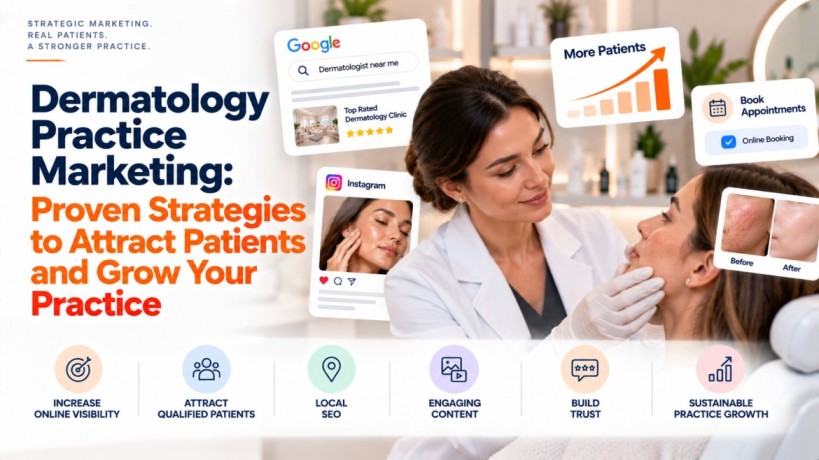
Successful dermatology practice marketing requires more than choosing a few advertising platforms. It means understanding patient needs, researching the local market, creating accurate educational content, strengthening local SEO, and making it easy for prospective patients to take the next step.
By combining dermatology market research, a practical dermatology business plan, and effective dermatologist marketing, practices can build a credible online presence and create a stronger foundation for sustainable growth. The priority should always be useful information, professional trust, and a consistent patient experience.
Stay updated with SunBPO Solutions for the latest trends, insights, and strategies to keep your business ahead of the curve!
Frequently Asked Questions (FAQs)
Why is dermatology market research important?
Dermatology market research helps practices understand patient needs, search behavior, local competition, and opportunities to improve their services and marketing messages.
What should a dermatology business plan include?
A dermatology business plan should outline business objectives, target audiences, services, budgets, staffing needs, marketing channels, operational priorities, and measurable performance indicators.
How can a dermatology practice measure marketing success?
Track organic search performance, relevant website traffic, qualified inquiries, consultation requests, completed appointments, and acquisition costs to understand which activities contribute to business outcomes.


0 Comments