




Table of Contents
Introduction: Environmental Graphic Design
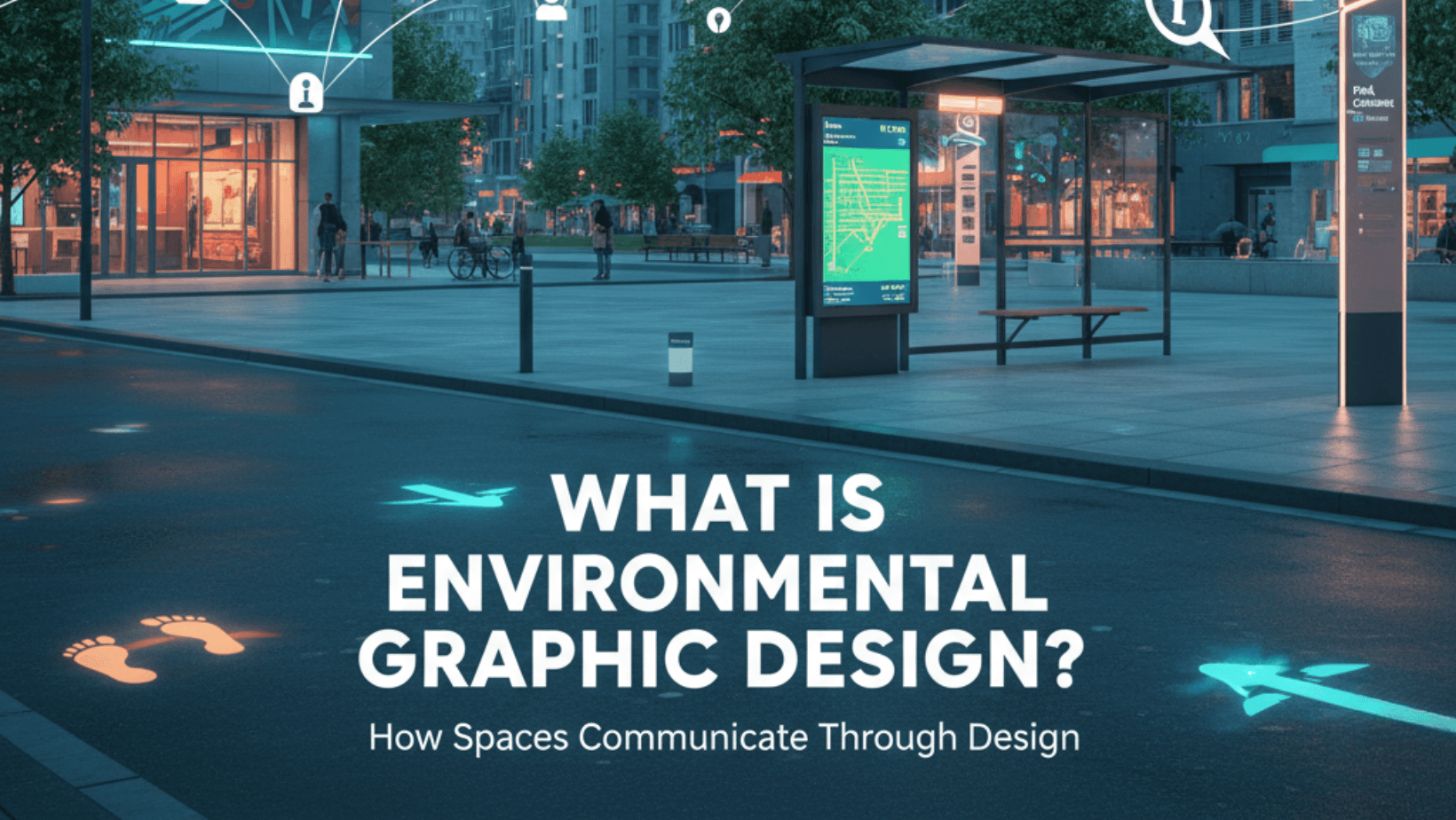
Have you ever walked into a space and instantly understood where to go, what the brand stood for, or how the place made you feel—without anyone explaining it? That experience is the power of Environmental Graphic Design at work.
EGD blends architecture, visual communication, and storytelling to transform physical spaces into meaningful brand experiences. It’s where graphic design marketing moves beyond screens and print to influence real-world behavior, perception, and emotion.
In this blog, we’ll explore what EGD really means, how it works, where it’s used, and why it’s becoming one of the most important design disciplines today—especially as brands compete for attention both online and offline.
What Is EGD?
Environmental Graphic Design (EGD) is the practice of using visual design elements—such as typography, color, imagery, materials, and spatial graphics—to enhance how people experience and navigate physical environments.
It sits at the intersection of:
- Graphic design
- Architecture and interiors
- Wayfinding and signage
- Branding and experiential storytelling
Unlike traditional graphic design, EGD is immersive. It interacts with people as they move through space, making it a powerful extension of graphic design marketing in the physical world. advertising strategies to these realities are seeing stronger engagement, better ROI, and longer-term brand loyalty.
Why EGD Matters in Modern Branding
Today’s consumers don’t just interact with brands digitally—they experience them physically. Offices, retail stores, exhibitions, and public spaces all contribute to brand perception.
EGD helps brands:
- Create clear navigation and flow
- Reinforce brand identity in physical spaces
- Improve user experience and accessibility
- Increase engagement and memorability
- Align physical environments with marketing goals
As graphic design trends move toward experience-driven branding, EGD has become essential—not optional.
Core Elements of Environmental-Graphic Design
✅Clear signage systems help people navigate spaces easily, reducing confusion and stress—especially in complex environments like hospitals, campuses, and transit hubs.
Logos, brand colors, typography, and messaging integrated into walls, floors, and structures turn spaces into brand touchpoints. This is graphic design marketing brought to life.
Large-scale murals, installations, and interactive elements create emotional connections. Many modern designs incorporate graphic design texture—such as layered materials, tactile surfaces, and dimensional graphics—to add depth and realism.
Environmental Design also simplifies complex information, making instructions, timelines, or exhibits easy to understand at a glance.
Environmental-Graphic Design Impact
Where Environmental-Graphic Design Is Used
EGD plays a role in almost every public-facing space.
Common applications include:
- Corporate offices and workspaces
- Retail stores and showrooms
- Museums and exhibitions
- Hospitals and healthcare facilities
- Airports and public transport
- Educational campuses
- Hospitality and tourism spaces
Each environment uses EGD differently, but the objective remains the same: guide behavior and shape experience through design.
Environmental Graphic Design vs Traditional Graphic Design
Traditional graphic design focuses on visual communication through digital and print formats. Environmental Graphic Design extends that communication into physical space.
Traditional graphic design asks:
“What should this look like?”
Environmental Design asks:
“How will people move, interact, and feel here?”
It considers scale, distance, lighting, materials, architecture, and human behavior—making it one of the most experience-driven design trends today.
The Role of Graphic Design Textures & Trends in EGD
Modern Environmental Design often incorporates current graphic design trends, including:
- Minimal yet bold typography
- Sustainable and natural materials
- Layered graphic design textures for depth
- Interactive and digital integrations
- Immersive storytelling
Textures—both visual and physical—add richness to spaces, making environments feel more authentic, engaging, and memorable.
Final Thoughts
Environmental Graphic Design is where space becomes communication.
How does Environmental Design support marketing?
Great spaces don’t just look good. They guide, engage, and connect.
Want to design physical spaces that strengthen your brand and support your marketing goals?
Contact us today to boost your digital growth with strategic Environmental Design that connects people, spaces, and stories.
Claim your free digital marketing audit.
Stay updated with SunBPO Solutions for the latest trends, insights, and strategies to keep your business ahead of the curve!
Frequently Asked Questions (FAQs)
How does Environmental Graphic Design support marketing?
It extends graphic design marketing into physical spaces, reinforcing brand identity and trust at real-world touchpoints.
Can small businesses use Environmental Graphic Design?
Absolutely. Even small retail or office spaces benefit from clear wayfinding and cohesive environmental branding.
Is Environmental Graphic Design a long-term investment?
Yes. Well-designed environments improve usability, brand recall, and customer experience over time.

0 Comments