




Table of Contents
Introduction
Getting your pages to rank on Google feels like a big win—but rankings alone don’t drive traffic. Learn how title and meta description mistakes stop clicks and how to fix them with smart on-page SEO strategy.
But then reality hits.
👉 Impressions are high
👉 Rankings look good
👉 Clicks are low
This frustrating gap usually has nothing to do with your content quality. In most cases, the problem lies in one overlooked area of on site SEO optimization — your title and meta description.
In this blog, we’ll explain why pages rank but don’t get clicks, common title and meta description mistakes, practical title and meta description examples, and how to align them with a strong on page SEO strategy to turn rankings into real traffic.
The Hidden SEO Issue: Ranking Without Engagement
Ranking tells you one thing — Google understands your page.
Clicks tell you another — users actually want to read it.
When users repeatedly ignore your result, Google notices. Over time, low click-through rates (CTR) can weaken performance, even if rankings remain stable.
This usually happens when:
- The title lacks clarity or appeal
- The meta description feels generic
- Search intent isn’t matched
- The snippet doesn’t stand out
Strong on site SEO optimization doesn’t stop at ranking — it must earn attention. and lifestyle businesses, social platforms now drive quicker conversions than standalone websites.
Why Title and Meta Description Matter So Much
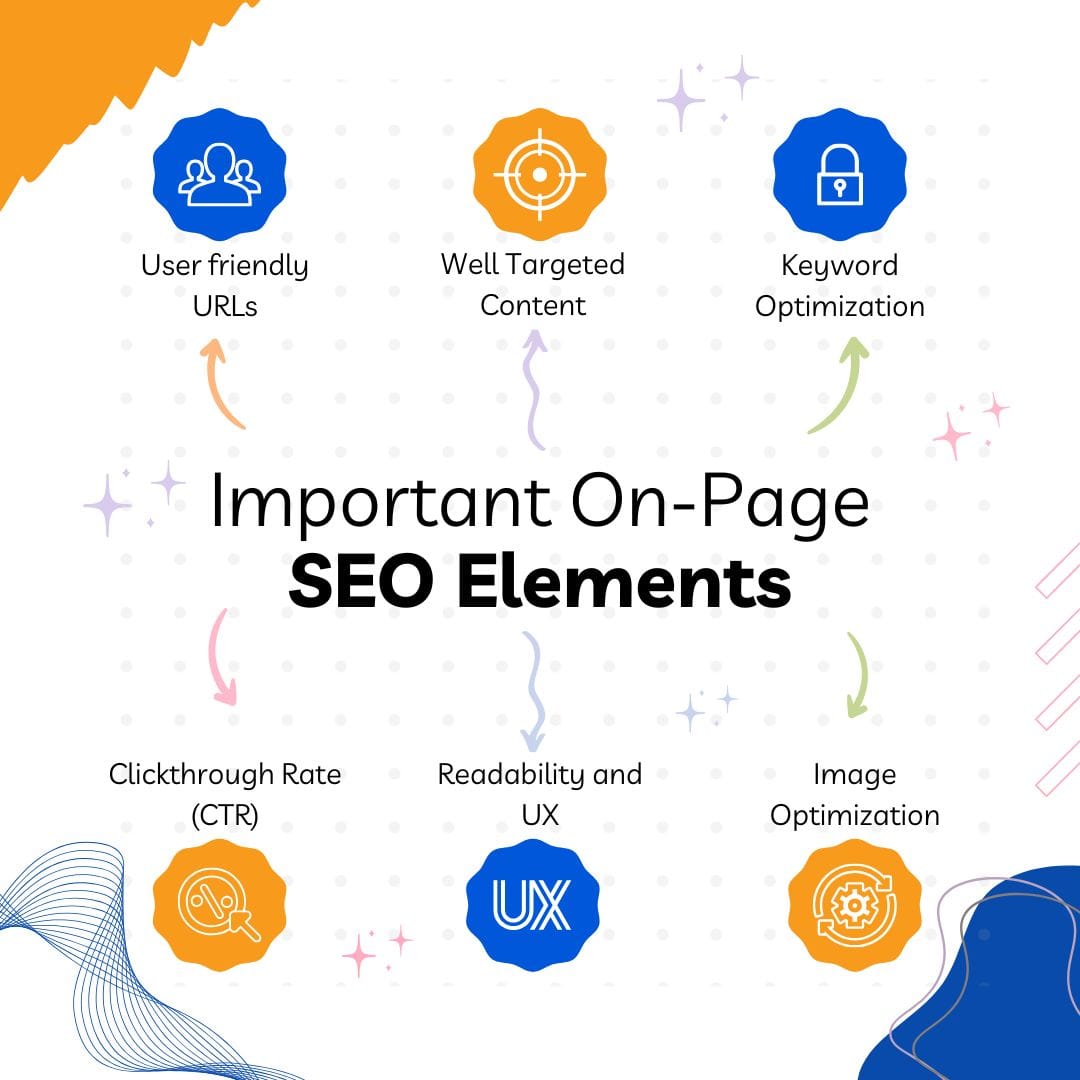
Your title and meta description are your first interaction with users.
They act as:
- Your organic ad copy
- A trust signal
- A promise of value
When someone searches, they don’t read every result — they skim. Your snippet must quickly answer:
👉 Why should I click this instead of the others?
Even the best content fails if the snippet doesn’t communicate value.
Common Title Mistakes That Kill Clicks
✅Example:
“SEO Tips for Websites”
This title:
- Doesn’t highlight a benefit
- Doesn’t spark curiosity
- Looks like every other result
Generic titles blend in instead of standing out.
✅A strong on page SEO strategy requires understanding intent.
If users want:
- A solution
- A comparison
- Clear steps
But your title sounds informational or vague, they’ll skip it — even if you rank
✅Example:
“SEO Optimization | On Page SEO Strategy | SEO Services”
This looks robotic and untrustworthy.
Users avoid results that feel over-optimized.ions here.
Titles should communicate value instantly.
Instead of just stating the topic, highlight:
- A transformation the platform — not you.
- A problem
- A result
Why Pages Rank but Don’t Get Clicks
Common Meta Description Mistakes
1. Repeating the Title Word-for-Word
Your meta description should expand the title, not duplicate it.
2. Writing for Google Instead of Users
Meta descriptions written only for keywords sound unnatural — and users ignore them.
3. No Call-to-Action
A good meta description nudges users to act:
- Learn why
- Discover how
- Fix this issue
- Avoid these mistakes
4. Poor Length Optimization
- Too short = wasted space
- Too long = cut off
The ideal range is 140–160 characters..
Title and Meta Description Examples (Simple Comparison)
Before (Low CTR):
Title: Website SEO Guide
Meta Description: Learn about SEO for websites.
After (Higher CTR):
Title: Why Your Website SEO Isn’t Working (And How to Fix It)
Meta Description: Ranking but not getting traffic? Discover the SEO mistakes hurting your clicks and learn how to fix them.
These title and meta description examples show how the same content can perform very differently just by changing how it’s presented in search results.
How to Improve Clicks Without Changing Rankings
Improving CTR doesn’t require rewriting your entire page. It starts with writing titles for people, not just search engines. Clear language, specific benefits, and emotional hooks naturally attract attention.
Meta descriptions should be treated as short sales messages. Instead of describing the page, explain the outcome the reader will get. Adding subtle calls-to-action like “learn why,” “discover how,” or “fix this issue” can significantly improve engagement.
Regular updates also matter. Search behavior evolves, and what worked last year may not work now. Reviewing titles and descriptions every few months keeps your on-page SEO strategy aligned with user expectations.
Final Thoughts
Ranking on Google is only half the job.
If your pages rank but don’t get clicks:
- Your content stays unread
- Your conversions never happen
- Your SEO potential remains untapped
Strong title and meta description optimization, supported by a smart on-page SEO strategy, turns rankings into real traffic and real growth.
Want to improve CTR and get more traffic from the rankings you already have?
Contact us today to boost your digital growth with data-driven on-site SEO optimization and snippet optimization strategies.
Claim your free digital marketing audit.
Stay updated with SunBPO Solutions for the latest trends, insights, and strategies to keep your business ahead of the curve!
Frequently Asked Questions (FAQs)
Can low CTR affect SEO performance?
Yes. Poor engagement signals can limit growth potential.
How often should titles and metas be updated?
Every 3–6 months or when performance drops.
Are titles and meta descriptions part of on page SEO strategy?
Absolutely. They are foundational elements.

0 Comments