





Table of Contents
Introduction
A social media marketing plan is the foundation of successful brand growth on modern platforms. Many businesses believe that simply posting content regularly on social media is enough to grow their brand. While consistency matters, posting alone does not guarantee results. The real difference between success and stagnation lies in whether businesses are posting content or executing a strategic social media marketing plan.
Successful brands follow a structured social media marketing plan designed to engage audiences, build relationships, and drive conversions. Instead of posting randomly, they create purposeful campaigns that support measurable business goals.
Understanding this difference is essential for effective social media marketing for business growth in today’s competitive digital landscape.
Posting vs Marketing: What’s the Difference?
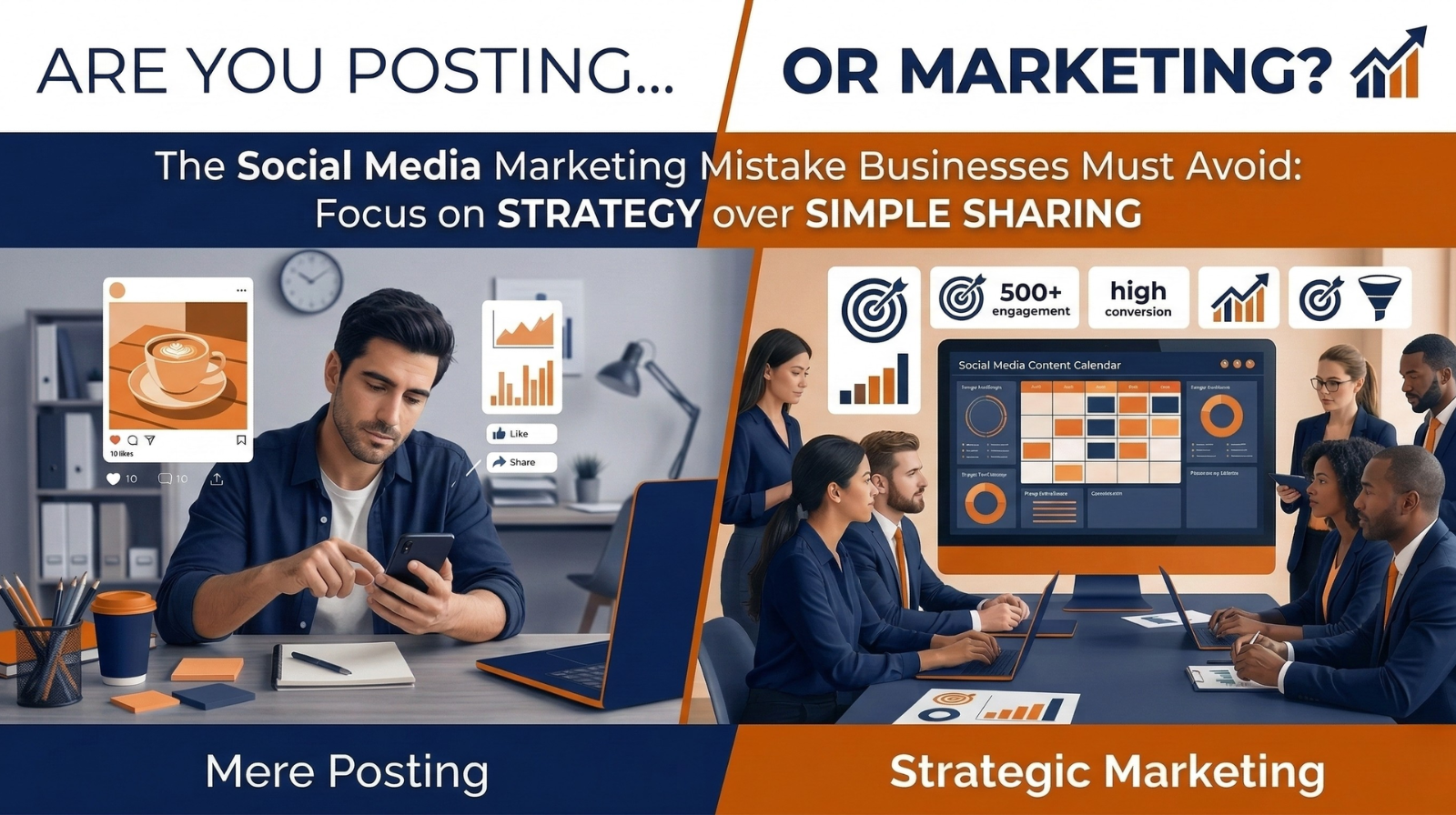
Posting means sharing updates or content without a defined objective. Marketing, however, focuses on strategic communication designed to influence audience behavior.
Posting typically involves:
- Random updates
- No defined target audience
- Limited engagement focus
- Lack of performance tracking
Marketing includes:
- Structured content planning
- Audience segmentation
- Clear calls-to-action
- Measurable campaign results
A business that follows a social media marketing strategy can turn content into a powerful growth tool.

Why Posting Alone Doesn’t Deliver Results
Many brands confuse activity with effectiveness. Simply posting content often fails because it lacks a structured approach.
Common problems include:
- Content that doesn’t align with audience needs
- Inconsistent messaging
- Low engagement rates
- No measurable business impact
Without a well-designed social media marketing plan, businesses struggle to convert followers into customers.t invest in SEO strategy marketing to gain sustainable digital advantages. authority. AI handles data-heavy optimization.
Key Elements of an Effective Social Media Marketing Strategy
Every campaign should support a business goal.
Common goals include:
- Increasing brand awareness
- Driving website traffic
- Generating leads
- Boosting sales
A structured social media marketing campaign ensures each piece of content contributes to these objectives.
Understanding audience preferences allows businesses to create relevant and engaging content.
Analyzing behavior patterns helps improve targeting and engagement rates.
Successful social media marketing requires a balanced mix of content such as:
- Educational posts
- Promotional updates
- Industry insights
- Interactive content
A consistent content strategy strengthens brand authority.h engines index and rank pages efficiently.
Social media is designed for conversation.
Responding to comments, messages, and feedback builds stronger relationships with followers.
Monitoring analytics helps businesses measure success.
Key metrics include:
- Engagement rate
- Reach and impressions
- Click-through rate
- Conversion rate
Analytics improve future campaign decisions. rankings.
A well-planned social media marketing campaign evolves based on performance insights.
Testing different formats, visuals, and messaging ensures continuous improvement. refine strategies and improve long-term results.
Components of a Successful Social Media Marketing Strategy
Common Social Media Marketing Mistakes
- Posting without a strategy
- Ignoring audience insights
- Over-promoting products
- Inconsistent branding
- Not tracking performance
- Lack of clear campaign goals
Avoiding these mistakes improves marketing effectiveness.
Tools That Improve Social Media Marketing for Business
Modern marketers rely on tools such as:
- Social media scheduling platforms
- Analytics dashboards
- Content planning tools
- CRM systems
- Marketing automation software
These tools help businesses manage campaigns more efficiently.
Tips to Improve Social Media Marketing
- Define clear campaign objectives
- Develop a structured social media marketing plan
- Focus on audience value
- Use storytelling in content
- Track analytics regularly
- Optimize campaigns continuously
- Maintain consistent brand messaging
Strategic consistency drives long-term results.
Future of Social Media Marketing
Social media continues evolving with new technologies and algorithms.
Emerging trends include:
- AI-powered content recommendations
- Short-form video dominance
- Interactive and immersive content
- Personalized audience targeting
- Data-driven marketing decisions
Businesses that adopt a structured social media marketing strategy will gain a competitive advantage.
Final Thoughts
The biggest mistake businesses make is confusing posting with marketing. While posting keeps your brand visible, only a strategic social media marketing campaign delivers measurable results.
By implementing a clear social media marketing plan, businesses can transform social platforms into powerful growth channels.
Successful social media marketing for business is built on strategy, engagement, and continuous optimization.
Want a powerful social media marketing strategy that drives real engagement and business results? Contact us today and let’s build your digital growth plan.
Claim your free digital marketing audit.
Stay updated with SunBPO Solutions for the latest trends, insights, and strategies to keep your business ahead of the curve!
Frequently Asked Questions (FAQs)
How does social media marketing help businesses?
It increases brand awareness, builds relationships with customers, and generates leads or sales.
How often should businesses post on social media?
Consistency matters more than frequency, but most businesses benefit from posting several times per week.
Why is a social media marketing strategy important?
It helps businesses reach the right audience, improve engagement, and achieve measurable marketing results.


0 Comments