




Table of Contents
Introduction
In today’s digital landscape, businesses often debate one major question: should they focus on branding or results-driven advertising? The truth is, the most successful companies don’t choose one—they combine both.
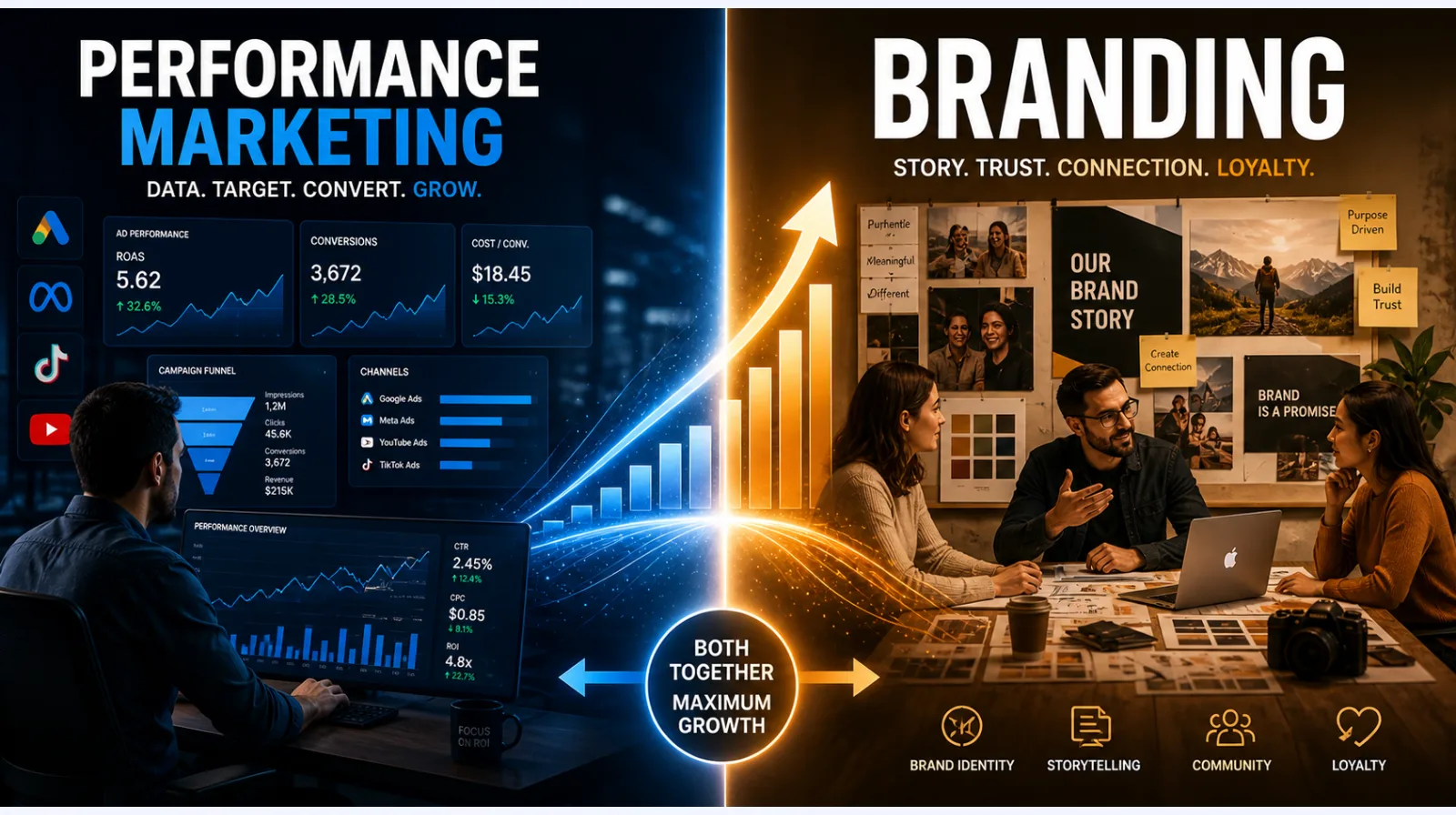
The discussion around brand vs performance marketing is no longer about competition. It’s about balance. While branding builds trust and long-term recognition, performance marketing focuses on measurable actions like clicks, leads, and conversions.
Businesses that integrate branding with a strong performance marketing strategy create sustainable growth, stronger customer loyalty, and better ROI.
What Is Brand Marketing?
Brand marketing focuses on shaping how people perceive your business.
Its goal is to:
- Build awareness
- Create emotional connections
- Increase credibility
- Develop long-term loyalty
Branding is about creating recognition and trust over time.
Examples include:
- Thought leadership
- Storytelling content
- Social media branding
- Community engagement
What Is Performance Marketing?
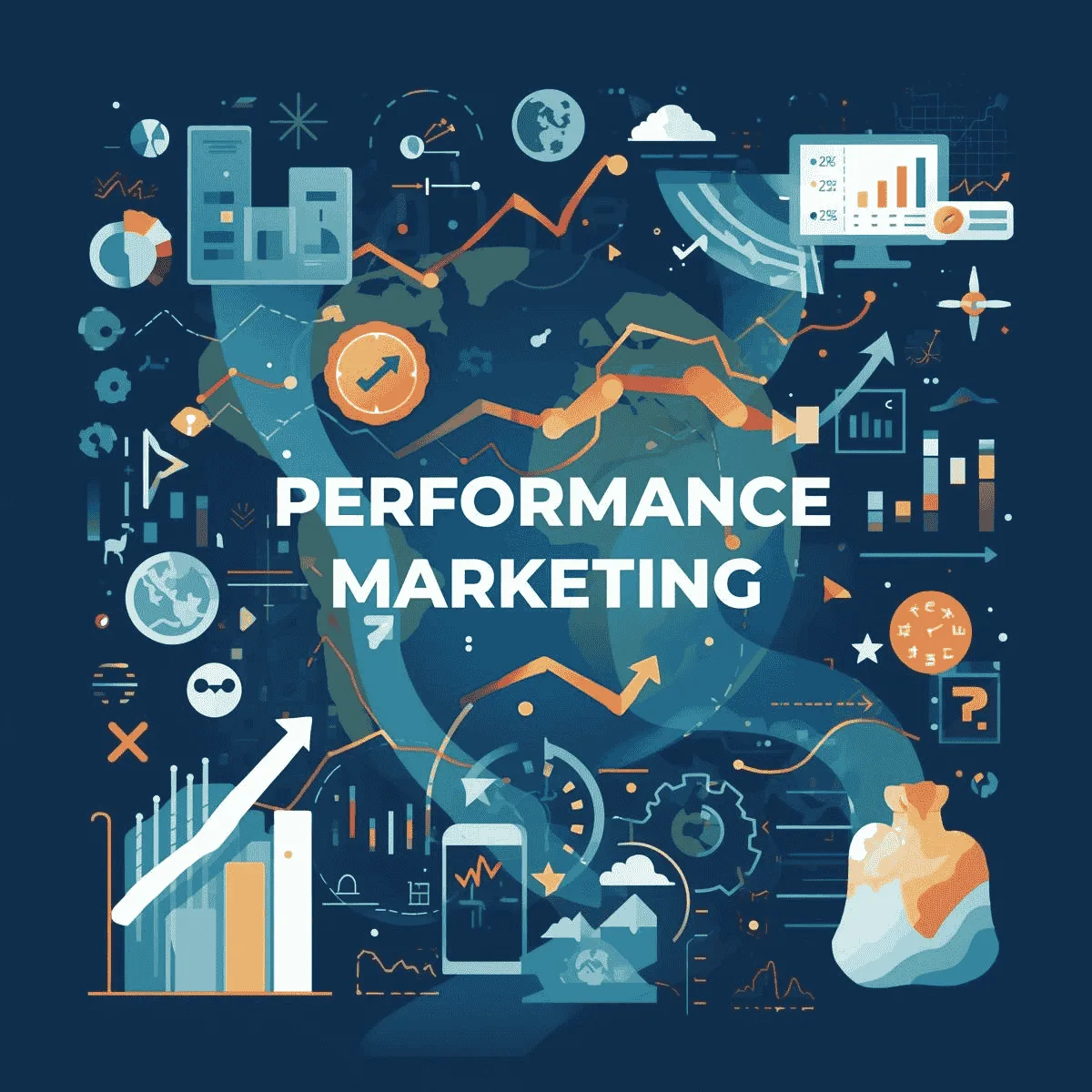
Performance marketing focuses on measurable outcomes.
It aims to generate:
- Leads
- Sales
- Website traffic
- Conversions
This includes channels like:
- PPC advertising
- Paid social campaigns
- Email marketing
- Conversion funnels
Unlike branding, it prioritizes direct results and data-driven optimization.
Why Brand and Performance Marketing Work Better Together
Once people notice you, they need a reason to stay.
Content types:
- Relatable content
- Storytelling posts
- Thought leadership
- Interactive content
Goal: Keep your audience engaged.TR.
A strong marketing strategy helps businesses distribute their message faster.
- Expands audience reach
- Drives targeted traffic
- Generates measurable engagement
This accelerates growth.
Recognizable brands often experience:
- Lower acquisition costs
- Better campaign performance
- Higher conversion rates
Brand familiarity improves efficiency.
Using performance tools gives businesses valuable insights.
You can analyze:
- Audience behavior
- High-performing messaging
- Conversion patterns
This helps optimize branding efforts.
Performance marketing drives quick results. Brand marketing ensures long-term customer loyalty.
Together they create:
- Consistent revenue
- Better retention
- Scalable business growth
This balance is essential in modern marketing.
Balanced Marketing Strategy Breakdown
Brand vs Performance: The Key Difference
| Brand Marketing | Performance Marketing |
|---|---|
| Builds awareness | Drives conversions |
| Long-term strategy | Short-term measurable results |
| Emotional connection | ROI-focused campaigns |
| Trust & authority | Leads & sales |
| Audience loyalty | Campaign performance |
How to Combine Performance& Brand Marketing Effectively
- Align messaging across all channels
- Create value-driven content consistently
- Use storytelling in paid campaigns
- Track awareness and conversion metrics
- Build long-term audience relationships
- Combine organic and paid strategies
- Use data insights to optimize campaigns
- Maintain a consistent brand identity
A balanced strategy delivers stronger results.e.
Best Performance Marketing Tools for Business Growth
Several performance tools help improve campaign performance.
Popular tools include:
- Google Analytics
- Meta Ads Manager
- HubSpot
- SEMrush
These tools help businesses track, optimize, and scale campaigns.
Benefits of Combining Performance& Brand Marketing
- Higher audience trust
- Better conversion rates
- Improved ROI
- Increased brand recognition
- Sustainable business growth
Integration creates long-term success.
Future Trends in Marketing
Marketing is evolving rapidly.
Key trends include:
- AI-powered personalization
- Community-led branding
- Data-driven storytelling
- Full-funnel marketing strategies
- Automation and predictive analytics
Businesses that combine branding with performance will lead the future.
Final Thoughts
The debate around brand vs performance marketing misses the bigger picture. The best businesses don’t choose one—they integrate both strategically.
A strong performance strategy generates measurable results, while branding builds trust and long-term loyalty. Together, they create sustainable business growth.
In 2026, balance is the real competitive advantage.
Ready to Boost Your Digital Growth and online presence?
Want a strategy that combines branding, content, and performance marketing for real business growth? Contact us today and let’s build a high-converting digital strategy for your brand.
Claim your free digital marketing audit.
Stay updated with SunBPO Solutions for the latest trends, insights, and strategies to keep your business ahead of the curve!
Frequently Asked Questions (FAQs)
What are performance marketing tools?
Tools that help track, analyze, and optimize campaigns for better performance.
What is the difference between brand and performance marketing?
Brand marketing focuses on awareness and trust, while performance marketing focuses on measurable conversions.
Can businesses combine both strategies?
Yes, combining both creates stronger long-term growth.


0 Comments