




Table of Contents
Introduction
Driving traffic to a website is important, but attracting the right visitors is what truly impacts business growth. Many companies invest significant resources into SEO and content marketing yet struggle to convert visitors into leads or customers. The missing piece is often understanding search intent marketing and how it influences user behavior.
Search engines have become increasingly sophisticated at understanding what users want when they enter a query. Businesses that align their content with user intent are more likely to improve engagement, increase conversion rates website performance, and generate meaningful results from their marketing efforts.
An effective SEO strategy plan focuses not only on ranking for keywords but also on delivering content that matches customer expectations. When businesses understand the connection between search intent marketing, conversion rates marketing, and SEO, they can create content that attracts qualified traffic and drives more conversions.
What Is Search Intent Marketing?
Search intent marketing is the process of creating content and marketing campaigns based on the purpose behind a user’s search query.
Rather than focusing solely on keywords, businesses analyze why users are searching and what information, solution, or action they are seeking. This approach helps marketers create highly relevant content that satisfies user needs and improves engagement.
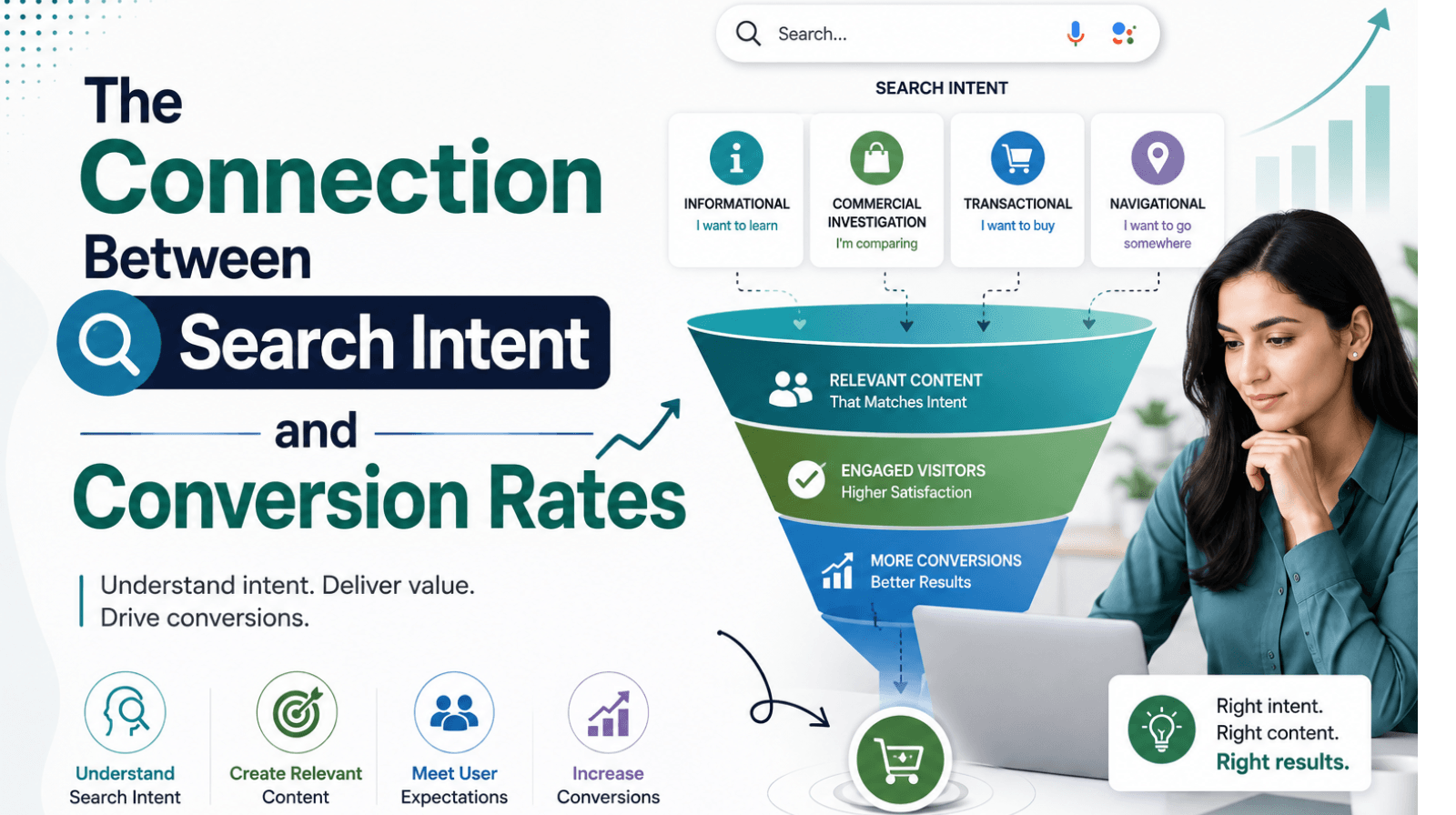
Search intent generally falls into four categories:
- Informational intent
- Navigational intent
- Commercial investigation intent
- Transactional intent
Understanding these intent types allows businesses to align content with every stage of the customer journey.

Why Search Intent Matters for Conversion Rates
The relationship between search intent marketing and conversion rates website performance is direct. When visitors find content that matches their expectations, they are more likely to stay engaged and take action.
For example, a user searching for “best CRM software for small businesses” expects comparisons, reviews, and recommendations. Providing detailed comparison content meets their needs and increases the likelihood of conversion.
On the other hand, directing that same user to a generic homepage creates friction and often results in higher bounce rates.
Businesses that align content with search intent typically experience:
Stronger conversion performanceo connect customer interactions often creates fragmented experiences that lead to frustration and lost sales.
- Higher engagement rates
- Better user experiences
- Lower bounce rates
- Improved lead quality
Building an SEO Strategy Plan Around Search Intent
Analyze search queries to determine what users are trying to accomplish.
Create educational content for awareness-stage users and conversion-focused content for decision-stage users.
Ensure landing pages align with the intent behind targeted keywords.
Fast-loading pages, clear navigation, and strong calls-to-action help improve conversion performance.
Distribution of Search Intent Types
Understanding Conversion Rates in Marketing
Conversion rates marketing refers to the percentage of visitors who complete a desired action on a website.
Conversions can include:
- Filling out a contact form
- Scheduling a consultation
- Downloading a resource
- Subscribing to an email list
- Making a purchase
Improving conversion rates website performance is not always about increasing traffic. Often, it’s about attracting visitors whose intent aligns with the solutions your business offers.
When content satisfies user expectations, conversion rates naturally improve.
How Search Intent Improves Marketing Results
Businesses that embrace search intent marketing often see improvements across multiple performance metrics.
When content directly addresses customer needs, visitors spend more time engaging with the website. This increased engagement sends positive signals to search engines while also increasing opportunities for conversion.
At the same time, improved conversion rates marketing performance helps businesses generate greater returns from their SEO, content marketing, and paid advertising efforts.
By focusing on user intent, organizations create more valuable experiences that benefit both customers and business outcomes.
Common Mistakes Businesses Make
Many businesses still focus exclusively on search volume when selecting keywords.
Common mistakes include:
- Ignoring user intent.
- Creating sales-focused pages for informational searches.
- Targeting broad keywords without understanding audience needs.
- Sending users to irrelevant landing pages.
- Failing to optimize content for conversions.
Avoiding these mistakes can significantly improve both SEO performance and conversion rates website results.
Industry Insights: Why Search Intent Is Reshaping SEO
Search engines are becoming increasingly focused on user satisfaction rather than simple keyword matching. Google’s algorithms now evaluate whether content successfully answers a user’s query and fulfills their expectations. This shift has made search intent marketing one of the most important components of modern SEO.
Businesses that understand user intent can create content that aligns with every stage of the customer journey, from awareness to purchase. Instead of chasing high-volume keywords alone, successful organizations build a comprehensive SEO strategy plan that focuses on delivering relevant content to the right audience at the right time.
As competition increases across digital channels, improving conversion rates marketing performance requires more than generating traffic. Companies must attract qualified visitors whose search intent aligns with their products, services, and solutions. This approach not only improves engagement but also strengthens overall conversion rates website performance.
Final Thoughts
The connection between search intent marketing and conversions has never been more important. Ranking highly in search results is valuable, but attracting visitors who are genuinely interested in your products, services, or expertise is what drives meaningful business growth.
By understanding user intent and building a targeted SEO strategy plan, businesses can create content that satisfies customer needs while improving search visibility. Whether users are seeking information, comparing solutions, or preparing to make a purchase, content should be designed to guide them toward the next step in their journey.
Organizations that focus on search intent rather than keywords alone often achieve stronger engagement, better lead quality, and higher conversion rates website performance. As search engines continue prioritizing relevance and user satisfaction, aligning content with intent will remain one of the most effective strategies for improving conversion rates marketing success.
Claim your free digital marketing audit.
Stay updated with SunBPO Solutions for the latest trends, insights, and strategies to keep your business ahead of the curve!
Frequently Asked Questions (FAQs)
What is a social media search tool?
A social media search tool refers to the search functionality within social platforms that helps users discover content, profiles, hashtags, products, and businesses.
What is social handle search?
Social handle search occurs when users search for a specific business profile, username, or brand account on social media platforms.
How can businesses improve social search visibility?
Businesses can improve visibility by optimizing profiles, using relevant keywords, creating engaging content, maintaining consistent branding, and encouraging audience interaction.


0 Comments