




Table of Contents
Introduction
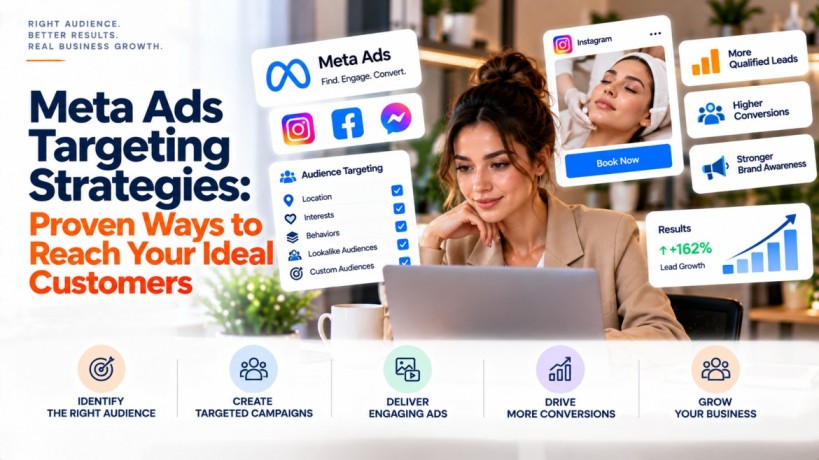
Running advertisements on Facebook and Instagram can help businesses reach potential customers, but success depends on showing the right message to the right audience. Without a clear targeting strategy, businesses may spend their advertising budget on people who are unlikely to engage, inquire, or purchase. Effective Meta Ads targeting strategies help businesses improve audience relevance, make better use of their budgets, and build campaigns around meaningful business goals.
Meta Ads provides tools for reaching new audiences, reconnecting with previous visitors, and finding people who may be interested in a business’s products or services. However, successful targeting requires more than selecting demographics or interests. Businesses need to understand customer behavior, create relevant advertisements, test different approaches, and measure the results.
Why Meta Ads Targeting Matters for Business Growth
Meta advertising allows businesses to promote products and services across Facebook, Instagram, Messenger, and other eligible placements. Its value comes from combining audience selection with creative content, campaign objectives, and performance optimization.
A well-targeted campaign starts with a clear understanding of the ideal customer. For example, an online skincare store may prioritize people interested in relevant products, while a B2B service provider may focus on business decision-makers through suitable audience signals and creative messaging.
Targeting alone does not guarantee conversions. The offer, advertisement, landing page, and follow-up experience must also meet customer expectations.
Define Your Ideal Customer Before Launching Ads
Before creating an audience in Meta advertising Manager, identify who your business wants to reach and what those people need. Customer research can reveal purchasing motivations, common challenges, preferred products, and reasons people choose one provider over another.
Review existing customer data, website analytics, sales conversations, customer feedback, and previous campaign results where available. Use these insights to develop a practical audience profile rather than relying on assumptions.
Consider factors such as customer needs, geographic location, purchasing behavior, and the problem your product solves. This foundation helps you create more relevant advertisements and choose appropriate targeting options.
Explore the Most Effective Meta Ads Targeting Strategies
Meta advertising offers audience controls and targeting options that can vary by campaign objective, account, location, and current platform policies. Depending on the available setup, businesses may use location, age, language, and detailed targeting options to help reach relevant audiences.
For local businesses, geographic targeting can be especially important. A service provider operating in one city may want to prioritize people within its service area rather than advertising nationwide.
Use only the targeting criteria that support your campaign goal. Overly restrictive audience settings can limit delivery, while broad targeting may work well when the campaign provides strong creative signals and sufficient conversion data.
Custom Audiences can help businesses reach eligible people who have already interacted with their brand. Depending on available data and permissions, these audiences may include website visitors, customer lists, or people who engaged with a business’s Facebook or Instagram content.
This approach is useful because previous interactions can indicate familiarity with the brand. For example, an ecommerce business might show a relevant advertisement to eligible visitors who viewed products but did not complete a purchase.
Always follow applicable privacy requirements, data-consent rules, and Meta’s advertising policies when using customer information.
Lookalike Audiences can help eligible advertisers find people who share characteristics with a selected source audience, where this feature is available. A useful source might be a customer list or another audience that represents valuable business outcomes.
The quality of the source matters. An audience based on qualified customers may be more useful than one based only on low-intent website visits.
Broader audience approaches can also be worth testing. Meta’s delivery systems may use campaign information and optimization signals to identify people likely to take the desired action. Compare approaches through controlled experiments rather than assuming one targeting method will always perform best.
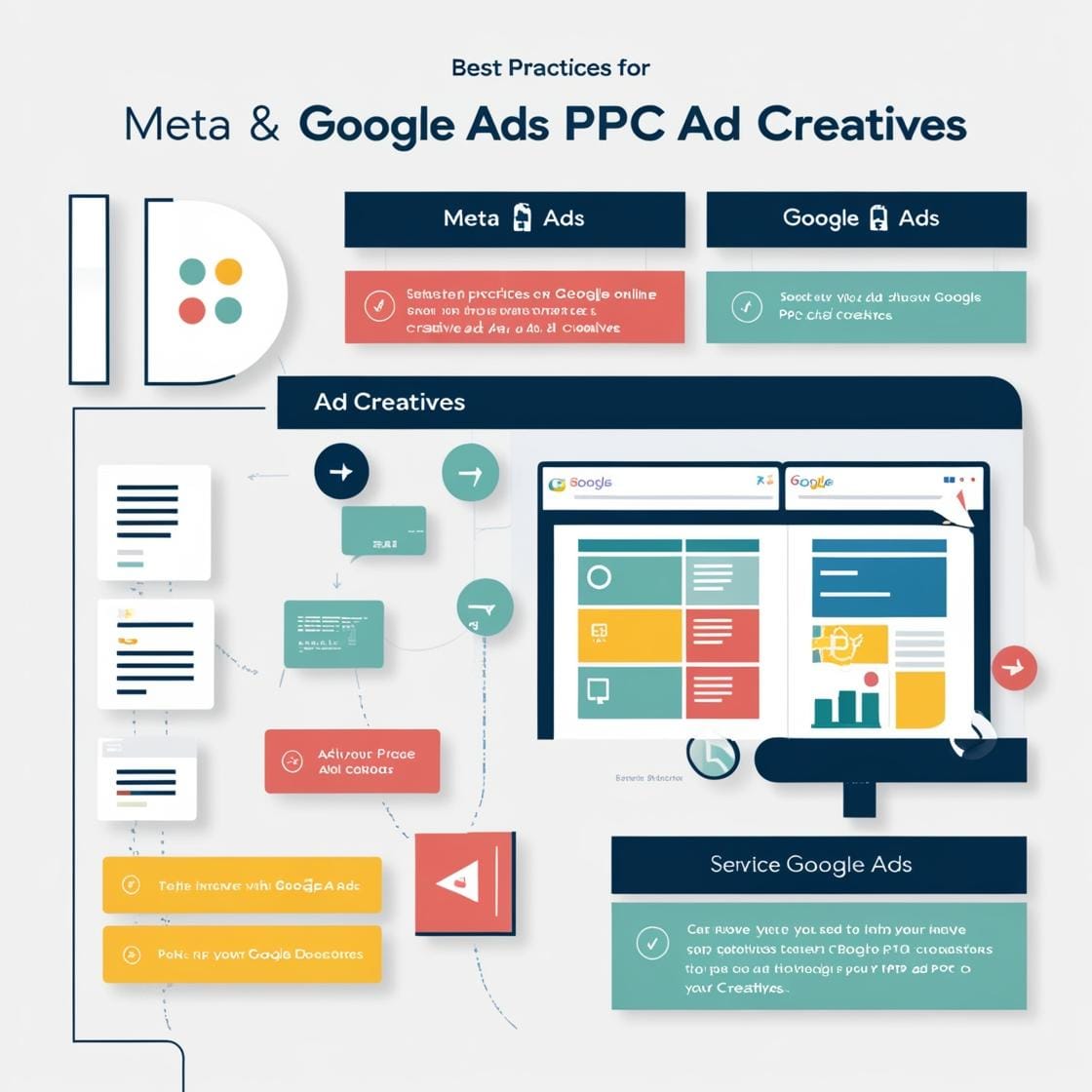
Meta Ads Budget Allocation
Match Meta advertising Creative to Audience Needs
Even a carefully selected audience may ignore an advertisement that feels irrelevant. Creative messaging should reflect the problem, interest, or goal that makes your product or service valuable.
Use clear headlines, authentic visuals, concise copy, and a specific call to action. Test different formats, such as Reels, Stories, carousels, and single-image ads, when they fit your objective.
For example, a software company might test an educational demonstration against a customer-focused benefit message. An ecommerce brand might compare product demonstrations with lifestyle imagery. Measure results to determine which creative attracts qualified prospects rather than simply generating inexpensive clicks.
Use Retargeting to Support the Customer Journey
Not every potential customer is ready to purchase after seeing one advertisement. Retargeting helps eligible businesses reconnect with people who previously visited their website or engaged with their content.
A practical retargeting strategy may include:
- Showing relevant product information to eligible website visitors.
- Sharing useful resources with people who engaged with educational content.
- Reminding interested prospects about an offer or consultation.
- Excluding recent purchasers when repeat promotion is unnecessary.
Use appropriate frequency controls and exclusions where available to avoid repetitive or intrusive advertising. Retargeting should provide a relevant next step, not simply repeat the same advertisement indefinitely.
Measure and Optimize Campaign Performance
Effective Meta Ads targeting strategies depend on consistent measurement. Review campaign performance against the business outcome you actually want, whether that is purchases, qualified leads, consultation requests, or another conversion.
Monitor click-through rate, cost per result, conversion rate, cost per acquisition, and return on ad spend where appropriate. Check tracking setup and attribution limitations before drawing conclusions from reported results.
Test one major variable at a time when possible, such as creative, audience approach, or landing-page messaging. Allow sufficient time and data for meaningful comparisons, and avoid making frequent changes based on small fluctuations.
Final Thoughts
Successful Meta advertising is not about targeting as many people as possible. It is about understanding customer needs, choosing suitable audience approaches, creating relevant advertisements, and measuring meaningful outcomes.
By combining audience research, Custom Audiences, eligible Lookalike Audiences, creative testing, and thoughtful retargeting, businesses can build a more structured advertising strategy. Continue testing, respect privacy requirements, and optimize for qualified conversions rather than clicks alone.
Stay updated with SunBPO Solutions for the latest trends, insights, and strategies to keep your business ahead of the curve!
Frequently Asked Questions (FAQs)
What is the difference between Custom Audiences and Lookalike Audiences?
Custom Audiences use eligible existing audience information or interactions to reach people already connected with a business. Lookalike Audiences help find new people with characteristics similar to a selected source audience, where the feature is available.
Should businesses use broad or detailed targeting?
The best approach depends on the campaign, available conversion data, audience, and creative. Testing broad and more specific approaches can help identify what delivers better business outcomes.
How can businesses improve Meta Ads performance?
Improve audience research, test creative variations, align advertisements with landing pages, verify conversion tracking, and evaluate campaign results against meaningful business objectives.

0 Comments