





Table of Contents
Introduction
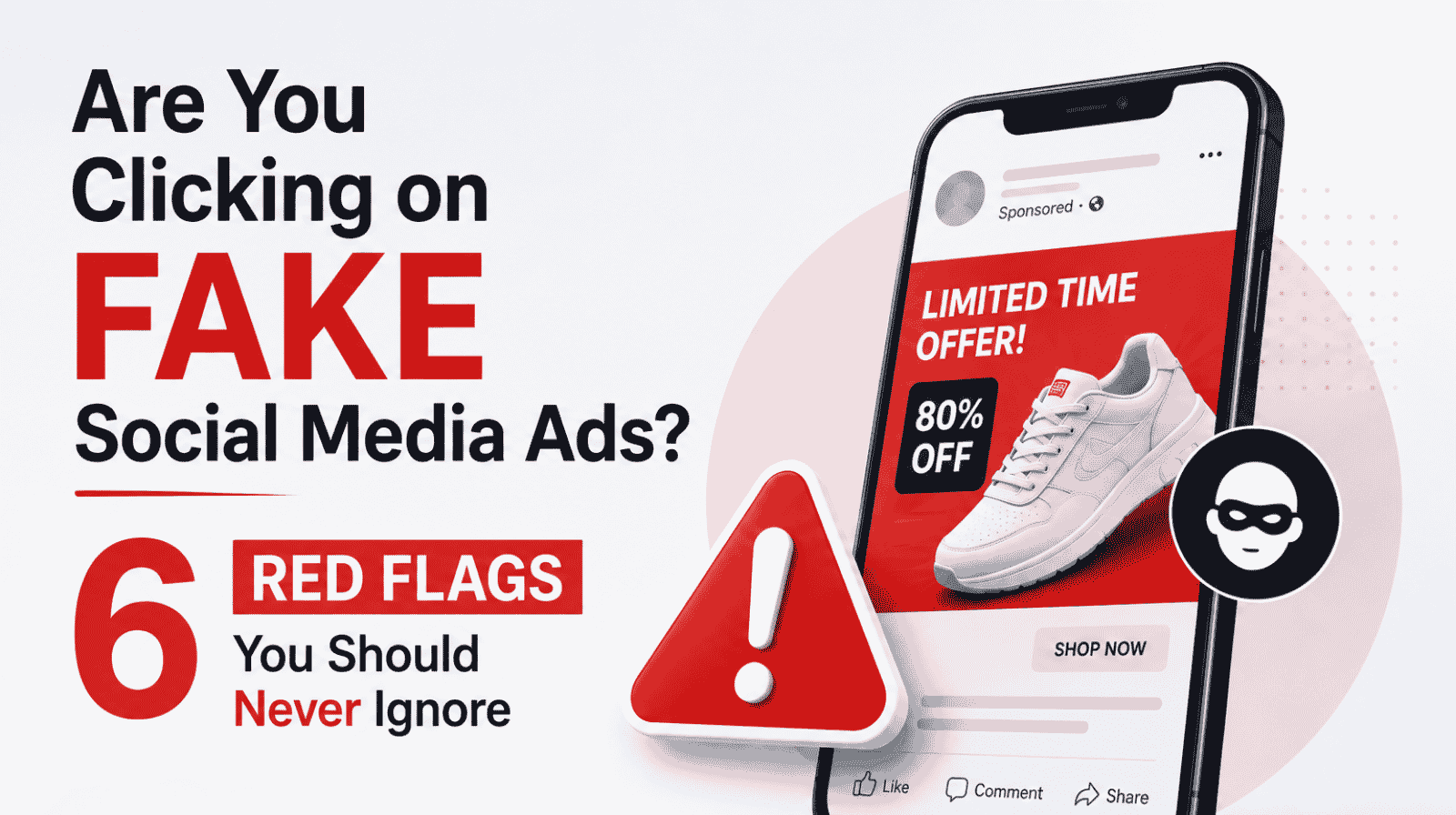
A Social Media Ad can help customers discover new products, services, and businesses within seconds. However, not every advertisement appearing in a social feed is trustworthy. Scammers increasingly create convincing social media ads that imitate real brands, promote unrealistic discounts, or redirect users to fraudulent websites.
With businesses investing more heavily in every social media ads campaign, consumers are seeing more promotional content than ever. At the same time, advertisers are using advanced social media ads tools to create highly targeted campaigns, making it increasingly important to know whether an offer is genuine before clicking.
What Makes a Social Media Ad Suspicious?
A legitimate Social Media Ad should clearly identify the business, provide accurate information, and direct customers to a trustworthy destination. Fake advertisements often use urgency, misleading prices, copied branding, or suspicious links to encourage quick decisions.
Before interacting with unfamiliar social media ads, take a few seconds to verify the business and offer.
What Is a Fake Social Media Ad?
A fake social media ad is a fraudulent advertisement designed to make users believe they are interacting with a legitimate business, product, or promotion.
Scammers may impersonate well-known brands, create fake online stores, advertise products that never arrive, or use stolen branding to make an offer appear genuine. The FTC specifically warns that scammers may use social-media ads offering brand-name products at unusually low prices and direct users to fake websites designed to steal money or personal information.
This makes social media advertising scams particularly dangerous because users often discover them while casually scrolling and may click before carefully checking the source.
6 Red Flags of Fake Social Media Ads
An extremely large discount should immediately make you cautious. Scammers often advertise expensive products at unusually low prices to encourage impulse purchases.
If a Social Media Ad promotes a product for a fraction of its normal price, compare the offer with the company’s official website and other trusted sellers.
Only 3 left!”
“Sale ends in 10 minutes!”
“Last chance!”
These messages are designed to make you act before you have time to think.
Urgency isn’t automatically proof of fraud because legitimate businesses use genuine limited-time promotions. However, extreme pressure combined with an unusually cheap offer or suspicious website should make you stop.
Scammers use urgency because they don’t want consumers to research the seller or compare the offer. The FTC recommends slowing down when a message or offer pressures you to act immediately.
What to do: Leave the ad and independently search for the company and promotion.
Always check where an advertisement takes you before entering personal or payment information.
Look for:
- Misspelled brand names
- Unusual domain names
- Extra characters in the URL
- Websites that don’t match the advertised brand
- Suspicious shortened links
Don’t assume that a professional-looking landing page is legitimate.
Be careful when a seller insists on gift cards, cryptocurrency, wire transfers, or other payment methods that may provide limited consumer protection.
A genuine business should provide clear payment and refund information.
If the payment process feels unusual, stop before completing the transaction.
Fake reviews can make fraudulent social media ads appear legitimate.
Be cautious if reviews seem repetitive, overly perfect, or impossible to verify. Don’t rely solely on testimonials displayed within the advertisement.
Search independently for customer reviews, complaints, and experiences before buying.
Never provide passwords, OTPs, banking credentials, or unnecessary personal information simply because an advertisement requests them.
A legitimate business should explain what information it needs and why.
If a Social Media Ad redirects you to a page asking for sensitive information without a clear reason, leave the page immediately.
Common Fake Ad Warning Signs
How to Check an Advertisement Before Buying
Before purchasing from an unfamiliar social-media advertisement, take a few minutes to investigate.
- Search the Business Independently
Don’t rely only on information provided inside the advertisement. Search the company name separately and look for independent reviews, complaints, and other customer experiences.
- Compare the Price
Check several legitimate retailers. A massive unexplained price difference is a reason to investigate further.
- Check Return and Refund Policies
A legitimate seller should clearly explain shipping, returns, refunds, and customer support. If these details are missing or difficult to find, consider walking away.
- Verify the Official Website
If the advertisement claims to represent a known company, visit that company’s official website independently and check whether the same offer exists.
Can Social Media Ads Tools Prevent Fake Ads?
Platforms use sophisticated social media ads tools and automated systems to review advertising activity, detect suspicious behavior, and enforce advertising policies. However, no automated system can guarantee that every fraudulent advertisement will be identified before users see it.
Scammers can change accounts, websites, messaging, and creative assets quickly. This is why consumer awareness remains an important layer of protection.
For legitimate businesses, using reputable social media ads tools can also help maintain campaign transparency, audience targeting, performance tracking, and advertising compliance.
What Should You Do If You Already Paid?
Don’t panic, but act quickly.
Save screenshots of the advertisement, website, order confirmation, receipts, emails, and payment records. Contact the payment provider or financial institution as soon as possible to ask what dispute or recovery options may be available.
You can also report suspected fraud to the appropriate platform and, where applicable, the FTC through its fraud-reporting service.
Keeping records can make it easier to explain what happened and support a dispute.
Industry Insight: Why Fake Ads Are So Effective
Social-media advertising gives scammers access to sophisticated targeting tools. The FTC reports that scammers can use advertising tools to target people based on characteristics such as age, interests, and shopping behavior.
That means a fraudulent advertisement may appear relevant to you by design.
The combination of personalized targeting, attractive creative, urgency, and copied branding can make a scam look like a normal advertisement. That’s why consumers should evaluate the source and offer, not simply how professional the ad appears.
Final Thoughts
Social media ads can help consumers discover genuine products and valuable offers, but not every promotion deserves an instant click.
A fake social media ad may look professional, use a familiar brand, and offer an irresistible deal. The safest response is to slow down and verify the seller, website, price, reviews, payment method, and information being requested.
Remember the simple rule:
Stop. Check. Verify. Then Click.
A few minutes of research can help protect you
Claim your free digital marketing audit.
Stay updated with SunBPO Solutions for the latest trends, insights, and strategies to keep your business ahead of the curve!
Frequently Asked Questions (FAQs)
Can a fake social media ad look completely legitimate?
Yes. Scammers can copy legitimate logos, product images, branding, and website designs. Always verify the business independently before purchasing.
What should I do if I already purchased from a scam ad?
Save all records, contact your payment provider or financial institution promptly, and report the suspected fraud to the relevant platform and authorities where appropriate.
Are all social media advertisements dangerous?
No. Millions of legitimate businesses advertise on social platforms. The key is learning to recognize social media scam warning signs and independently verifying unfamiliar offers.


0 Comments