

Table of Contents
Introduction
Not every person who discovers your brand is ready to buy immediately. Some people are simply discovering a problem, others are researching solutions, and some are already comparing providers. Treating all these audiences the same can make your marketing less effective.
The See Think Do framework gives marketers a practical way to understand these different stages and create content that matches customer intent. Instead of publishing content randomly, businesses can use a structured content marketing strategy to reach people at the right stage with the right message.
This approach becomes even more powerful when combined with social media content marketing, search-friendly content, email campaigns, blogs, videos, and other content marketing channels. A well-organized content marketing plan can help businesses build awareness, nurture prospects, and turn qualified audiences into customers.
Why the See Think Do Framework Matters for Content Marketing
A strong content marketing strategy should not focus only on producing more content. It should focus on producing the right content for the right audience.
For example, someone searching “What is SEO?” probably isn’t ready to purchase an SEO service immediately. They need educational content first. Someone searching “best SEO agency for small business” has much stronger commercial intent. They may be comparing providers and looking for evidence of expertise.
Someone searching for a specific company’s pricing or service page may be ready to take action. Understanding these differences allows businesses to create a more effective content marketing plan.
What Is the See Think Do Framework?
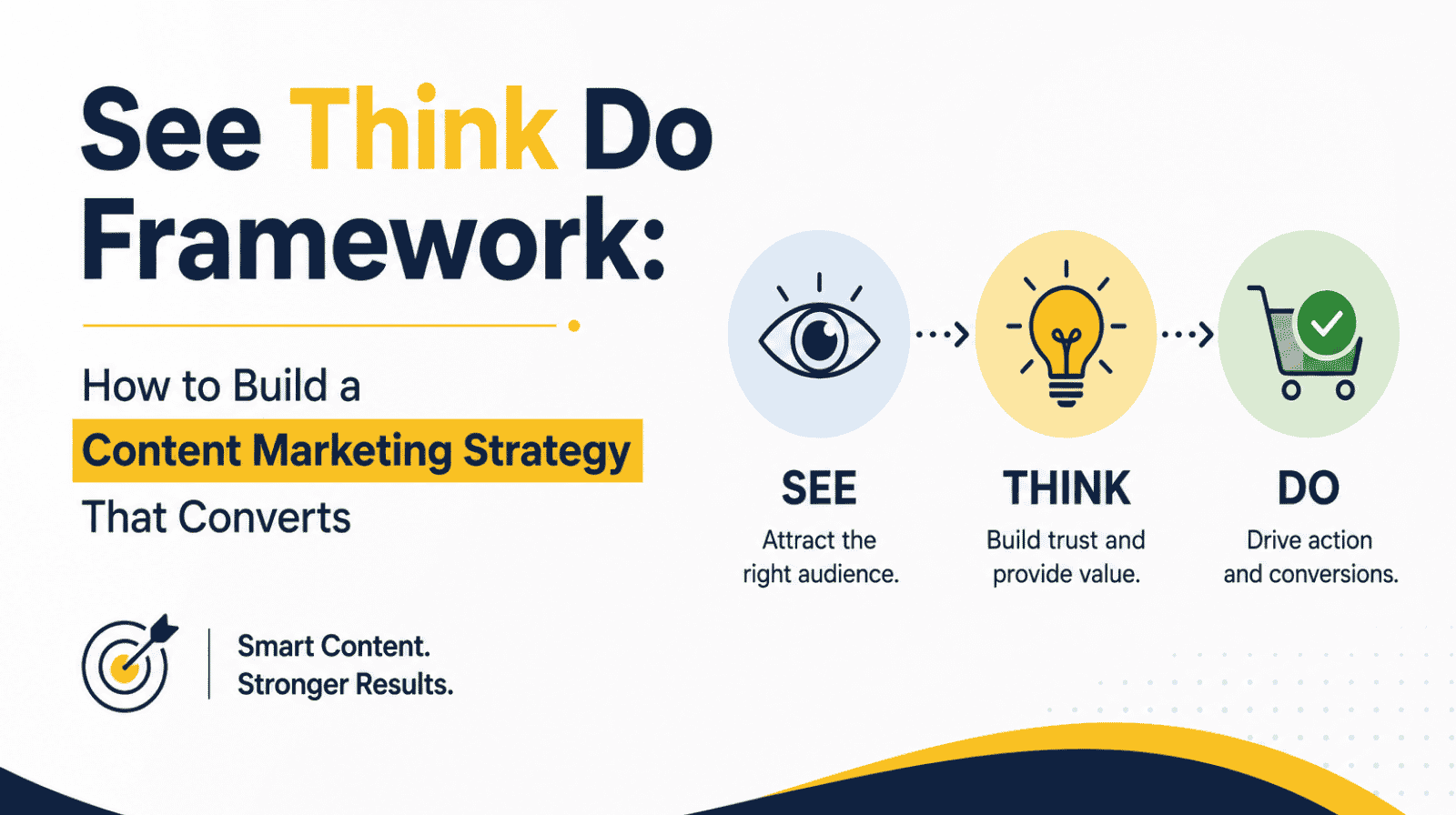
The See Think Do framework divides audiences according to their level of purchase intent. Each stage requires a different type of content and marketing message.
1. See: Build Awareness
The See stage represents the largest relevant audience. These people may not be actively searching for your product or service yet, but they could benefit from what your business offers.
The objective here is to create awareness and introduce your brand.
Educational blogs, social media posts, short videos, industry insights, infographics, and beginner guides can work well at this stage.
2. Think: Build Consideration
Think-stage audiences have a stronger interest. They may be researching a problem, comparing solutions, or trying to understand which option is right for them.
This is where detailed content becomes valuable.
Comparison articles, case studies, webinars, expert guides, FAQs, and solution-focused content can help prospects evaluate their options.
3. Do: Encourage Action
Do-stage audiences have strong purchase intent. They may be ready to request a quote, schedule a consultation, purchase a product, or contact your sales team.
At this stage, content should make the next step simple.
Product pages, service pages, testimonials, demos, pricing information, landing pages, and strong calls-to-action can help convert interest into action.
Building a Content Marketing Strategy Around Customer Intent
Awareness content should educate and attract potential customers without immediately pushing a sales message.
Blog posts, social media content, videos, industry reports, and educational guides are useful formats.
Consideration content should demonstrate expertise and help prospects evaluate options.
Businesses can publish comparison guides, case studies, tutorials, webinars, expert opinions, and detailed FAQs.
What to do: Leave the ad and independently search for the company and promotion.
Conversion-focused content should remove doubts and make taking action easier.
Testimonials, service pages, product demonstrations, pricing information, and landing pages can support this stage.
Content Distribution
The Role of Content Marketing for Social Media
Social media is an important part of the See Think Do journey.
Content marketing for social media allows businesses to introduce their brand, educate audiences, encourage conversations, and move interested users toward deeper content.
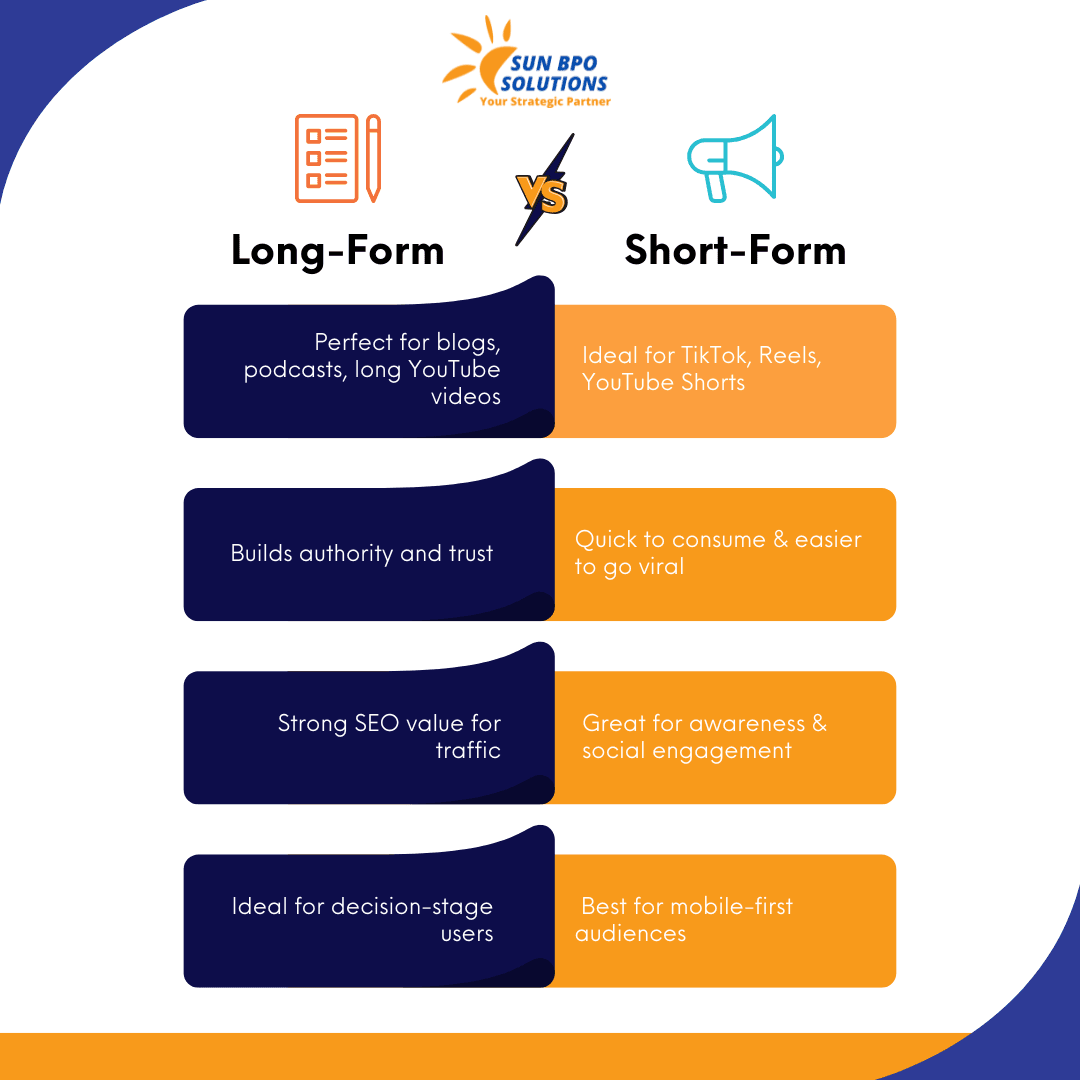
For the See stage, short-form videos, inspirational posts, trends, and educational content can help increase awareness. For the Think stage, businesses can use carousels, tutorials, customer stories, webinars, and expert insights. For the Do stage, product demonstrations, testimonials, offers, and direct calls-to-action can encourage conversions.
The key is not to treat every social media post as a sales opportunity. Different audiences need different messages. a known company, visit that company’s official website independently and check whether the same offer exists.
Choosing the Right Content Marketing Platforms
Businesses have more publishing options than ever. The challenge is deciding where each piece of content should appear.
Common content marketing platforms include websites, blogs, LinkedIn, Instagram, YouTube, Facebook, TikTok, email marketing platforms, and content distribution networks.
The best platform depends on the audience and objective.
- Website and Blog: Ideal for educational content, SEO, guides, case studies, and detailed resources.
- LinkedIn: Useful for B2B content, professional insights, thought leadership, and industry discussions.
- Instagram and TikTok: Effective for visual storytelling, short-form video, educational content, and brand awareness.
- YouTube: Strong for tutorials, demonstrations, interviews, educational videos, and long-form content.
- Email: Useful for nurturing audiences and moving prospects from consideration toward conversion.
A successful content marketing plan doesn’t necessarily require every platform. It requires the platforms where your audience is most active.
Industry Insights: Why Intent-Based Content Is Becoming More Important
Customers now interact with brands across multiple channels before making a decision. A person might discover a company through Instagram, read its blog, watch a YouTube video, compare competitors, and eventually contact the business through its website.
This makes a single-channel marketing strategy increasingly ineffective.
A modern content marketing strategy needs to connect different formats and platforms while maintaining consistent messaging.
The See Think Do framework helps businesses organize this complexity by focusing on what customers need at each stage instead of simply focusing on where content is published.
Common Mistakes in See Think Do Marketing
- Creating Only Sales Content
Constantly promoting products can discourage people who are still researching. A balanced content marketing strategy should educate before asking for a purchase.
- Publishing Without a Plan
Random content makes it difficult to build a connected customer journey. A clear content marketing plan keeps topics, formats, and goals organized.
- Using Every Platform
Being present everywhere isn’t always effective. Focus on the content marketing platforms that your target audience actually uses.
- Measuring Everything by Sales
Awareness content may not generate immediate sales. Measuring reach, engagement, consideration, and conversions separately provides a more realistic picture.
Final Thoughts
The See Think Do framework gives businesses a simple way to create content around customer intent.
The See stage creates awareness. The Think stage builds consideration and trust. The Do stage encourages action.
When businesses combine this framework with a strategic content marketing strategy, effective content marketing for social media, carefully selected content marketing platforms, and a structured content marketing plan, they can create a more connected customer journey.
The goal isn’t simply to create more content. It’s to create the right content for the right customer at the right moment.
Claim your free digital marketing audit.
Stay updated with SunBPO Solutions for the latest trends, insights, and strategies to keep your business ahead of the curve!
Frequently Asked Questions (FAQs)
What is the See Think Do framework?
The See Think Do framework divides audiences into three stages: awareness, consideration, and action. It helps businesses create content based on customer intent.
Which content marketing platforms should businesses use?
The best content marketing platforms depend on the audience and goals. Websites, blogs, LinkedIn, Instagram, YouTube, TikTok, and email can all play different roles.
What should a content marketing plan include?
A strong content marketing plan should include audience research, content goals, topics, formats, publishing schedules, distribution channels, and performance metrics.


0 Comments