




Table of Contents
Introduction
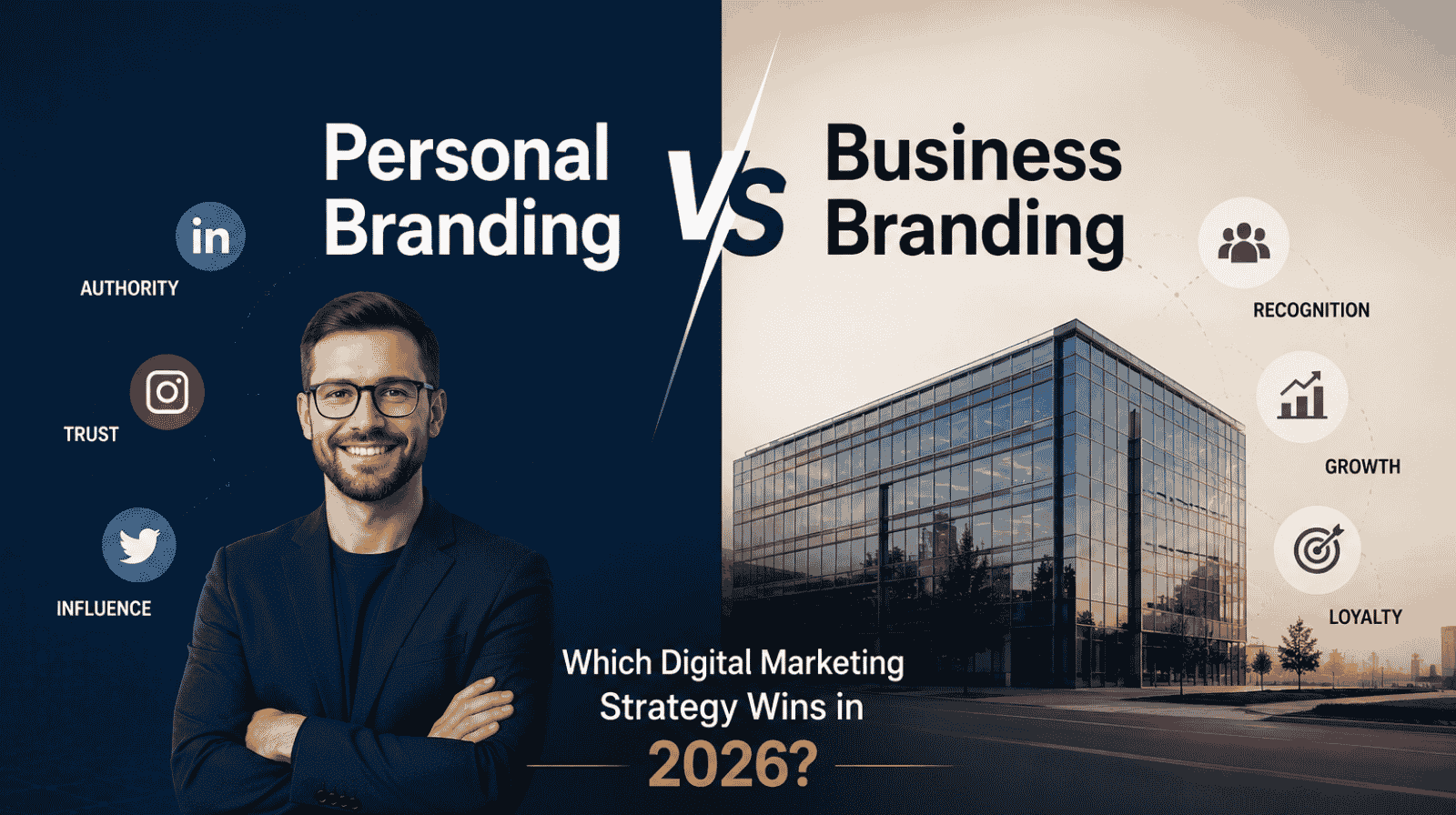
In today’s competitive online world, branding is no longer just about logos, websites, or advertisements. Businesses and professionals are building strong digital identities to improve visibility, increase trust, and attract opportunities online.
One major question continues shaping modern marketing strategies — should you focus on personal branding, social media growth or build a stronger business branding system?
The answer depends on your goals, audience, and long-term vision. In 2026, both branding models play a major role in digital success, but they work differently.
A strong Digital Marketing Strategy helps businesses and professionals understand how to use branding effectively to grow online visibility and audience trust.
What Is Personal Branding?
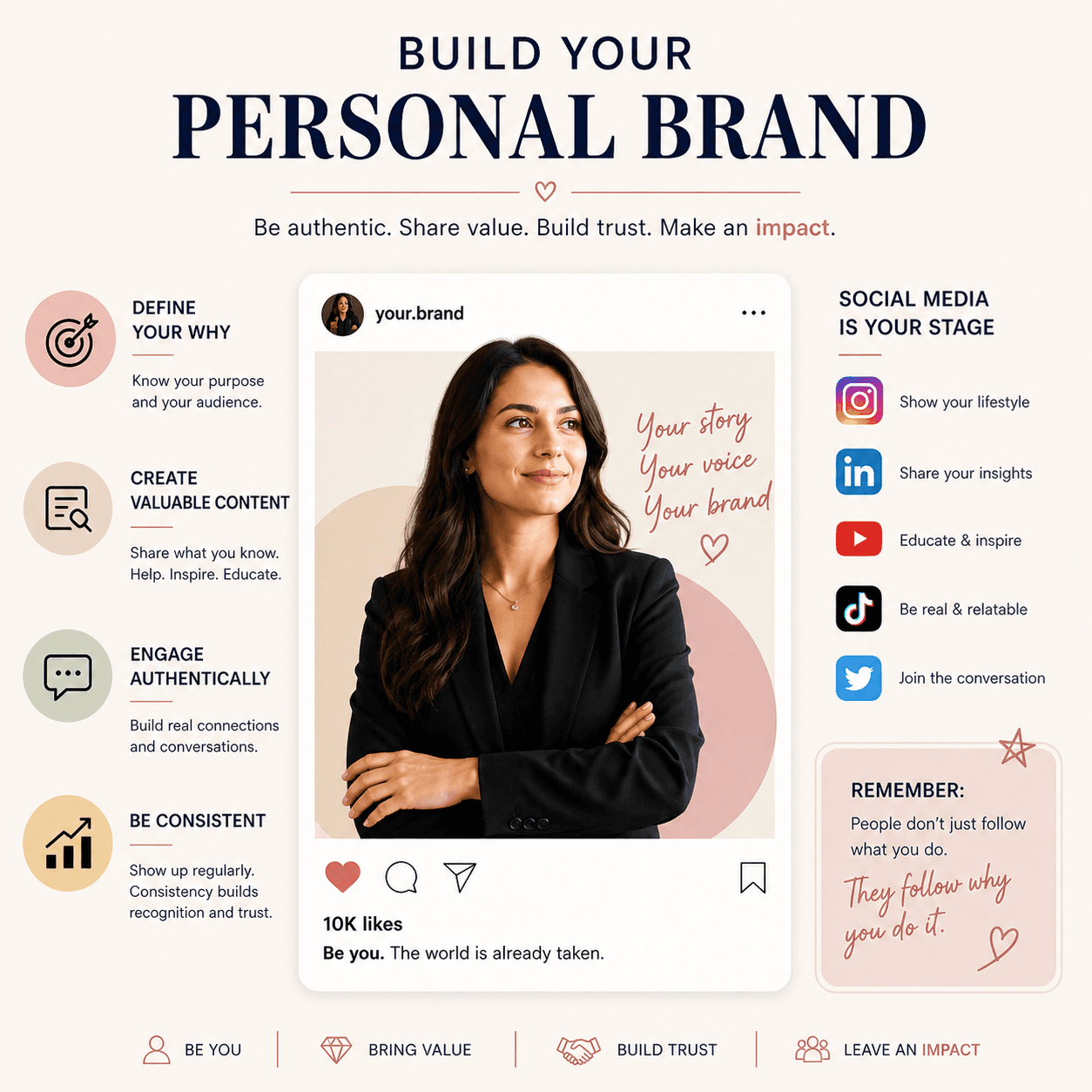
Personal branding focuses on promoting an individual’s expertise, personality, and professional identity.
It is widely used by:
- Entrepreneurs
- Coaches
- Consultants
- Creators
- Industry professionals
Platforms like LinkedIn, Instagram, and YouTube are commonly used for personal branding, LinkedIn strategies, and audience growth.
The goal is to build authority and trust around a person rather than a company
What Is Business Branding?
Business branding focuses on building the identity and reputation of a company or organization.
It includes:
- Brand messaging
- Visual identity
- Customer experience
- Company positioning
- Marketing communication
Business branding creates a scalable and recognizable brand image.
Why Branding Matters in Digital Marketing
A strong Digital Marketing Strategy depends heavily on effective branding.
Benefits include:
- Better audience trust
- Increased visibility
- Higher customer loyalty
- Stronger online authority
- Competitive differentiation
Both personal and business branding help improve long-term marketing performance.
Personal Branding vs Business Branding: Key Differences
Personal Branding
People connect more emotionally with individuals and stories.
Business Branding
Businesses focus more on company identity and customer experience. real problems through content, they naturally improve their link building for SEO efforts.
Personal Branding
Trust develops faster because audiences engage directly with a person.
Business Branding
Trust builds through consistency, reputation, and service quality. not only improves backlinks but also positions businesses as industry experts.
Personal Branding
Content often includes storytelling, personal experiences, and opinions.
Business Branding
Content focuses more on products, services, and company value.
Personal Branding
Creates strong audience relationships and thought leadership.
Business Branding
Supports operational scalability and brand recognition. increases credibility and strengthens overall SEO authority.
Key Components of Effective Branding Strategies
How Personal Branding Social Media Strategies Drive Growth
Strong personal branding social media strategies help professionals:
- Build authority
- Improve engagement
- Increase networking opportunities
- Strengthen audience trust
Audiences often engage more with authentic and relatable content, relevance, and user-focused strategies.
The Role of Personal Branding LinkedIn Strategy
A strong personal branding LinkedIn approach helps professionals position themselves as industry experts.
Benefits include:
- Better professional visibility
- Increased credibility
- Stronger networking opportunities
- Thought leadership growth
LinkedIn remains one of the most powerful platforms for professional branding in 2026.
How Business Branding Supports Long-Term Success
Strong business branding creates more scalable business systems.
Benefits include:
- Better brand recognition
- Improved customer loyalty
- Stronger market positioning
- Easier business expansion
Businesses with strong branding often achieve more sustainable growth.
Can Personal and Business Branding Work Together?
Yes, many successful businesses combine both approaches.
Examples include:
- Founders building thought leadership
- CEOs acting as brand ambassadors
- Creators launching businesses
- Consultants building companies around expertise
This hybrid strategy often increases trust and audience engagement
Future Trends in Branding
Digital branding continues evolving rapidly.
Key trends include:
- Creator-led business growth
- AI-powered personalization
- Community-driven marketing
- Thought leadership branding
- Video-first content strategies
Businesses adapting early will continue growing faster in 2026.
Final Thoughts
The debate between personal branding and business branding is not about choosing one over the other — it’s about understanding which approach aligns best with your goals.
Strong personal branding social media strategies help professionals build trust and authority, while effective business branding creates scalable systems for long-term growth. Businesses combining both within a smart Digital Marketing Strategy often achieve the strongest results online.
In 2026, authentic branding and audience relationships will continue driving digital success.
Claim your free digital marketing audit.
Stay updated with SunBPO Solutions for the latest trends, insights, and strategies to keep your business ahead of the curve!
Frequently Asked Questions (FAQs)
Why is personal branding on social media important?
It helps professionals build authority, trust, and audience engagement online.
What role does branding play in a Digital Marketing Strategy?
Branding improves visibility, trust, customer loyalty, and long-term marketing performance.
Can businesses combine personal and business branding?
Yes, many successful businesses use both strategies together for stronger growth.
0 Comments