





Table of Contents
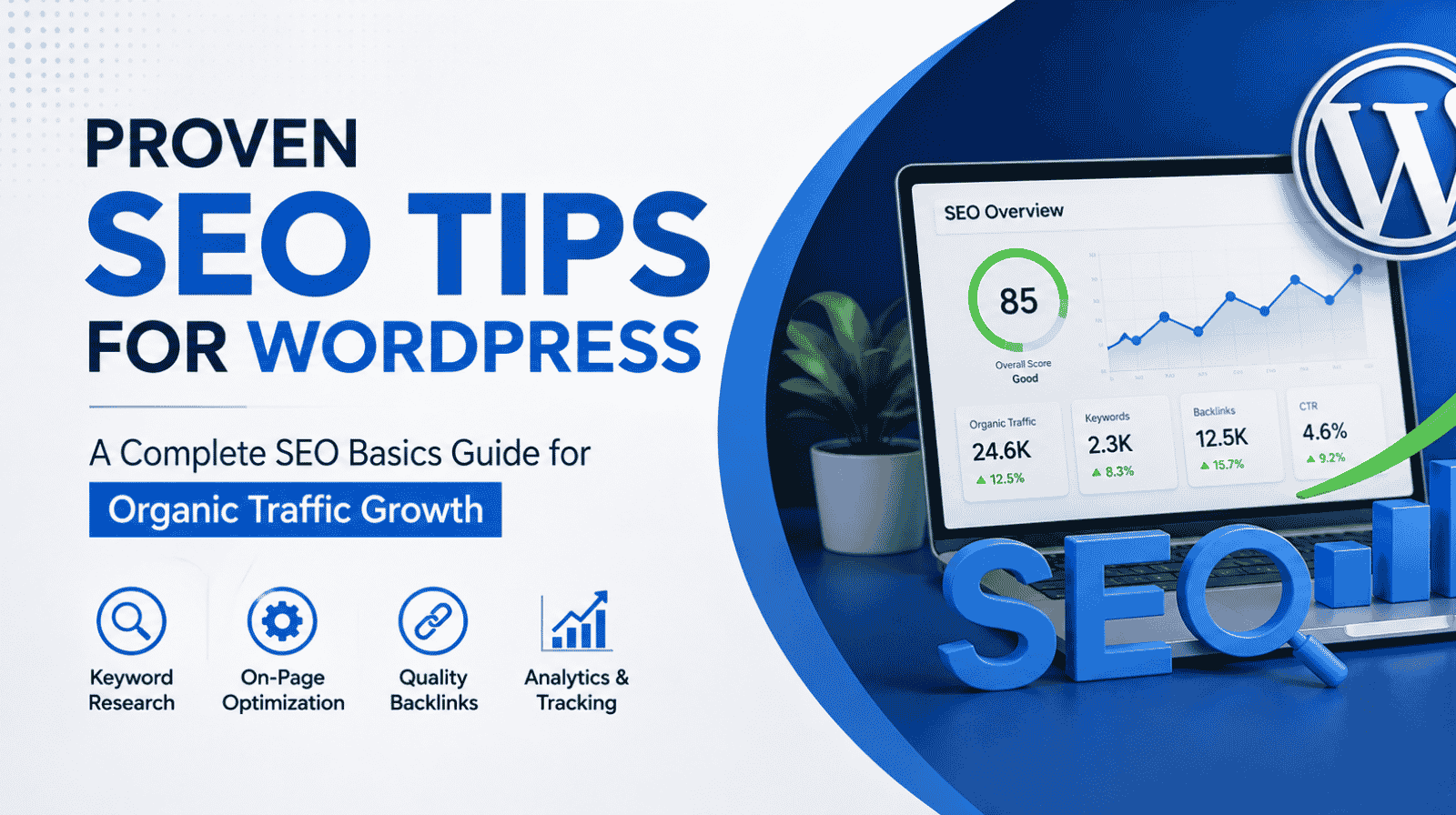
Introduction: SEO Tips for WordPress
Building a website is only the first step in establishing an online presence. The real challenge lies in attracting visitors, generating engagement, and converting traffic into business opportunities. This is where search engine optimization (SEO) becomes essential. For businesses using WordPress, implementing the right SEO practices can significantly improve visibility and support long-term organic traffic growth.
WordPress is one of the most SEO-friendly content management systems available today. However, simply launching a WordPress website does not guarantee higher rankings. Success requires a strategic approach that combines technical optimization, quality content, and user-focused improvements.
Whether you’re a beginner looking for an SEO basics guide or a business owner seeking practical SEO tips for websites, understanding the fundamentals can make a substantial difference. This article explores proven SEO tips for WordPress that can help websites achieve sustainable search engine success.
Why SEO Matters for WordPress Websites
Search engines remain one of the most important sources of website traffic. When users search for products, services, or information, they typically click on results that appear near the top of search engine pages.
Effective SEO helps businesses:
- Increase search visibility
- Drive targeted website traffic
- Improve user experience
- Build credibility and authority
- Generate leads and conversions
Without proper optimization, even high-quality websites may struggle to attract consistent visitors.
Understanding the SEO Basics
Before implementing advanced strategies, it is important to understand the fundamentals.
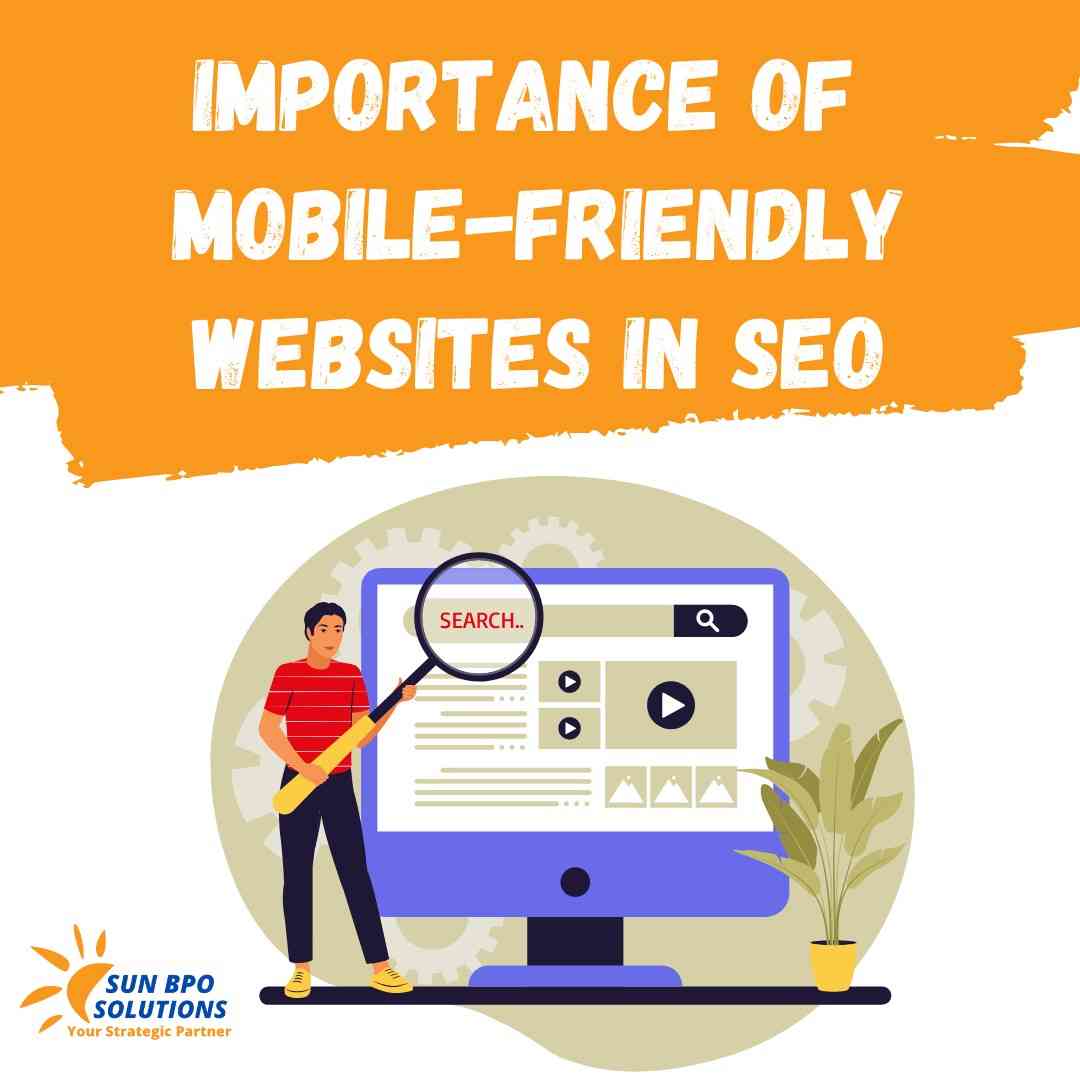
SEO involves optimizing a website so search engines can easily understand, index, and rank its content. Modern SEO focuses on delivering valuable content and excellent user experiences rather than simply targeting keywords.
A successful SEO strategy generally includes:
- Content optimization
- Technical SEO improvements
- Website performance enhancements
- Internal linking
- User experience optimization
These elements work together to improve rankings and support long-term growth. a fundamental component of successful business management. effective long-term optimization strategies available today.
Proven SEO Tips for WordPress
Content remains one of the strongest ranking factors in search engine optimization.
Businesses should focus on creating content that:
- Answers audience questions
- Solves real problems
- Provides valuable insights
- Demonstrates expertise
Instead of publishing content solely for search engines, prioritize user needs and search intent.
Long-form educational content often performs well because it provides comprehensive information while encouraging longer engagement.
Consistently publishing valuable content is one of the most effective ways to support organic traffic growth.
A well-organized website helps both users and search engines navigate content efficiently.
Important structural elements include:
- Clear navigation menus
- Logical category organization
- User-friendly URLs
- Strategic internal linking
Proper website architecture helps search engines understand content relationships while improving the visitor experience.
For WordPress websites, creating organized categories and linking related articles can strengthen topical authority and improve discoverability.
Website speed directly impacts user experience and search rankings.
Slow-loading websites often experience:
- Higher bounce rates
- Lower engagement
- Reduced conversions
- Poor search performance
To improve performance:
- Compress images
- Minimize unnecessary plugins
- Enable browser caching
- Use quality hosting services
- Optimize website code
Fast-loading websites provide better experiences and improve SEO outcomes.
On-page SEO helps search engines understand page relevance and content quality.
Optimize Title Tags: Create descriptive titles that naturally include target keywords while encouraging clicks.
Write Effective Meta Descriptions: Meta descriptions should clearly explain page content and encourage users to visit the website.
Use Proper Heading Structure: Organize content using H1, H2, and H3 headings to improve readability and content hierarchy.
Optimize Images: Use descriptive file names and alt text while maintaining fast load times.
Include Internal Links: Strategic internal linking improves navigation and helps distribute authority throughout the website.
These techniques form the foundation of a strong on-page SEO strategy.
One advantage of WordPress is access to powerful SEO tools and plugins.
Popular solutions can help with:
- XML sitemaps
- Meta tag management
- Schema markup
- Technical SEO improvements
- Content optimization
Businesses should also monitor performance using analytics and search console tools to identify opportunities for improvement.
Data-driven decisions help ensure SEO efforts remain effective over time.
Factors Influencing SEO Success
Common SEO Mistakes Website Owners Should Avoid
Many websites struggle because of avoidable SEO mistakes.
Common issues include:
- Publishing low-quality content
- Ignoring mobile optimization
- Overusing keywords
- Neglecting technical SEO
- Failing to update older content
- Weak internal linking strategies
Avoiding these mistakes helps improve rankings and maintain long-term visibility.
Industry Insights: The Future of SEO and Organic Traffic Growth
Search engines continue evolving to prioritize user experience, content quality, and relevance. Artificial intelligence, semantic search, and machine learning are changing how content is evaluated and ranked.
Businesses that focus on creating valuable content while maintaining strong technical performance are more likely to achieve sustainable organic traffic growth.
The future of SEO will continue emphasizing expertise, trustworthiness, and user satisfaction. Websites that consistently deliver value will remain best positioned for long-term success.
Final Thoughts
Implementing the right SEO tips for WordPress can significantly improve website performance, visibility, and long-term success. From creating valuable content and improving website structure to optimizing speed and on-page elements, every aspect of SEO contributes to better rankings and user experiences.
This SEO basics guide demonstrates that successful optimization is not about shortcuts or keyword stuffing. Instead, it requires a strategic approach focused on quality, relevance, and continuous improvement.
Businesses that consistently apply these SEO tips for websites will be better positioned to attract targeted visitors, strengthen online authority, and achieve sustainable organic traffic growth.
Claim your free digital marketing audit.
Stay updated with SunBPO Solutions for the latest trends, insights, and strategies to keep your business ahead of the curve!
Frequently Asked Questions (FAQs)
What are the most important SEO tips for WordPress websites?
Creating quality content, improving website speed, optimizing on-page elements, maintaining strong site structure, and using SEO tools effectively are among the most important practices.
How often should SEO be updated?
SEO should be reviewed regularly because search engine algorithms, user behavior, and industry trends continue to evolve.
Can beginners implement SEO successfully?
Yes. Following an SEO basics guide and focusing on quality content, user experience, and technical optimization can produce strong results over time.


0 Comments